Introduction
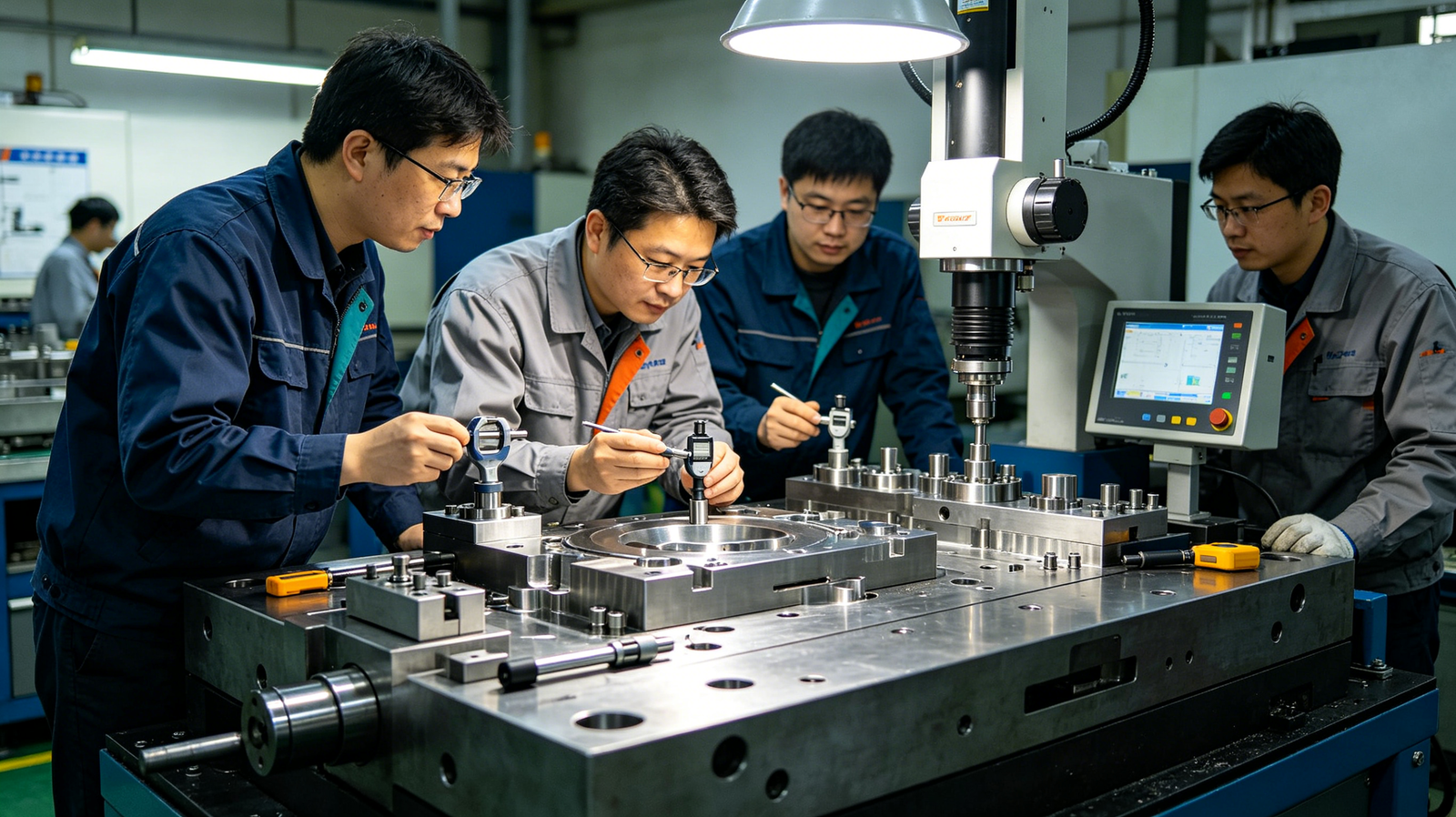
In high-volume injection molding production, molds operate under continuous thermal cycling and mechanical stress for long periods. Over time, these conditions significantly increase the probability of structural degradation and failure. Based on production experience from Xiamen Ruicheng, more than 60% of unexpected downtime is caused by early-stage micro-damage that was not detected in time. These hidden risks gradually accumulate during mass production and eventually lead to sudden shutdowns.
In large-scale manufacturing environments, mold components, cooling systems, and material fatigue interact in complex ways. Xiamen Ruicheng’s engineering analysis shows that the combination of thermal stress and mechanical wear is the primary driver of long-term mold failure. Without a structured maintenance strategy, production stability decreases continuously, directly affecting delivery reliability and cost efficiency.
Why do molds suddenly fail during high-frequency production?
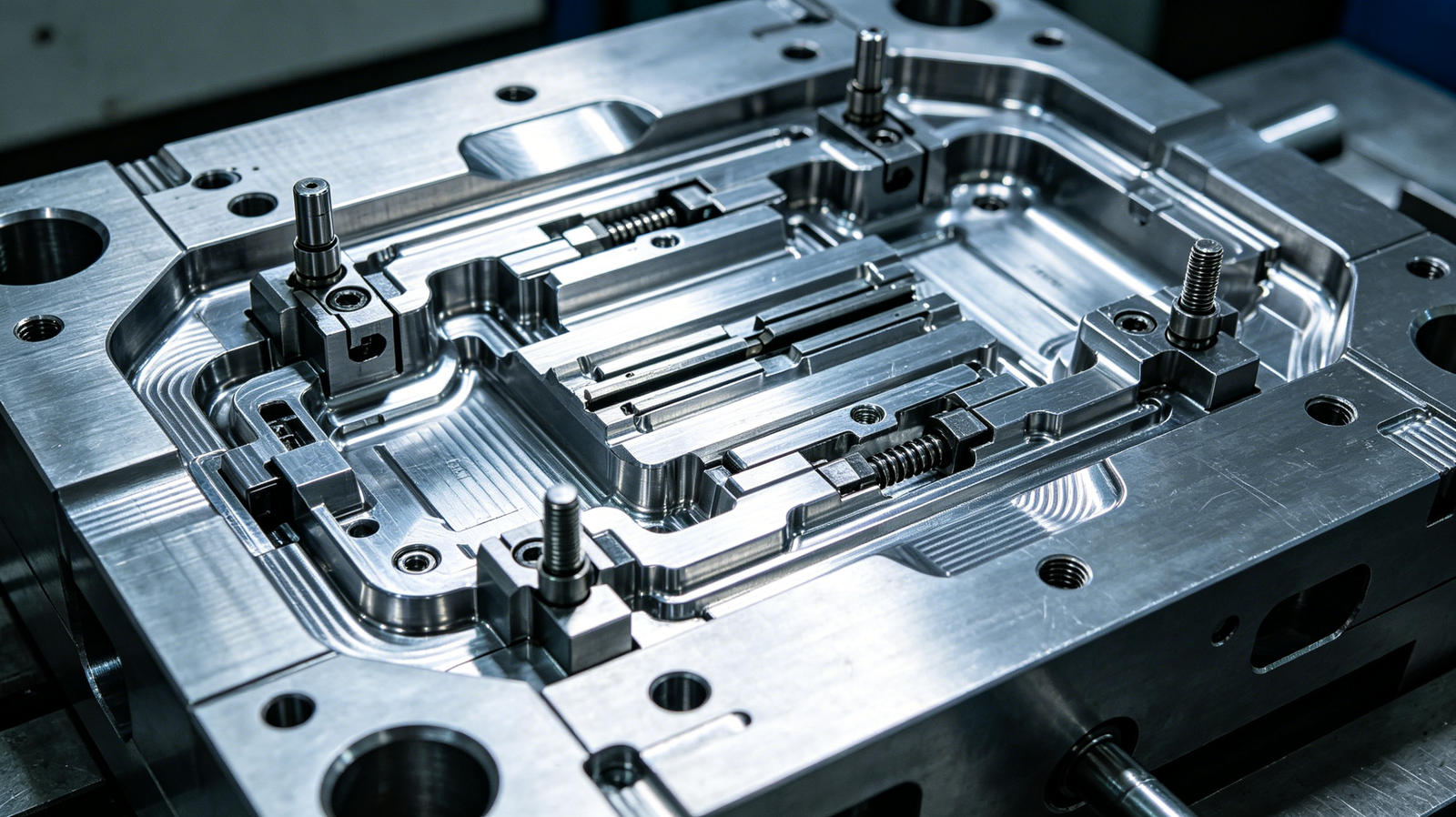
In large-scale injection molding, mold failure is rarely an instant event but rather the result of long-term accumulated stress. The injection molding process and mold design structure are continuously exposed to thermal cycling and mechanical fatigue. According to Xiamen Ruicheng’s production cases, micro-crack propagation is one of the most critical failure pathways. Hidden fatigue damage is often more dangerous than visible defects.
Thermal cycling stress: Repeated heating and cooling cause material fatigue accumulation.
Structural stress concentration: Complex cavity regions generate localized stress peaks.
Cooling imbalance: Uneven temperature distribution accelerates deformation.
Maintenance neglect: Lack of preventive maintenance amplifies micro-damage.
😟 Micro-scale fatigue accumulation is often the true starting point of mold failure
Why does higher production volume increase uncontrollable risks?

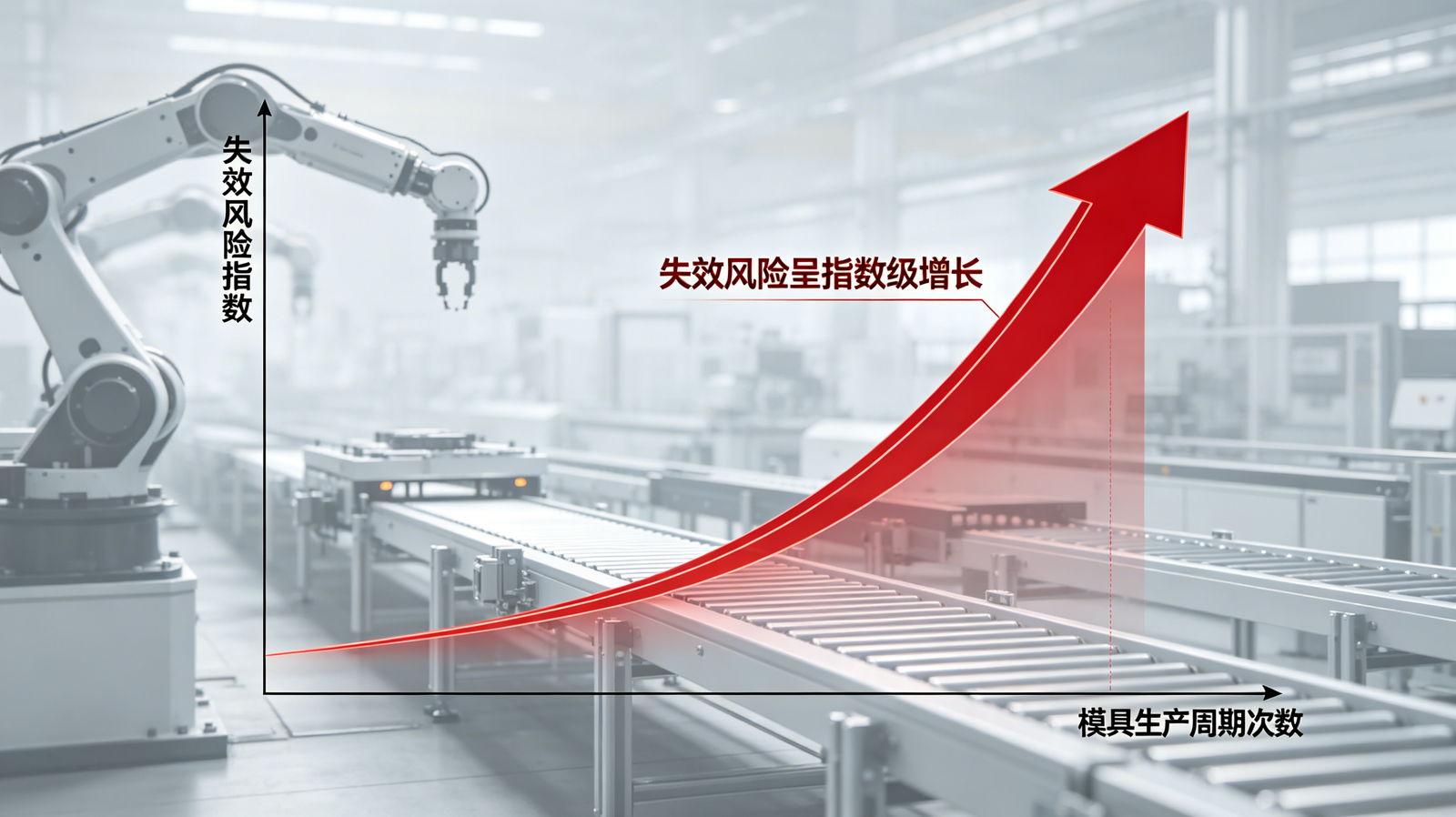
As production volume increases, molds gradually approach their fatigue limit under continuous cycles. Based on ISO quality frameworks and internal monitoring at Xiamen Ruicheng, failure risk does not grow linearly but accelerates exponentially. Once mold cycles exceed the designed lifespan range, the probability of failure rises sharply. Lack of mold maintenance strategies further accelerates structural degradation.
Life limit breakthrough: Mold steel enters fatigue crack propagation stage.
Precision decay: Dimensional stability gradually decreases.
Batch consistency risk: Product quality variation increases.
Downtime cost increase: Maintenance windows disrupt production flow.
⚠️ The larger the production scale, the stronger the risk amplification effect
How can companies detect early mold failure signals?
In high-volume injection molding systems, early detection of failure signals is critical for cost control. Xiamen Ruicheng integrates production data feedback and mold health monitoring systems to shift risk detection earlier in the lifecycle. With injection mold maintenance models, unexpected downtime can be significantly reduced. Early detection capability directly defines production stability limits.
Surface gloss abnormality: Visual changes often indicate early issues.
Increased ejection resistance: Friction rise caused by wear.
Cycle time fluctuation: Cooling efficiency degradation signal.
Flash occurrence: Loss of mold closing precision.
🔍 Early detection is always more cost-effective than corrective repair
Mold Failure Types | Risk Comparison Table
| Risk Type | Root Cause | Production Impact | Prevention Method |
|---|---|---|---|
| Thermal fatigue cracks | Heat cycling | Shutdown repair | Cooling optimization |
| Structural wear | High cycle operation | Precision loss | Material upgrade |
| Cooling blockage | Channel aging | Longer cycle time | Regular cleaning |
| Deformation failure | Stress concentration | Batch scrap risk | Redesign optimization |
Risk events in mass production often occur without warning. Companies need a systematic evaluation framework. For deeper engineering support, please contact us for Xiamen Ruicheng’s mold risk analysis solutions.
Systemic Risk Structure of Mold Failure in Mass Production
Mold failure in large-scale injection molding is not caused by a single factor but by the combined effects of materials, structure, and process conditions. Xiamen Ruicheng’s long-term projects in automotive, medical, and industrial sectors show that risks often behave in a chain reaction pattern.
1 Material fatigue risk: Mold steel loses stability under repeated thermal cycles.
2 Structural design risk: Poor cavity design amplifies stress concentration.
3 Process control risk: Temperature and pressure fluctuations reduce consistency.
4 Maintenance system risk: Lack of preventive maintenance leads to hidden damage accumulation.
FAQ Module Title
Question: What are the core evaluation criteria for mold failure in mass production?
Answer: Key indicators include mold cycle life, thermal fatigue crack propagation rate, and dimensional stability of molded parts. Xiamen Ruicheng uses both online monitoring and offline inspection systems to evaluate mold health comprehensively.
Question: How to reduce unexpected downtime risk in mass production?
Answer: A preventive maintenance system should be implemented with regular inspections, cooling system optimization, and lubrication management to reduce accumulated thermal and mechanical stress.
Question: Can material upgrades fully solve mold lifespan issues?
Answer: Material improvement increases durability but cannot eliminate risks caused by design and process conditions. Multi-dimensional optimization is always required.
Question: Can molds with early damage still be used?
Answer: It depends on severity. Minor damage can be repaired, while cracks beyond safety thresholds require immediate replacement to avoid batch failure.
Question: Do you provide customized mold life optimization solutions?
Answer: Xiamen Ruicheng provides tailored solutions based on production volume, materials, and process conditions, including structural reinforcement, cooling redesign, and maintenance planning.
Conclusion
Mold failure in high-volume injection molding is a systemic issue that evolves over time due to accumulated stress across multiple dimensions. Preventive maintenance systems are the key to reducing production risks. Xiamen Ruicheng has proven that only by shifting risk control earlier in the lifecycle can manufacturers ensure stable production and reliable delivery performance.
For expert assistance in implementing for your production needs, visit our resource center or contact us. Let’s help you scale up your manufacturing with precision and efficiency!