
POM (acetal) and nylon (polyamide) are the two most common engineering plastics for gears, bearings, and moving parts. Both offer low friction, good wear resistance, and high strength — but they behave very differently in real applications. Choose the wrong one and your gear may fail prematurely, absorb moisture and swell, or wear out faster than expected. This guide compares POM vs nylon across every key property to help you select the right material for your mechanical components.
The Basic Difference
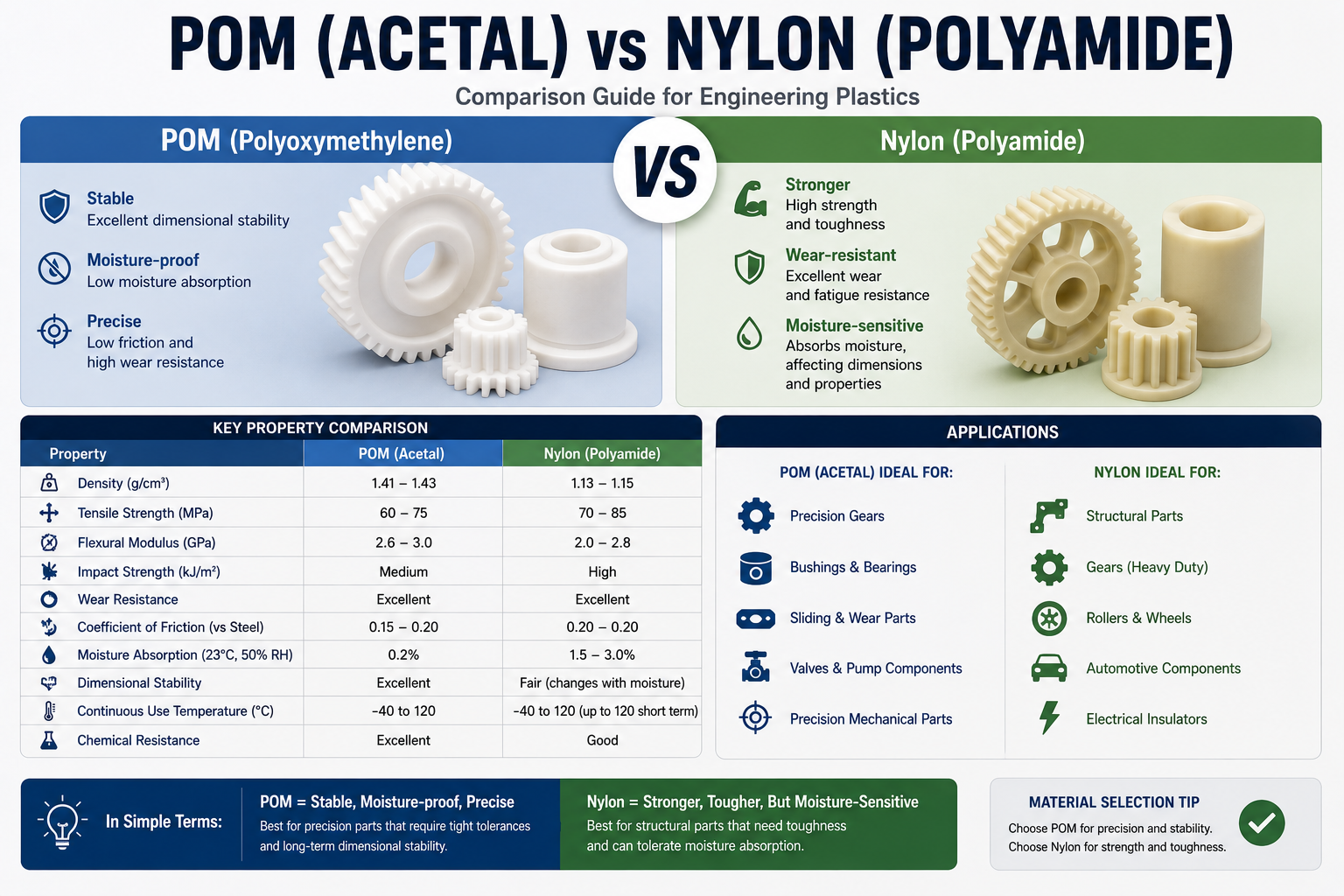
POM (polyoxymethylene), also called acetal, is a crystalline thermoplastic with excellent dimensional stability, low moisture absorption, and outstanding wear and friction properties. It is the default material for precision gears, bushings, and sliding parts.
Nylon (polyamide) is a crystalline thermoplastic with high strength, toughness, and excellent wear resistance — but it absorbs moisture, which changes its dimensions and properties.
In simple terms: POM = stable, moisture-proof, precise. Nylon = stronger, tougher, but moisture-sensitive.
Key Properties Comparison
| Property | POM (Acetal) | Nylon (PA66) |
|---|---|---|
| Tensile strength | 60-70 MPa | 70-90 MPa |
| Impact strength | Moderate | Excellent |
| Moisture absorption | 0.2-0.4% (very low) | 1.5-8.5% (high) |
| Dimensional stability | Excellent | Affected by moisture |
| Wear resistance | Excellent | Excellent |
| Coefficient of friction | Very low (0.2) | Low (0.25-0.3) |
| Fatigue resistance | Good | Excellent (living hinge) |
| Chemical resistance | Good | Good |
| Continuous service temp | Up to 100°C | Up to 120°C |
| Cost | Similar | Similar |
Dimensional Stability: POM's Big Advantage
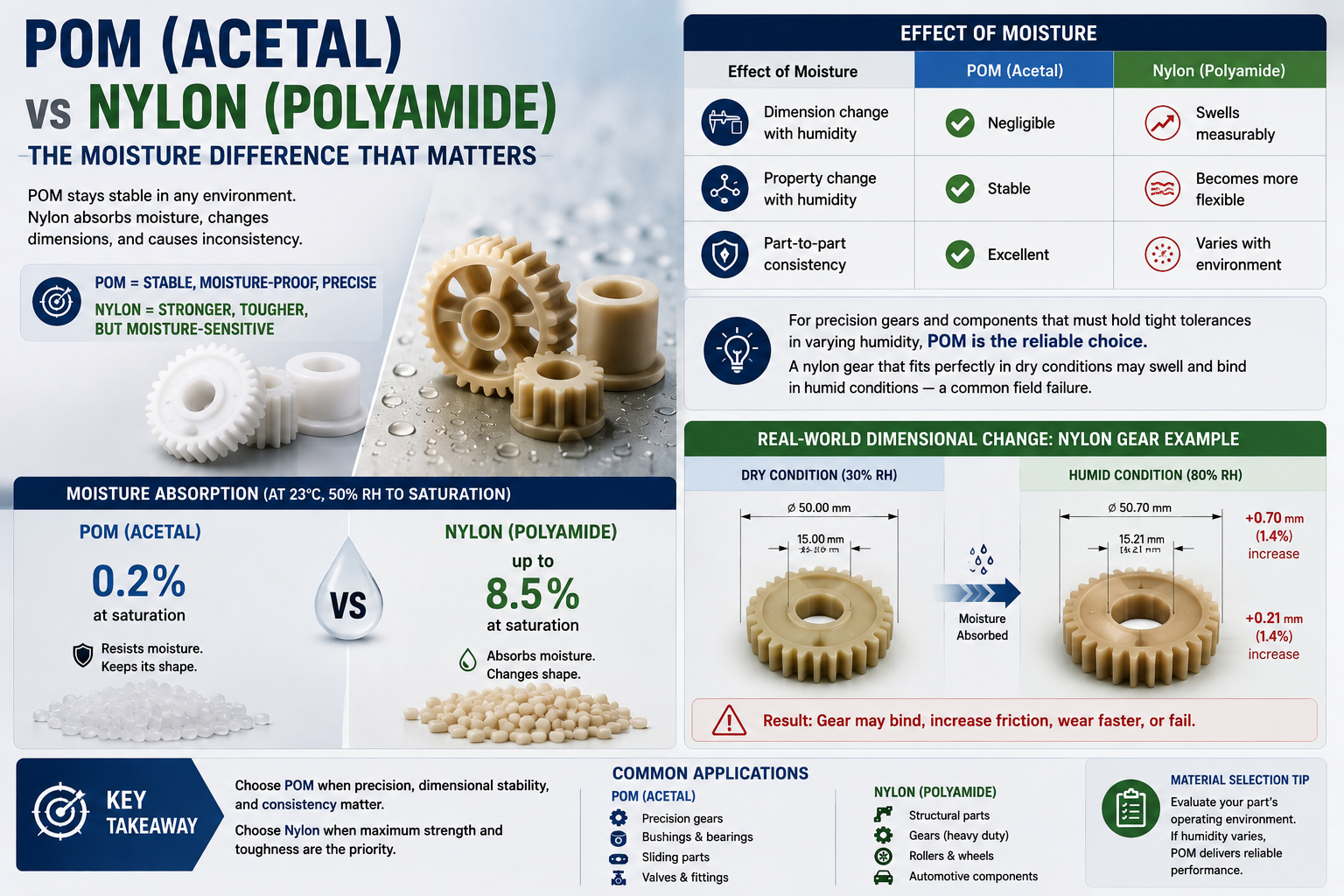
The single biggest difference is moisture absorption. Nylon absorbs moisture from the air — up to 8.5% at saturation — and this changes its dimensions and properties:
| Effect of Moisture | POM | Nylon |
|---|---|---|
| Dimension change with humidity | Negligible | Swells measurably |
| Property change with humidity | Stable | Becomes more flexible |
| Part-to-part consistency | Excellent | Varies with environment |
For precision gears and components that must hold tight tolerances in varying humidity, POM is the reliable choice. A nylon gear that fits perfectly in dry conditions may swell and bind in humid conditions — a common field failure.
Strength and Impact: Nylon's Advantage
Nylon is stronger and tougher than POM:
- Tensile strength: nylon (PA66) reaches 70-90 MPa vs POM's 60-70 MPa
- Impact strength: nylon absorbs impacts much better, resisting cracks and breakage
- Fatigue resistance: nylon handles repeated flexing (living hinges) far better than POM
- Temperature: nylon can serve up to ~120°C vs POM's ~100°C
For heavily loaded gears, impact-prone parts, or applications near heat sources, nylon is the stronger choice — provided moisture is controlled.
Wear and Friction: Close Competition
Both materials excel in wear and friction, which is why both are used for gears and bearings:
| Property | POM | Nylon |
|---|---|---|
| Friction coefficient (vs steel) | 0.15-0.25 | 0.2-0.35 |
| Wear rate | Very low | Very low |
| Self-lubricating | Yes | Yes |
| With lubricants | Good | Good |
POM has a slight edge in dry-running friction. Nylon, when lubricated, offers excellent wear life. For gear applications, both perform well; the deciding factors are usually moisture exposure and load.
Applications by Component Type
| Application | Recommended Material | Reason |
|---|---|---|
| Precision gears (instruments) | POM | Dimensional stability |
| Power transmission gears | Nylon | Strength, toughness |
| Bearings and bushings | POM | Low friction, stability |
| Worm gears | POM or nylon | Both work |
| Living hinges | Nylon | Fatigue resistance |
| Snap-fit clips | POM | Flexible without breaking |
| Water pump parts | Nylon (PA66-GF) | Strength, heat |
| Precision sliding parts | POM | Wear + stability |
Processing Considerations
Both materials are easy to injection mold but require attention to drying:
| Processing Factor | POM | Nylon |
|---|---|---|
| Drying required | Minimal (if stored dry) | Mandatory (moisture-sensitive) |
| Melt temperature | 180-220°C | 260-300°C |
| Mold temperature | 60-100°C | 80-90°C |
| Shrinkage | 1.5-2.0% | 1.0-1.8% |
Nylon must be dried before molding or the moisture causes splay (silver streaks) and property loss. POM is more forgiving but can degrade if overheated (releases formaldehyde gas).
Cost Comparison
| Factor | POM | Nylon |
|---|---|---|
| Raw material price | Similar | Similar |
| Tooling cost | Same | Same |
| Total part cost | Similar | Similar |
Material cost is comparable, so the decision should be based on performance requirements, not price.
Which Should You Choose?
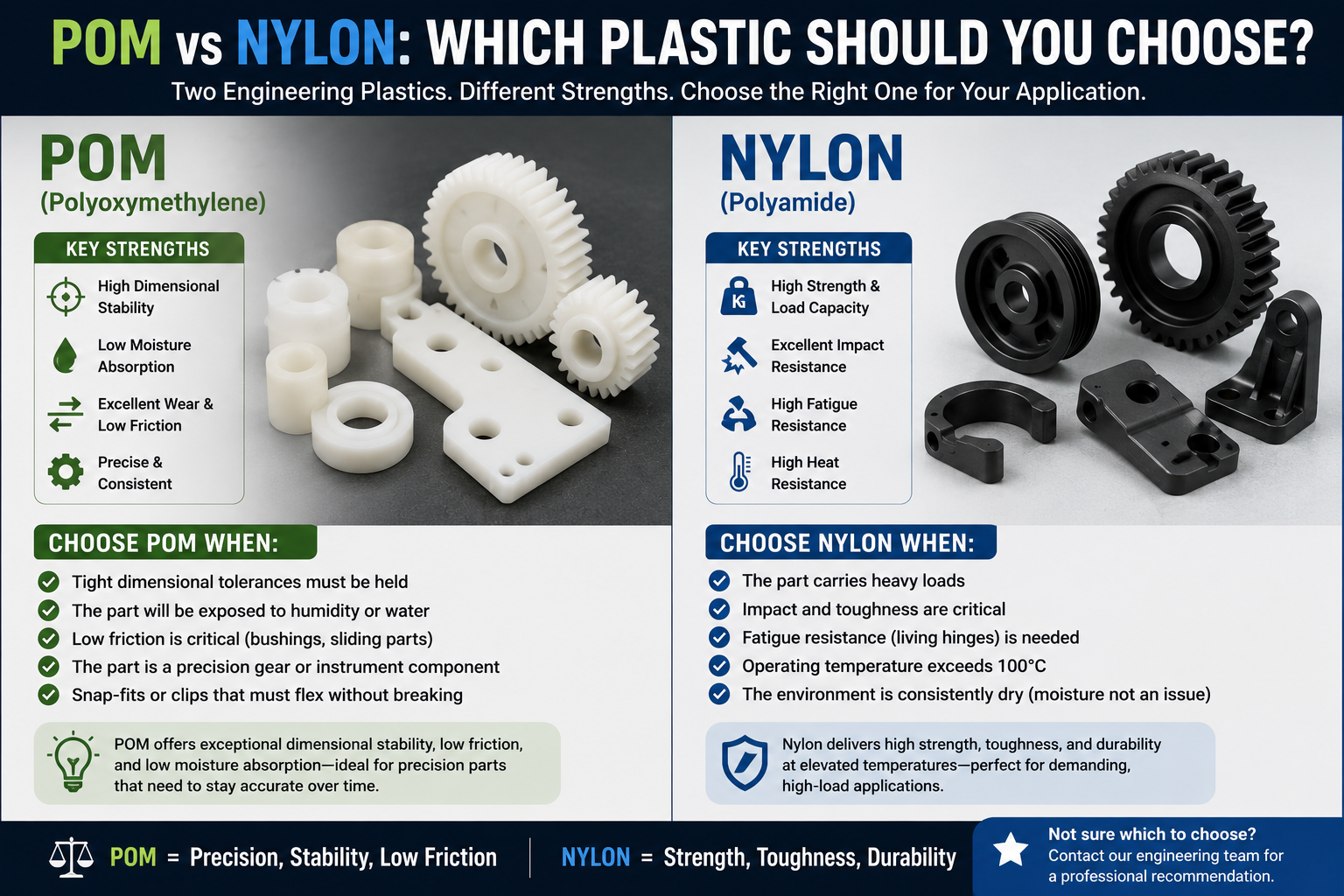
Choose POM when:
- Tight dimensional tolerances must be held
- The part will be exposed to humidity or water
- Low friction is critical (bushings, sliding parts)
- The part is a precision gear or instrument component
- Snap-fits or clips that must flex without breaking
Choose nylon when:
- The part carries heavy loads
- Impact and toughness are critical
- Fatigue resistance (living hinges) is needed
- Operating temperature exceeds 100°C
- The environment is consistently dry (moisture not an issue)
Conclusion
POM and nylon are both excellent engineering plastics for moving parts, but they serve different strengths. POM delivers dimensional stability, moisture resistance, and low friction — ideal for precision components. Nylon delivers superior strength, toughness, and heat resistance — ideal for heavy-duty parts in controlled environments. Matching the material to the actual service conditions prevents premature failure and extends component life.
With experience in engineering plastic selection and precision injection molding, PlasticXperts helps customers choose between POM and nylon for their gears and mechanical components. Contact our engineering team for a professional material recommendation.
FAQ
Which is better for gears, POM or nylon?
For precision gears requiring dimensional stability, POM is better — it does not absorb moisture and swell. For heavily loaded power transmission gears, nylon is often better due to its higher strength and toughness. The choice depends on load and moisture exposure.
Does nylon absorb moisture and how does it affect performance?
Yes. Nylon absorbs up to 8.5% moisture at saturation, which causes it to swell and become more flexible. This changes gear dimensions and can cause binding in humid conditions. POM absorbs only 0.2-0.4% and maintains stable dimensions.
Is POM stronger than nylon?
No. Nylon has higher tensile strength (70-90 MPa vs 60-70 MPa) and much better impact resistance. POM's advantages are dimensional stability, moisture resistance, and lower friction — not strength.
Can POM be used for gears exposed to water?
Yes. POM is an excellent choice for water-exposed gears because it absorbs almost no moisture and maintains its dimensions and properties. Nylon would swell and change dimensions in the same application.
What is the service temperature for POM and nylon?
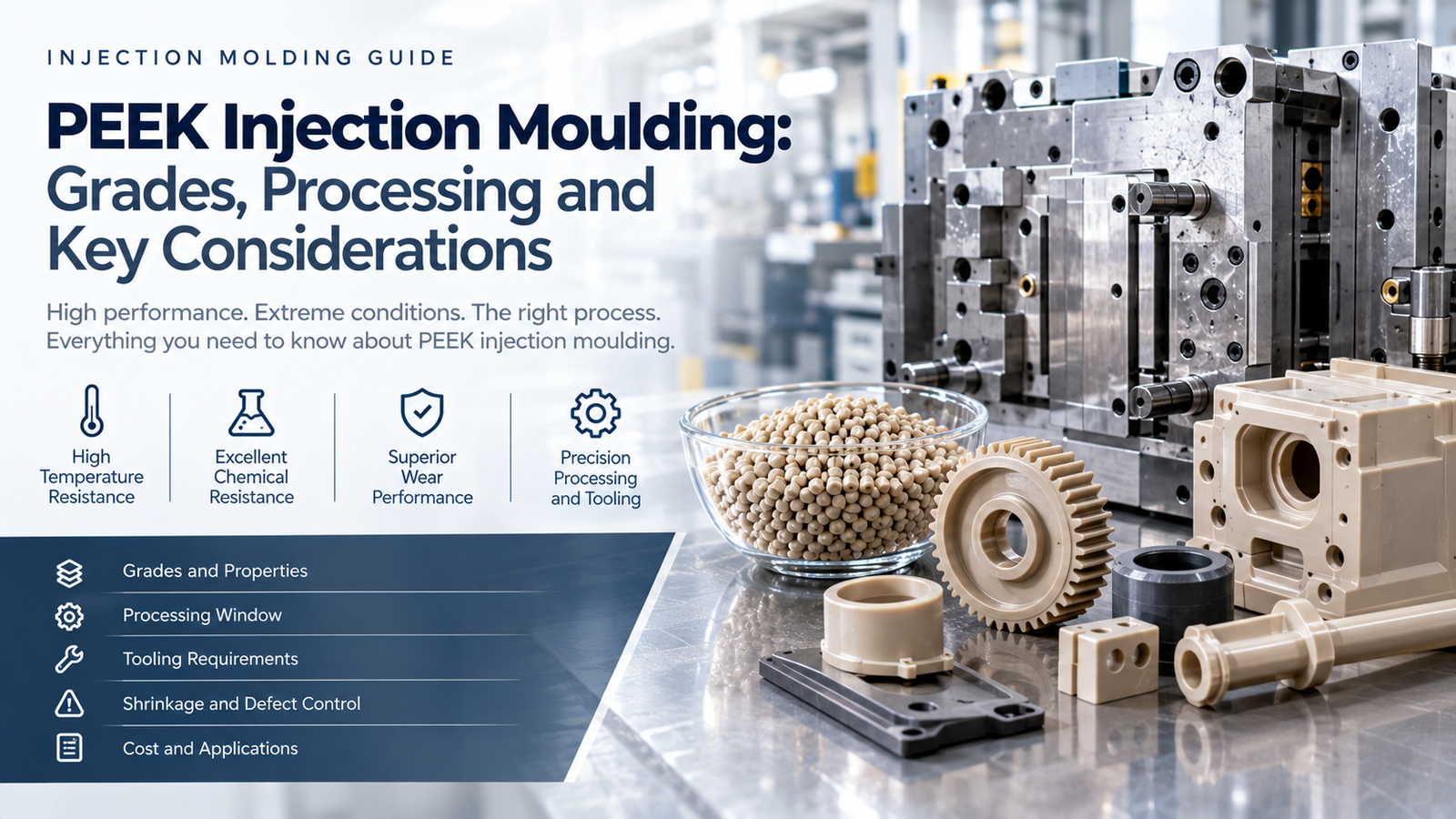
POM serves continuously up to about 100°C. Nylon can serve up to about 120°C. For higher temperatures, glass-filled grades of either material extend the range, or high-performance materials like PPS or PEEK are used.
Which material is better for a living hinge?
Nylon is the better choice for living hinges due to its excellent fatigue resistance — it can flex millions of times without breaking. POM is more likely to crack under repeated flexing. However, POM works well for snap-fit clips that flex only occasionally.
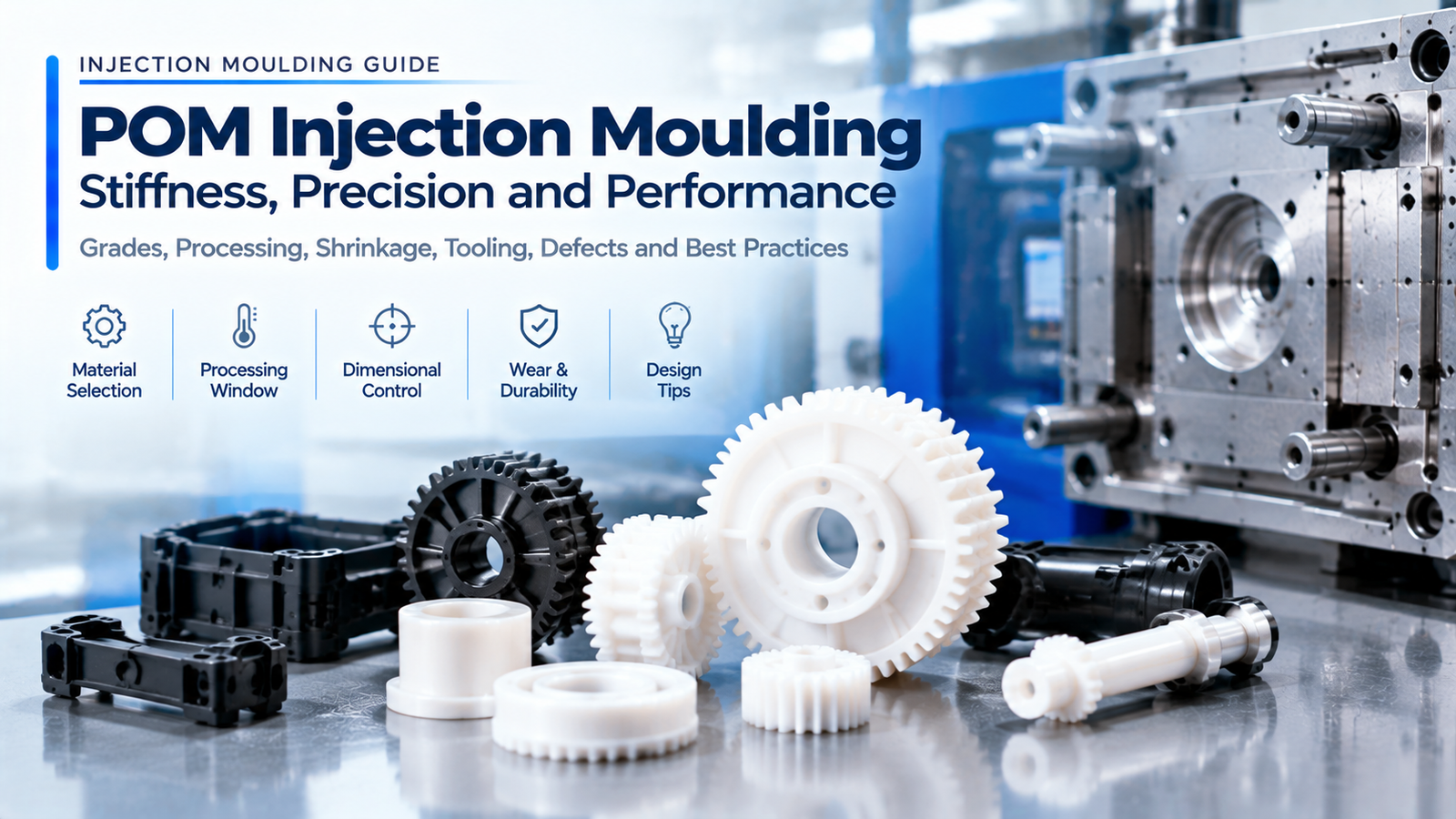
For the full material picture behind that comparison, see our guide to POM injection moulding.


一个回复