Polyurethane screen panels have become the standard choice for screening applications in mining, coal washing, and aggregate processing. Unlike traditional metal screens, polyurethane panels combine the wear resistance of hardened steel with the flexibility of rubber, delivering dramatically longer service life in abrasive environments. This guide explains panel types, hole size options, and how to select the right configuration for your operation.
Why Choose Polyurethane Screen Panels
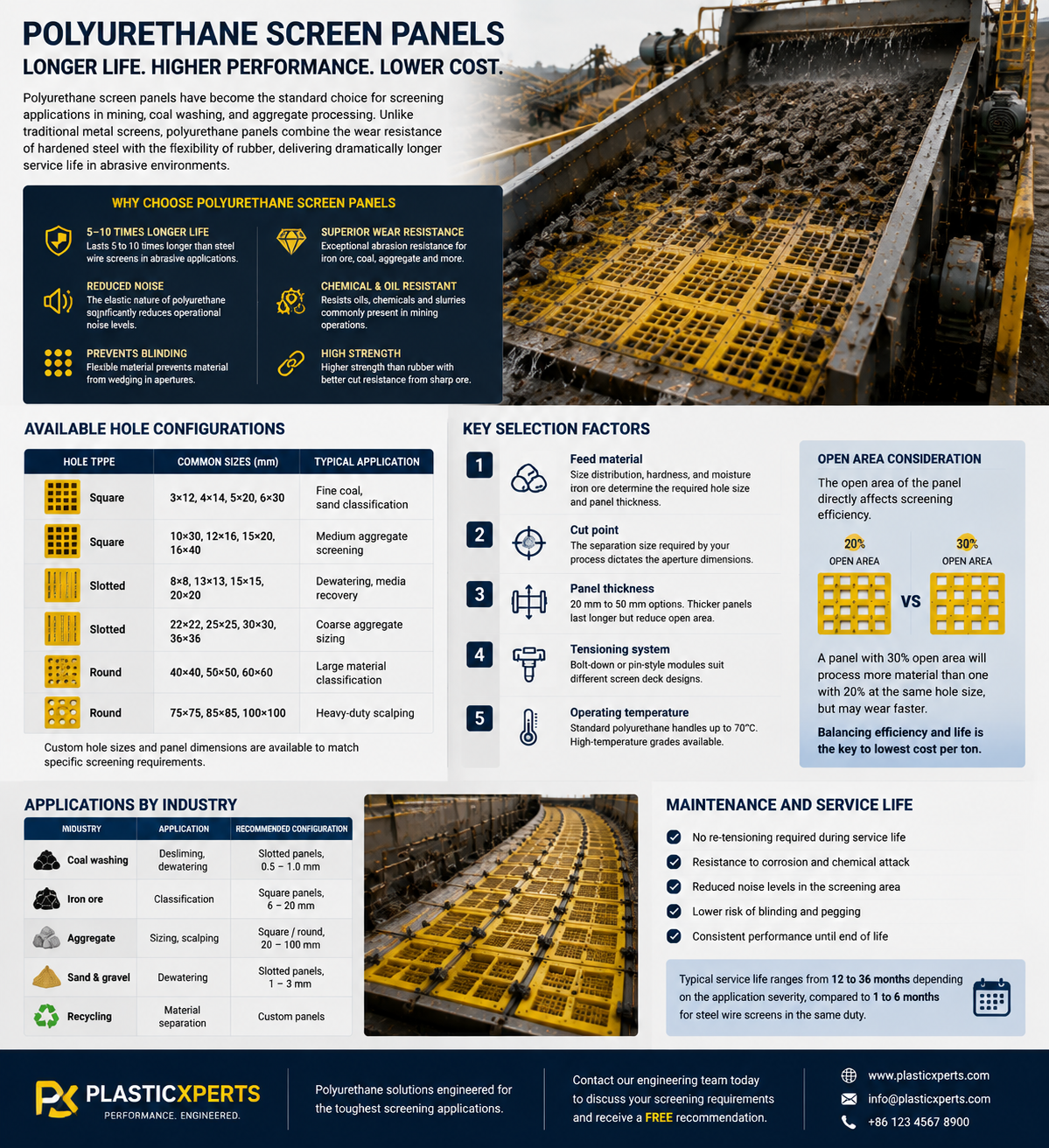
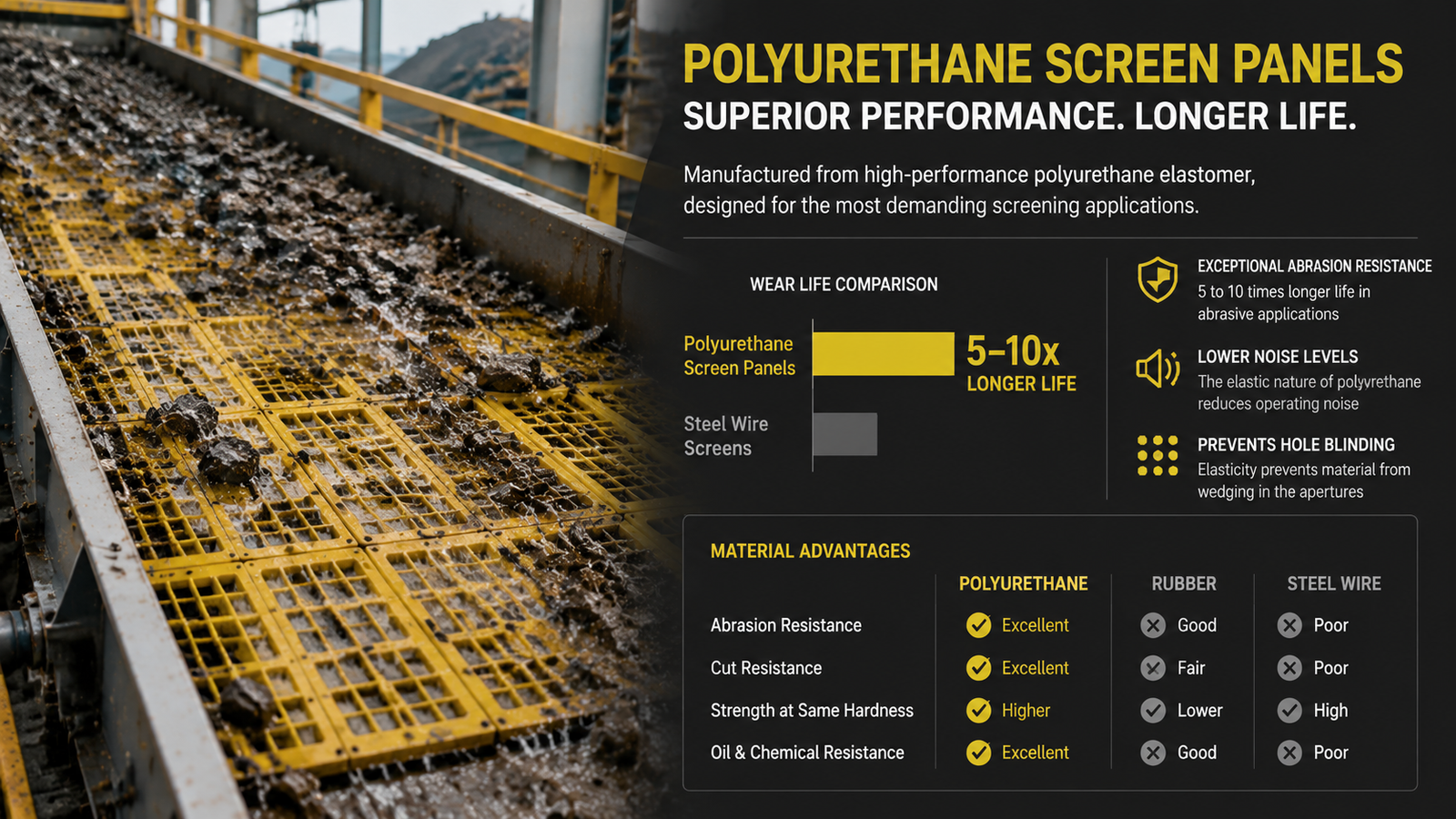
Polyurethane screen panels are manufactured from high-performance polyurethane elastomer, a material class known for exceptional abrasion resistance. In field applications, polyurethane panels typically last 5 to 10 times longer than steel wire screens when processing abrasive materials such as iron ore, coal, and aggregate. The elastic nature of the material also reduces noise levels and prevents hole blinding, where material becomes wedged in the apertures.
Compared to rubber panels, polyurethane offers higher strength at equivalent hardness, better cut resistance from sharp ore, and superior resistance to oils and chemicals commonly present in mining slurries. This makes polyurethane the preferred material for demanding classification and dewatering duties.
Available Hole Configurations
Screen panels are available in square, slotted, and round hole patterns to suit different classification requirements:
| Hole Type | Common Sizes (mm) | Typical Application |
|---|---|---|
| Square | 3×12, 4×14, 5×20, 6×30 | Fine coal, sand classification |
| Square | 10×30, 12×16, 15×20, 16×40 | Medium aggregate screening |
| Slotted | 8×8, 13×13, 15×15, 20×20 | Dewatering, media recovery |
| Slotted | 22×22, 25×25, 30×30, 36×36 | Coarse aggregate sizing |
| Round | 40×40, 50×50, 60×60 | Large material classification |
| Round | 75×75, 85×85, 100×100 | Heavy-duty scalping |
Each panel configuration can be customized for specific screening applications, including modular systems that allow individual panels to be replaced without removing the entire screen deck.
Key Selection Factors
When selecting polyurethane screen panels, consider the following parameters:
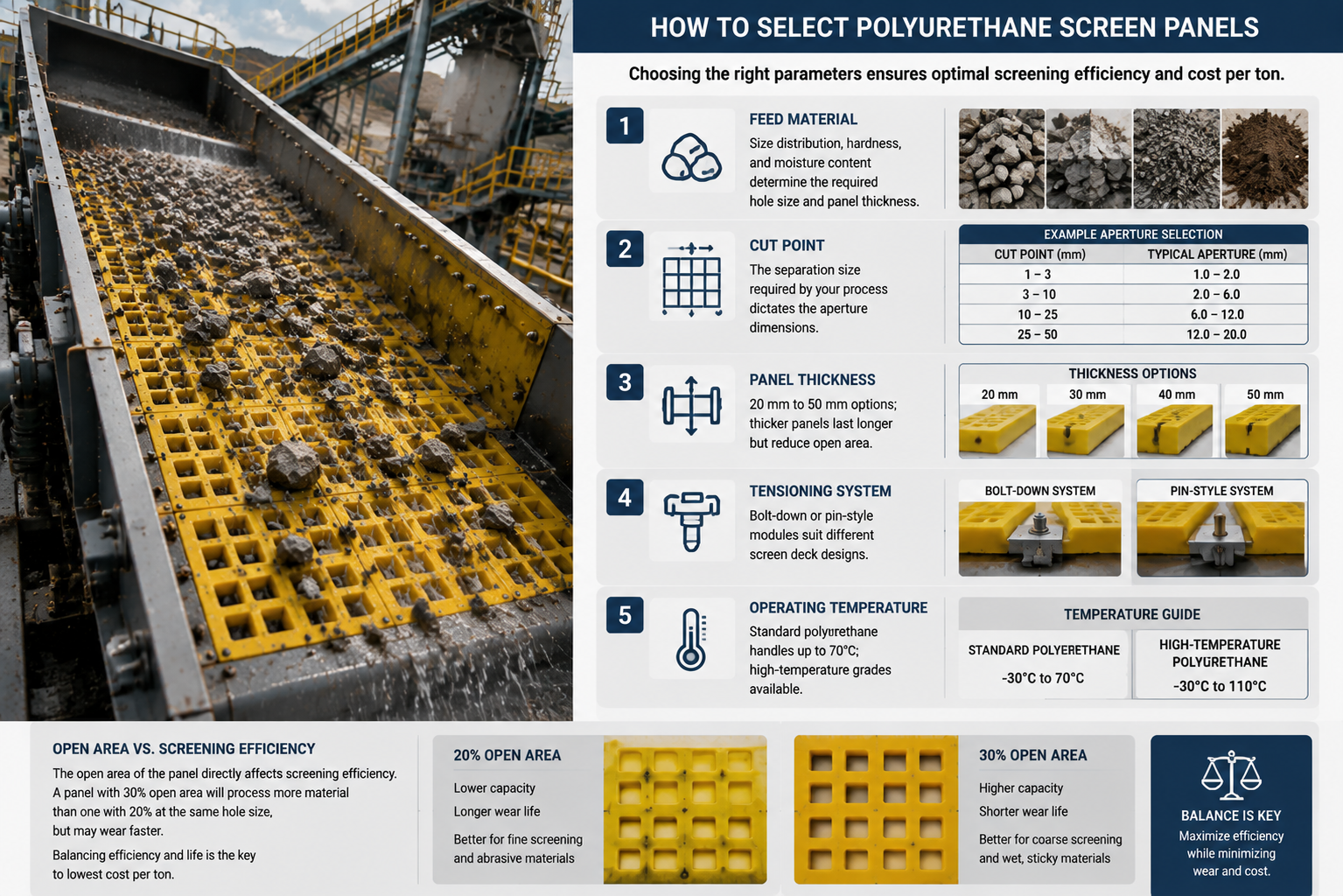
- Feed material — size distribution, hardness, and moisture content determine the required hole size and panel thickness
- Cut point — the separation size required by your process dictates the aperture dimensions
- Panel thickness — 20 mm to 50 mm options; thicker panels last longer but reduce open area
- Tensioning system — bolt-down or pin-style modules suit different screen deck designs
- Operating temperature — standard polyurethane handles up to 70°C; high-temperature grades available
The open area of the panel directly affects screening efficiency. A panel with 30% open area will process more material than one with 20% at the same hole size, but may wear faster. Balancing efficiency and life is the key to lowest cost per ton.
Applications by Industry
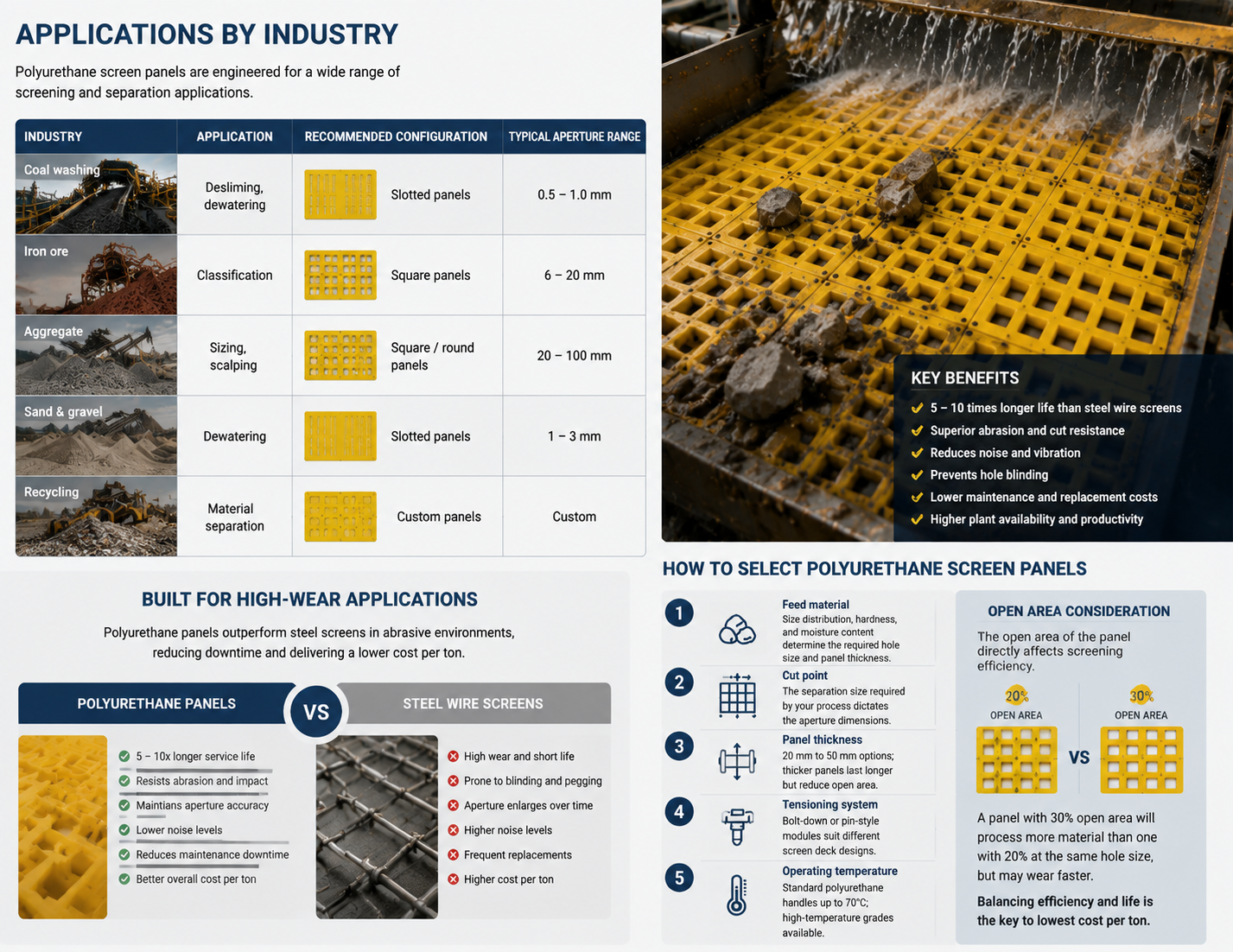
| Industry | Application | Recommended Configuration |
|---|---|---|
| Coal washing | Desliming, dewatering | Slotted panels, 0.5-1.0 mm |
| Iron ore | Classification | Square panels, 6-20 mm |
| Aggregate | Sizing, scalping | Square/round, 20-100 mm |
| Sand & gravel | Dewatering | Slotted panels, 1-3 mm |
| Recycling | Material separation | Custom panels |
Polyurethane panels also excel in high-wear applications where steel screens fail prematurely, reducing maintenance downtime and improving plant availability.
Maintenance and Service Life
Polyurethane screen panels require minimal maintenance compared to steel screens. The key benefits include:
- No re-tensioning required during service life
- Resistance to corrosion and chemical attack
- Reduced noise levels in the screening area
- Lower risk of blinding and pegging
- Consistent performance until end of life
Typical service life ranges from 12 to 36 months depending on the application severity, compared to 1 to 6 months for steel wire screens in the same duty.
Conclusion
Polyurethane screen panels deliver outstanding value in abrasive screening applications through dramatically longer service life, reduced maintenance, and improved screening efficiency. With a wide range of hole configurations and the ability to customize panels for specific duties, polyurethane is the material of choice for modern screening plants.
With experience in polyurethane product selection and application engineering, PlasticXperts helps mining and aggregate operations choose the right screen panels for their process. Contact our engineering team to discuss your screening requirements and receive a free recommendation.