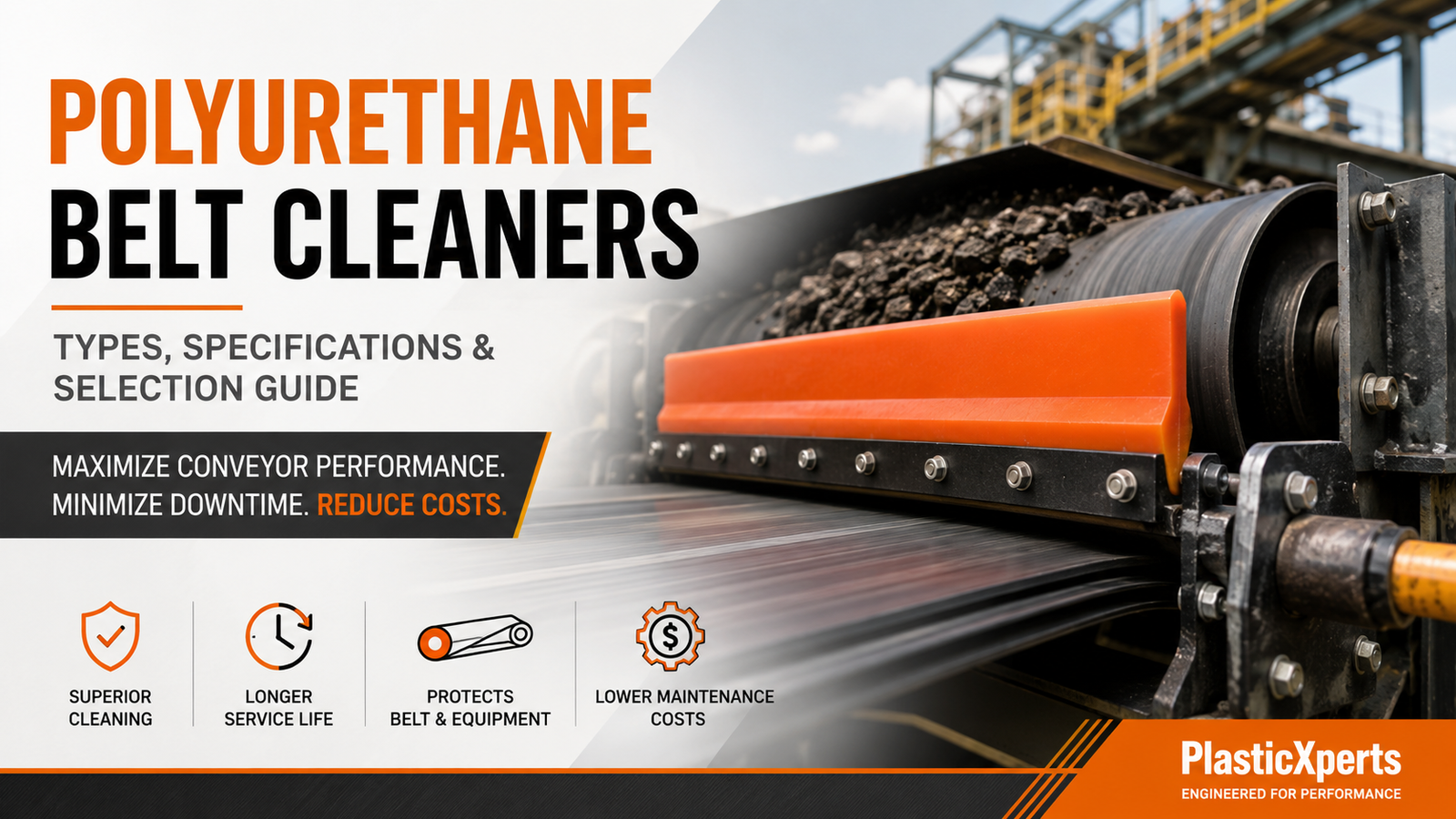
Conveyor belt cleaners are critical components in bulk material handling systems. Carryback material left on the belt after discharge causes belt mistracking, premature component wear, spillage, and increased maintenance costs. Polyurethane belt cleaners have become the industry standard because they combine effective cleaning with exceptional wear life. This guide explains the types of polyurethane belt cleaners, their specifications, and how to select the right configuration for your conveyor system.
Why Polyurethane Belt Cleaners
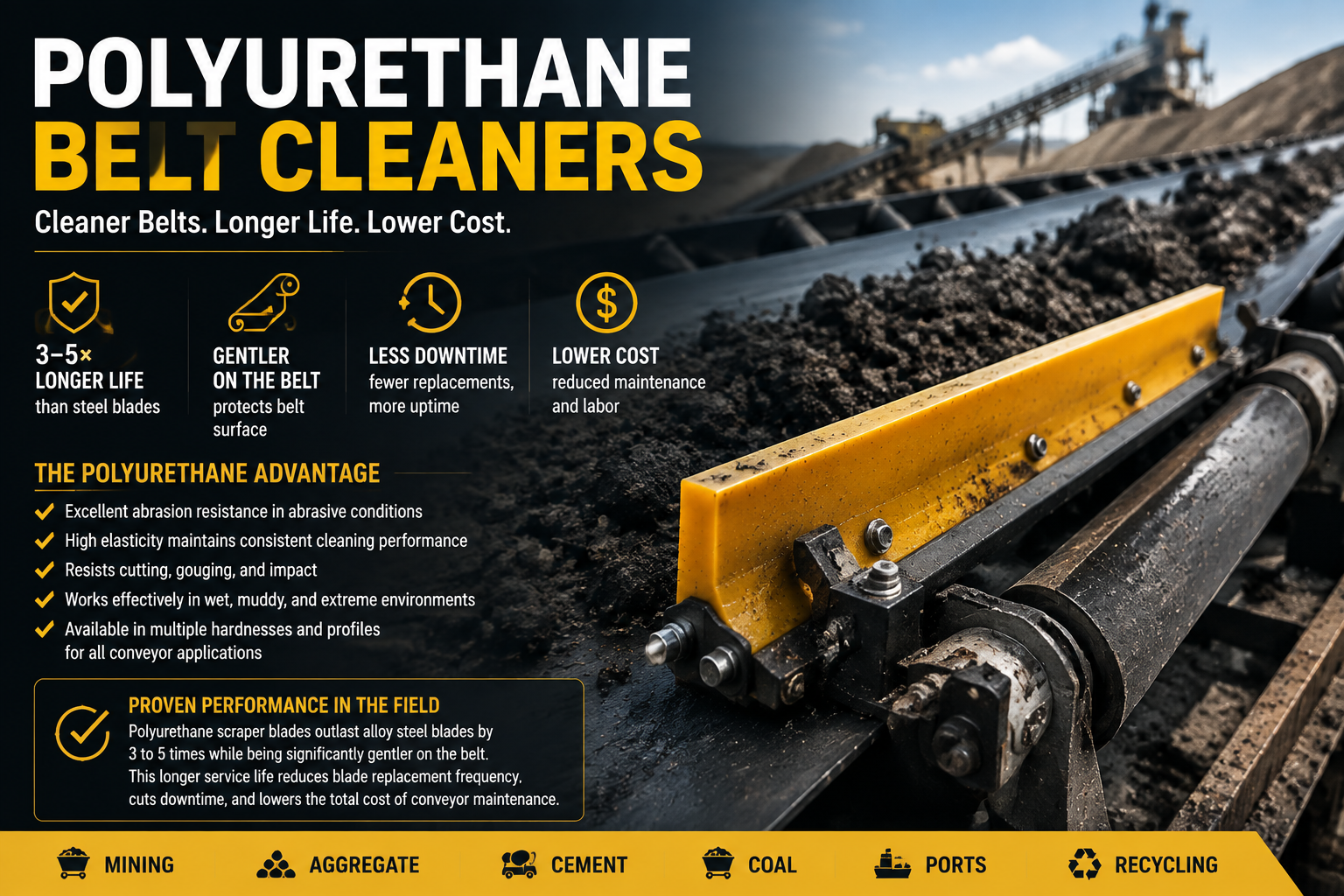
Polyurethane is the preferred material for conveyor belt cleaner blades because it offers an optimal balance of hardness, elasticity, and abrasion resistance. A blade must be hard enough to scrape material effectively, yet flexible enough to conform to belt surface irregularities without damaging the belt — especially steel cord belts.
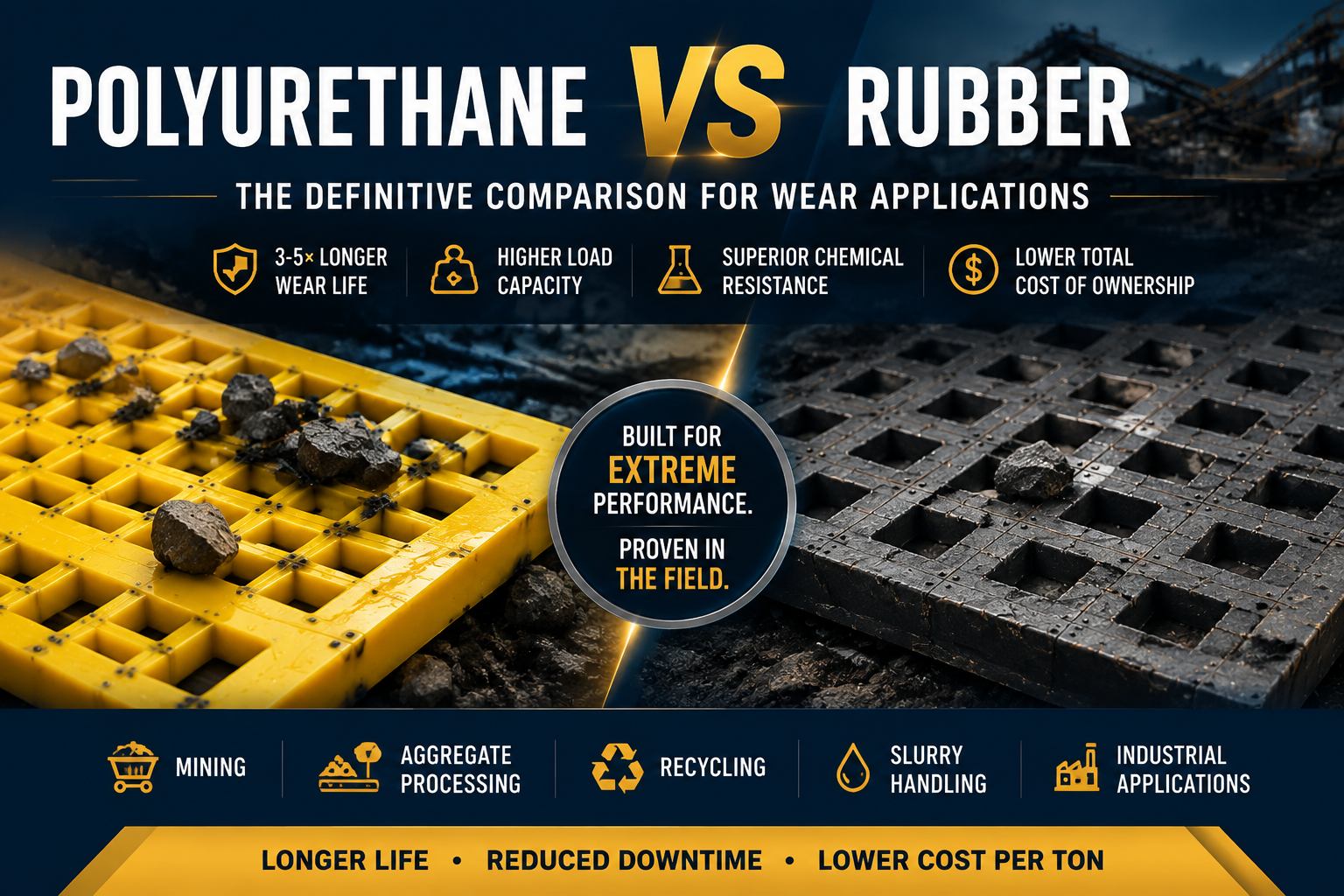
Polyurethane elastomer blades with a hardness of Shore A 85-90 deliver this balance. Field data shows polyurethane scraper blades outlast alloy steel blades by 3 to 5 times while being significantly gentler on the belt surface. This longer service life reduces blade replacement frequency, cuts downtime, and lowers the total cost of conveyor maintenance.
Types of Polyurethane Belt Cleaners
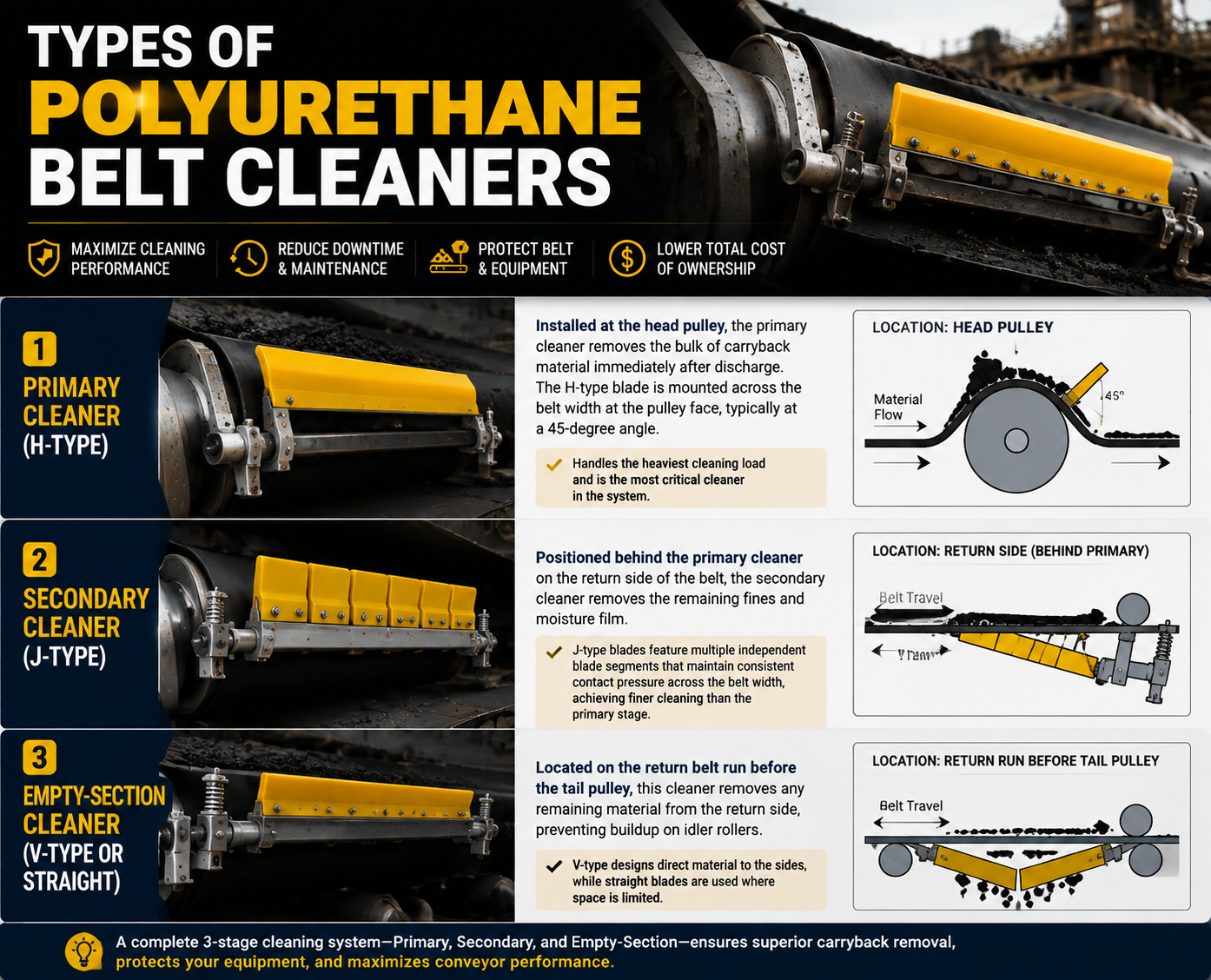
Belt cleaners are classified by their position and cleaning function:
Primary Cleaner (H-Type)
Installed at the head pulley, the primary cleaner removes the bulk of carryback material immediately after discharge. The H-type blade is mounted across the belt width at the pulley face, typically at a 45-degree angle. It handles the heaviest cleaning load and is the most critical cleaner in the system.
Secondary Cleaner (J-Type)
Positioned behind the primary cleaner on the return side of the belt, the secondary cleaner removes the remaining fines and moisture film. J-type blades feature multiple independent blade segments that maintain consistent contact pressure across the belt width, achieving finer cleaning than the primary stage.
Empty-Section Cleaner (V-Type or Straight)
Located on the return belt run before the tail pulley, this cleaner removes any remaining material from the return side, preventing buildup on idler rollers. V-type designs direct material to the sides, while straight blades are used where space is limited.
Key Specifications
| Specification | Typical Range |
|---|---|
| Blade hardness | Shore A 85-90 |
| Operating temperature | -40°C to 71°C |
| Suitable belt speed | 2-6 m/s |
| Suitable belt width | 200-2200 mm |
| Blade material options | Standard PU, imported PU, alloy-reinforced, tungsten carbide-tipped |
The working temperature range is important: polyurethane maintains its cleaning performance down to -40°C, making it suitable for outdoor mining operations in cold climates, while the upper limit of 71°C covers most bulk material applications.
Material Options for Specialized Duties
While standard polyurethane suits most applications, specialized options are available for demanding conditions:
- Imported high-grade polyurethane — for highly abrasive materials with extended service life
- Alloy-reinforced blades — for applications where material is extremely coarse or impact-heavy
- Tungsten carbide-tipped blades — for the most severe duties, combining PU flexibility with carbide wear resistance
The plastic engineering behind blade design also matters: blade geometry, contact angle, and mounting tension determine cleaning efficiency. A properly tensioned polyurethane blade cleans with a wiping action rather than a scraping action, minimizing belt wear.
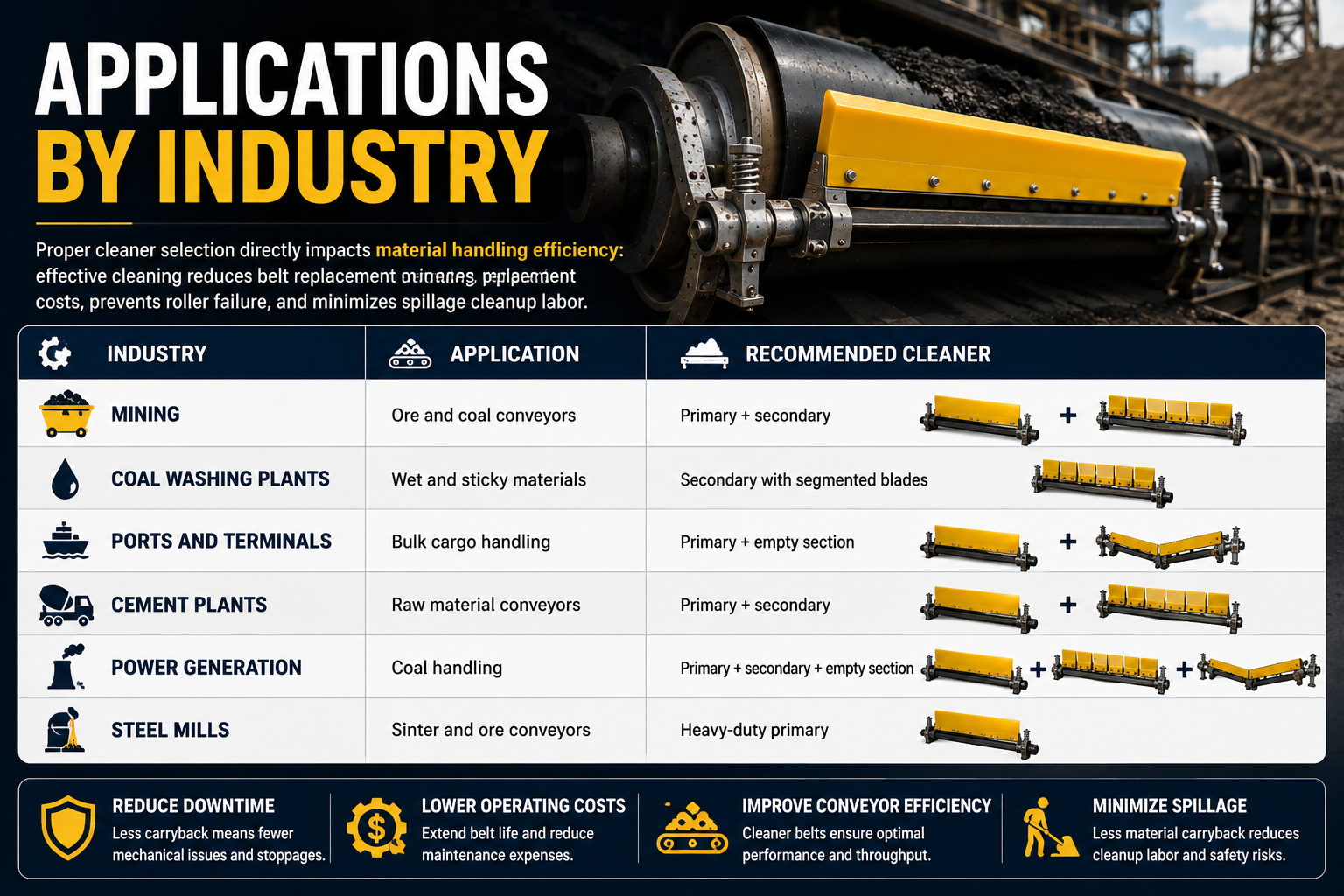
Applications by Industry
| Industry | Application | Recommended Cleaner |
|---|---|---|
| Mining | Ore and coal conveyors | Primary + secondary |
| Coal washing plants | Wet and sticky materials | Secondary with segmented blades |
| Ports and terminals | Bulk cargo handling | Primary + empty section |
| Cement plants | Raw material conveyors | Primary + secondary |
| Power generation | Coal handling | Primary + secondary + empty section |
| Steel mills | Sinter and ore conveyors | Heavy-duty primary |
Proper cleaner selection directly impacts material handling efficiency: effective cleaning reduces belt replacement costs, prevents roller failure, and minimizes spillage cleanup labor.
Installation and Maintenance Tips
- Install the primary cleaner so the blade contacts the belt across its full width with uniform pressure
- Maintain proper blade-to-belt tension — too much causes belt wear, too little reduces cleaning efficiency
- Check blade wear every 2-4 weeks; replace when the wear indicator is reached
- For steel cord belts, always use polyurethane blades to avoid belt damage
- On reversing or dual-direction belts, use specially designed cleaners or remove the cleaner during reverse operation
With proper installation and regular inspection, a polyurethane belt cleaner system can achieve 90-95% carryback reduction, dramatically improving conveyor reliability.
Conclusion
Polyurethane belt cleaners deliver superior cleaning performance, longer service life, and better belt protection than traditional metal scrapers. With options for every conveyor position — primary, secondary, and empty section — and material grades for demanding duties, polyurethane cleaning systems are the standard choice for modern bulk material handling operations.
With experience in polyurethane product selection and conveyor system engineering, PlasticXperts helps mining, power, and port operations choose the right belt cleaning solution. Contact our engineering team to discuss your conveyor requirements and receive a professional recommendation.
FAQ
What is the difference between a primary and secondary belt cleaner?
A primary cleaner is installed at the head pulley and removes the bulk of carryback material immediately after discharge. A secondary cleaner is positioned behind it on the return side and removes the remaining fines and moisture film for finer cleaning. Many operations use both for best results.
How often should polyurethane belt cleaner blades be replaced?
With proper tensioning and regular inspection, polyurethane blades typically last 6-12 months in normal duty, compared to 2-4 months for alloy steel blades. Replacement is needed when the wear indicator is reached or cleaning efficiency noticeably drops. Inspect blades every 2-4 weeks.
Can polyurethane belt cleaners damage the conveyor belt?
No — polyurethane blades are gentler on belts than metal scrapers. The elastic material wipes rather than scrapes, which is why polyurethane is recommended for steel cord belts. However, excessive blade tension can cause premature belt wear, so correct tensioning is essential.
What hardness is best for belt cleaner blades?
Shore A 85-90 is the industry standard for polyurethane belt cleaner blades. This hardness range provides effective scraping action while maintaining enough flexibility to conform to belt surface variations without damaging the belt.
Are polyurethane belt cleaners suitable for wet and sticky materials?
Yes. Polyurethane's low friction surface and flexibility make it effective for wet, sticky, and clay-like materials. For these applications, segmented secondary cleaners are often recommended because individual segments maintain contact pressure across the belt width.
What is the operating temperature range for polyurethane belt cleaners?
Polyurethane belt cleaners operate effectively from -40°C to 71°C. The low-temperature performance makes them suitable for outdoor mining operations in cold climates, while the upper limit covers most bulk material handling applications.