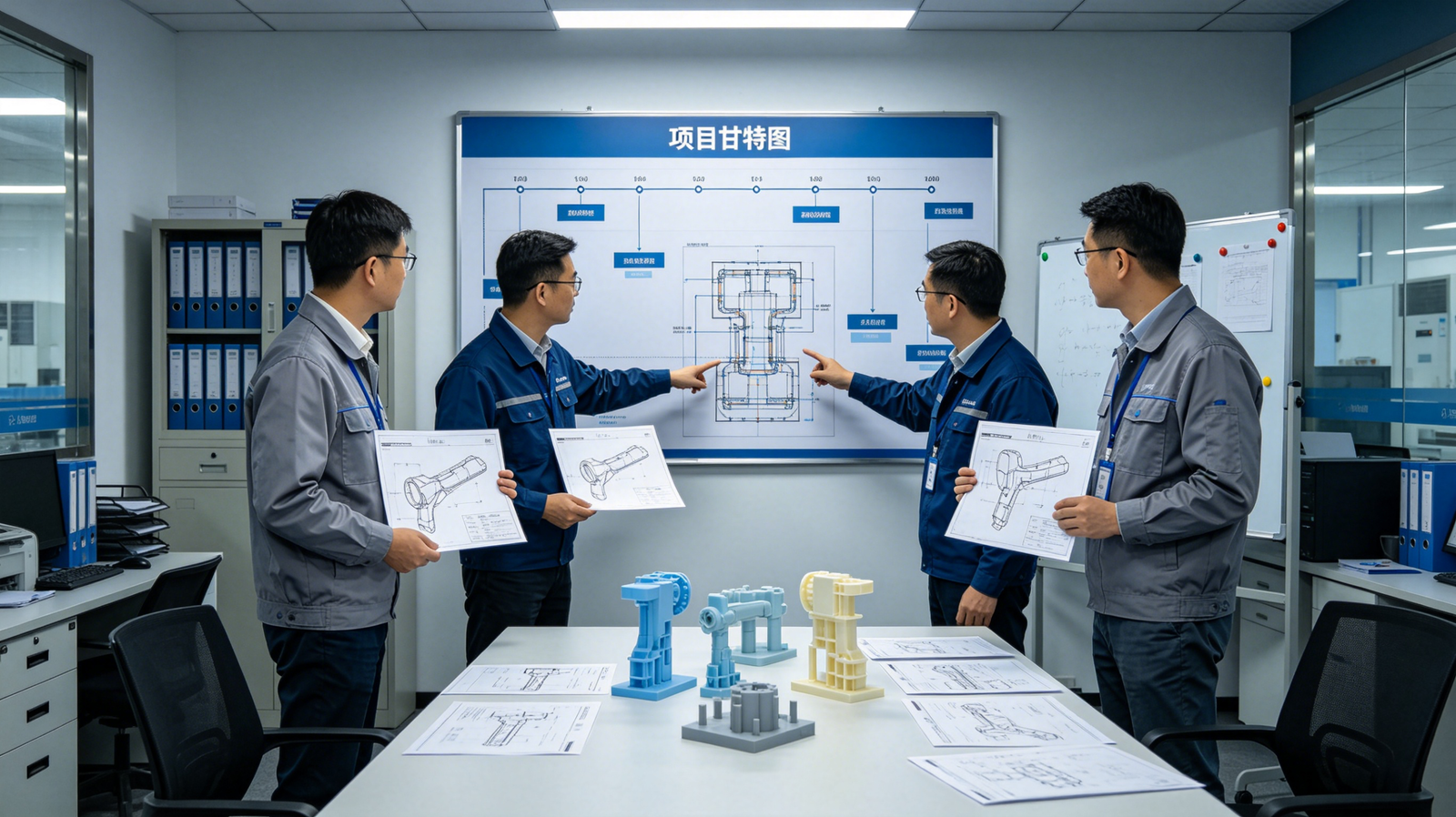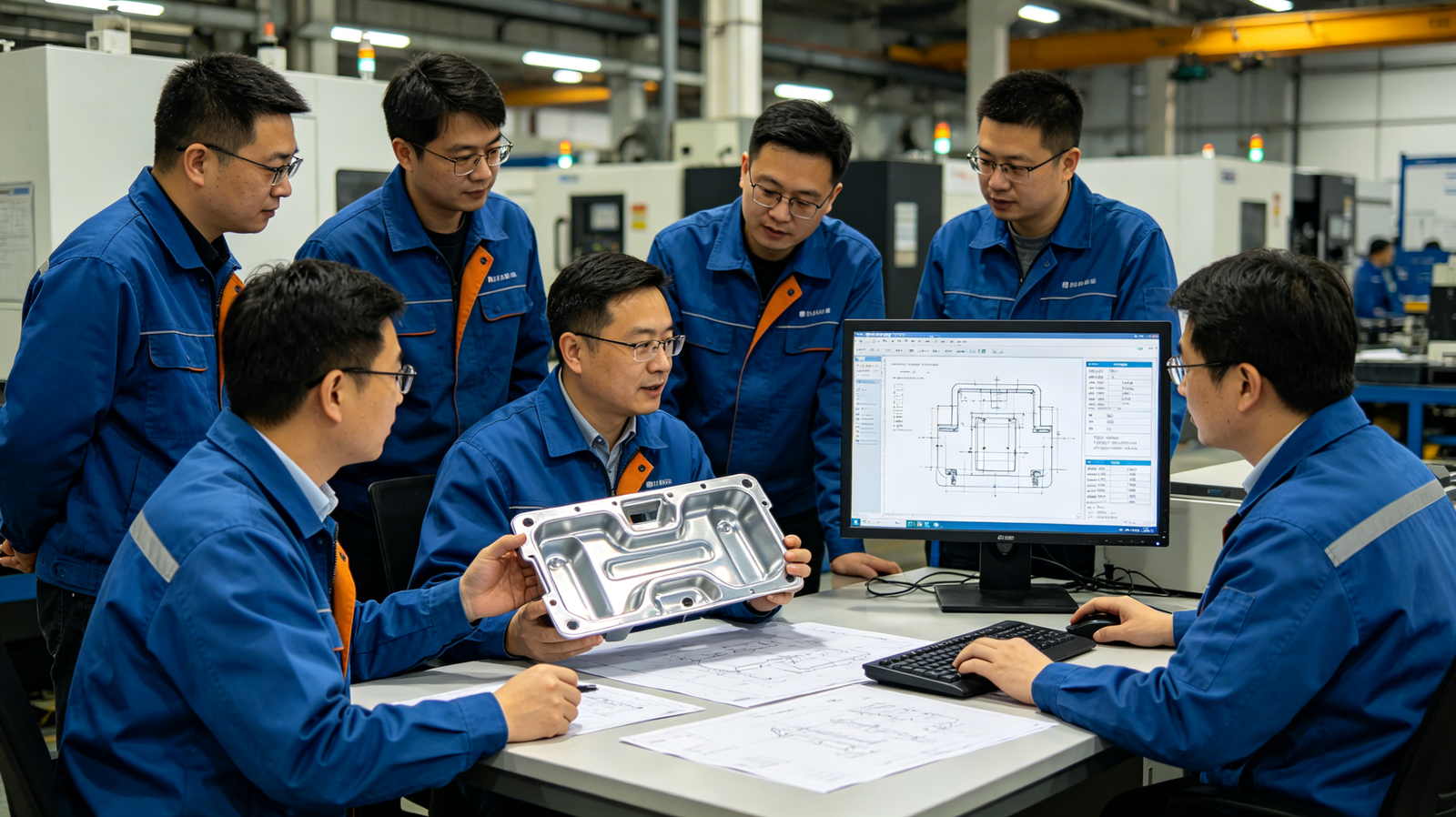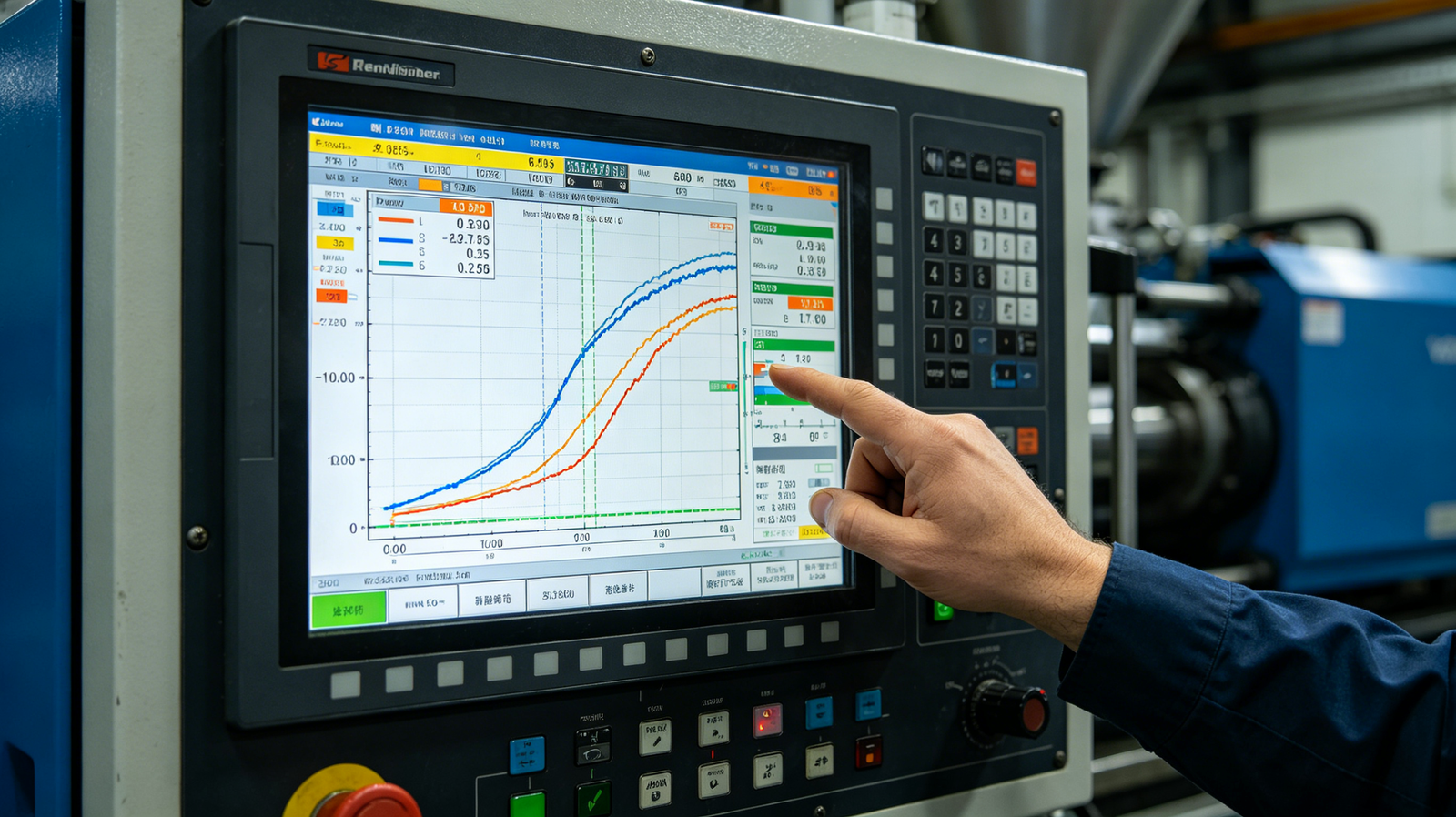
Protective cases look simple — a box with a handle. But designing and manufacturing one that truly protects sensitive equipment through years of rough handling, extreme weather, and constant transport is a demanding engineering challenge. Over the years, we have developed and manufactured protective cases for equipment manufacturers, tool brands, and industrial customers across multiple markets.
This article shares how we approach protective case development — from material selection and structural design to sealing, finishing, and customization — and what goes into a case that survives real-world use.
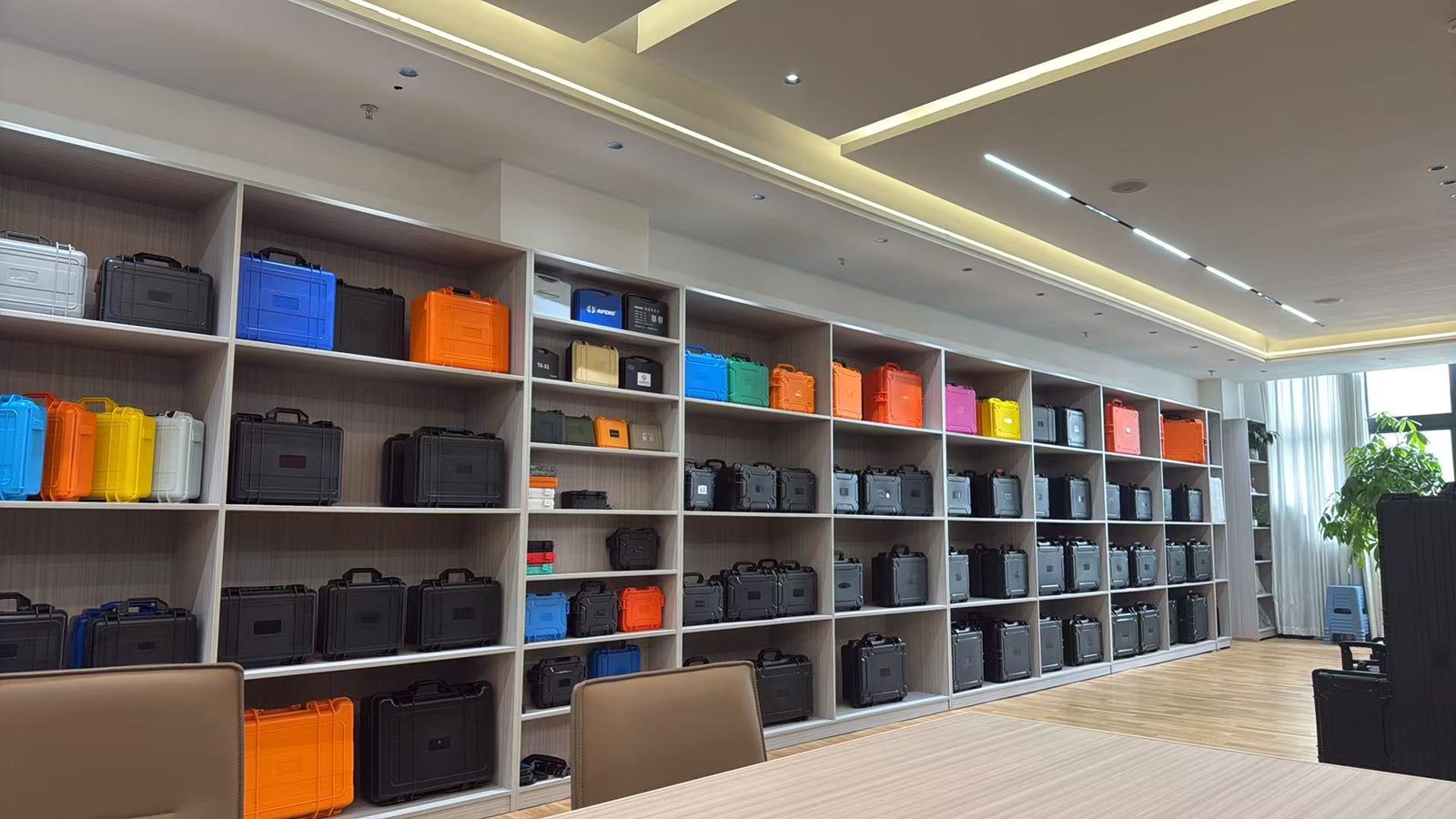
Starting With the Right Material
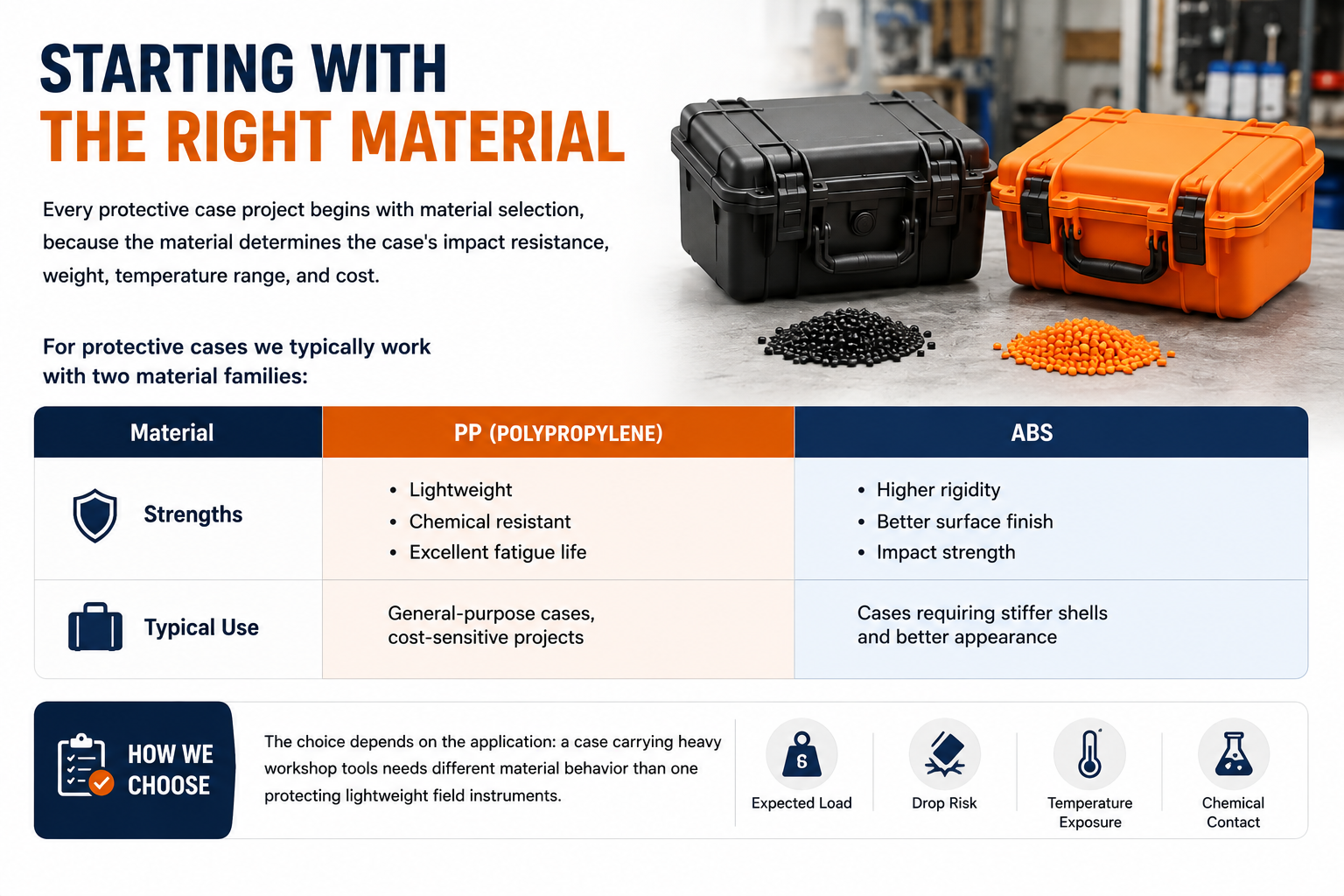
Every protective case project begins with material selection, because the material determines the case's impact resistance, weight, temperature range, and cost.
For protective cases we typically work with two material families:
| Material | Strengths | Typical Use |
|---|---|---|
| PP (polypropylene) | Lightweight, chemical resistant, excellent fatigue life | General-purpose cases, cost-sensitive projects |
| ABS | Higher rigidity, better surface finish, impact strength | Cases requiring stiffer shells and better appearance |
The choice depends on the application: a case carrying heavy workshop tools needs different material behavior than one protecting lightweight field instruments. We evaluate the expected load, drop risk, temperature exposure, and chemical contact before recommending a material.
Structural Design: More Than a Box
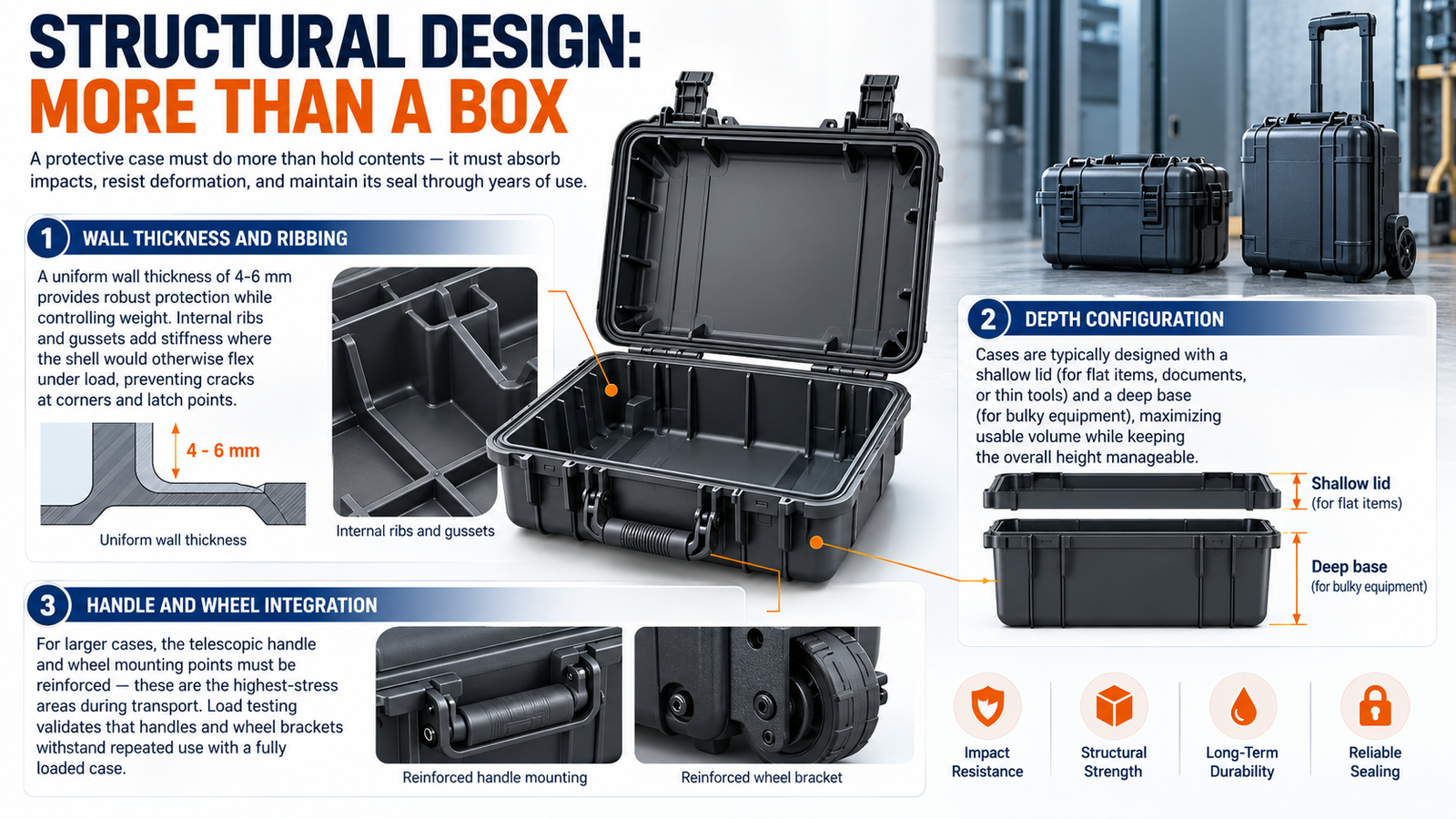
A protective case must do more than hold contents — it must absorb impacts, resist deformation, and maintain its seal through years of use. Our design process focuses on several structural elements:
Wall thickness and ribbing. A uniform wall thickness of 4-6 mm provides robust protection while controlling weight. Internal ribs and gussets add stiffness where the shell would otherwise flex under load, preventing cracks at corners and latch points.
Depth configuration. Cases are typically designed with a shallow lid (for flat items, documents, or thin tools) and a deep base (for bulky equipment), maximizing usable volume while keeping the overall height manageable.
Handle and wheel integration. For larger cases, the telescopic handle and wheel mounting points must be reinforced — these are the highest-stress areas during transport. Load testing validates that handles and wheel brackets withstand repeated use with a fully loaded case.
Sealing: Keeping Water and Dust Out
Waterproofing is where many cases fail. A case that is not properly sealed can let moisture reach sensitive equipment, causing corrosion and failure at the worst possible moment.
We use a closed-cell rubber gasket seated in a groove around the case rim. When the latches are closed, the gasket compresses to form a continuous seal against water and dust ingress. The gasket material is selected for compression set resistance — it must return to shape after thousands of open-close cycles, not flatten permanently.
For cases that travel by air, a pressure-equalization valve is fitted. It allows internal pressure to balance during altitude changes without letting water in, preventing the case from bulging or the seal from being forced open.
Latches and Hardware
Hardware quality determines how the case feels and how long it lasts. We select latches based on the case's duty cycle:
- Standard over-center latches — for general-purpose cases, with metal construction for durability
- Lockable latches — allowing padlocks for security-sensitive shipments
- Reinforced corner protection — metal or heavy-duty plastic corners where impact is most likely
Latch placement is designed so the seal compresses evenly around the perimeter — uneven latch pressure is a common cause of premature gasket failure.
Customization: Fitting the Case to the Product
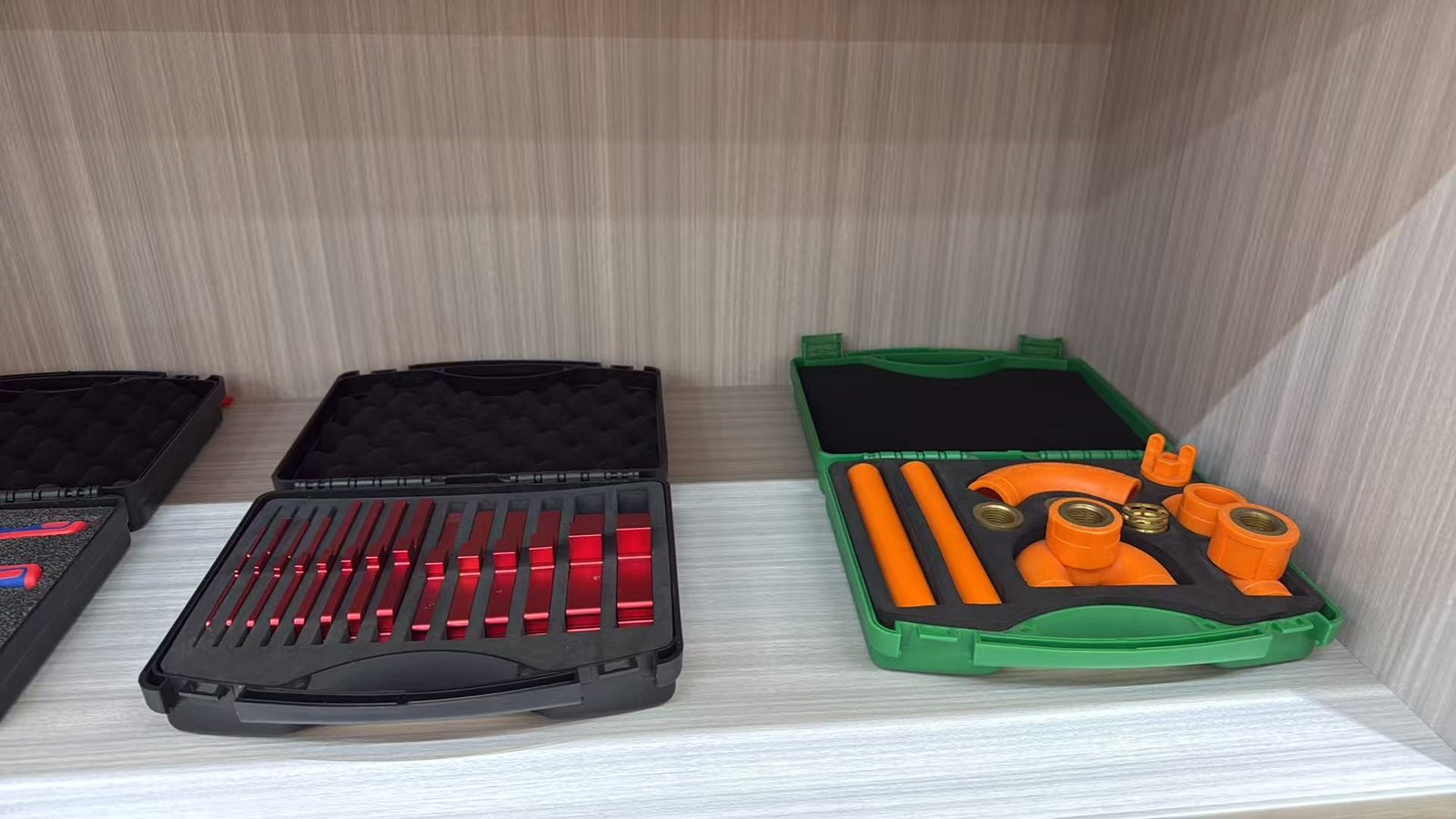
Most of our protective case projects are custom to some degree. The most common customization is foam inserts — the interior foam is CNC-cut or die-cut to cradle the specific product, protecting it from movement and impact during transport.
Other customization options include:
| Customization | Description |
|---|---|
| Logo printing | Silk screen, pad print, or adhesive labels |
| Color matching | Case body color matched to brand |
| Foam inserts | Custom-cut foam for specific equipment |
| Document pockets | Interior lid organization |
| Branded latches | Hardware with custom finish |
Quality Testing
Before a case design goes into production, we validate it through testing:
- Drop test — loaded case dropped from specified heights to verify impact resistance
- Seal test — water immersion or spray test to confirm waterproofing
- Handle load test — fully loaded case lifted and transported repeatedly
- Temperature cycling — case exposed to temperature extremes to verify material performance
For export markets, we also verify material compliance. Our case materials meet RoHS and REACH requirements, which is essential for customers shipping into the European Union.
Manufacturing and Quality Control
Production is carried out with consistent process control:
- Injection molding with monitored parameters for consistent wall thickness and surface quality
- In-process inspection at each stage — shell, sealing, hardware installation
- Final inspection including seal check and hardware function on every unit
This disciplined approach ensures that whether a customer orders 100 cases or 10,000, each one meets the same standard.
Conclusion
Developing a protective case that truly protects equipment requires attention to material selection, structural design, sealing, hardware, and testing. It is a process we have refined through years of manufacturing experience — and it is why customers across tool, instrument, and equipment industries trust us with their protective case programs.
With experience in protective case design and manufacturing, we support customers from concept to production, including custom sizing, branding, and foam solutions. Contact our engineering team to discuss your protective case project.
FAQ
What materials are protective cases made from?
Protective cases are typically made from PP (polypropylene) or ABS. PP offers lightweight and chemical resistance; ABS offers higher rigidity and better surface finish. The choice depends on the application's impact, weight, and appearance requirements.
How are protective cases made waterproof?
A closed-cell rubber gasket is seated in a groove around the case rim. When latches close, the gasket compresses to form a continuous seal against water and dust. Air-travel cases also include a pressure-equalization valve.
Can you customize the case with our logo?
Yes. We offer logo printing (silk screen, pad print, labels), custom colors, and CNC-cut foam inserts tailored to your specific equipment. Customization is applied after the shell is manufactured.
How do you test protective cases?
Cases are validated through drop tests, water seal tests, handle load tests, and temperature cycling. Each test verifies a specific aspect of durability and protection before production approval.
What is the minimum order quantity for custom cases?
MOQ depends on the customization level. Standard cases with logo printing typically have lower MOQs, while fully custom sizes with new tooling require higher volumes. Contact us for project-specific MOQ information.
Do the cases meet European regulations?
Yes. Our case materials comply with RoHS and REACH requirements, making them suitable for customers exporting products to the European Union.