Introduction

Expedited production for customized injection molded products is not simply a matter of asking a supplier to “make it faster.” A custom project may involve tooling, material sourcing, mold trials, process validation, production scheduling, inspection, packaging, and logistics, with each stage affecting the final delivery date. A successful expedited production plan compresses controllable lead time without removing the quality controls that protect the project.For product managers, engineers, and project leaders, an urgent order often means that a product launch, customer delivery, or internal development milestone is already under pressure. In this situation, the supplier’s ability to identify the real production bottleneck is more valuable than a general promise to deliver early. From the perspective of Xiamen RuiCheng, an expedited project should begin with a clear assessment of the current tooling status, material availability, production quantity, machine capacity, and required delivery date.
Simply telling a manufacturer to “ship as soon as possible” provides too little information for an executable production plan. A much stronger approach is to provide the target arrival date, order quantity, drawing status, material specification, mold condition, and quality requirements from the beginning.The goal of expedited production is not to shorten every step, but to identify which waiting periods can be safely eliminated or run in parallel.
What Makes Customized Injection Molding Difficult to Expedite?

Customized injection molded products normally pass through multiple interconnected stages, including mold manufacturing, material preparation, mold trials, dimensional verification, process optimization, mass production, inspection, and shipping. Buyers can evaluate custom injection molding capabilities early and confirm the supplier’s tooling and production resources before committing to an urgent schedule. When a project has already entered mass production, the focus should shift toward machine scheduling, material readiness, staffing, inspection capacity, and logistics rather than revisiting completed development work. The earlier the actual lead-time bottleneck is identified, the more realistic and effective the expedited production negotiation becomes.
Identify the Bottleneck: The supplier should determine whether the main restriction comes from tooling, materials, machines, labor, inspection, or logistics.
Break Down the Lead Time: Separating tooling, material preparation, trial molding, production, inspection, and shipping makes it easier to identify activities that can overlap.
Separate Critical Steps: Dimensional validation, functional testing, and other agreed quality checks should not simply be removed because the order is urgent.
Develop Alternatives: If the preferred machine is unavailable, the manufacturer can evaluate another compatible machine, additional shifts, split production, or other capacity options.
⚡ Effective expedited production starts by identifying where time can be saved rather than demanding that the entire manufacturing cycle be compressed.
How Should Buyers Negotiate Expedited Lead Times and Costs?

Expedited production may require additional resources such as overtime, machine rescheduling, mold changes, material allocation, additional inspection, or premium logistics. The supplier therefore needs to understand how much lead-time reduction is actually required and what delivery date represents the project priority. For an experienced plastic injection molding supplier, a productive negotiation is based on delivery requirements, order quantity, available resources, and realistic production constraints rather than simply asking for a lower price. A clearly defined delivery priority gives the manufacturer a practical basis for reallocating resources. At Xiamen RuiCheng, we evaluate the actual project status before confirming an expedited schedule instead of making an unrealistic promise simply to win an order.
Define the Required Date: Instead of saying “as soon as possible,” specify the exact date when the products need to arrive at the customer’s facility.
Provide Complete Order Information: Quantity, material, drawings, packaging requirements, and inspection criteria allow the supplier to build a faster and more accurate production plan.
Discuss Resource Allocation: Ask whether additional shifts, alternative machines, parallel inspection, or priority scheduling can reduce the lead time.
Review Expedited Costs: Additional charges should correspond to actual incremental resources rather than being added arbitrarily as a percentage of the product value.
💰 The most effective delivery negotiation connects time, resource allocation, and cost so both parties understand what is achievable.
How Can Buyers Verify an Expedited Production Promise?
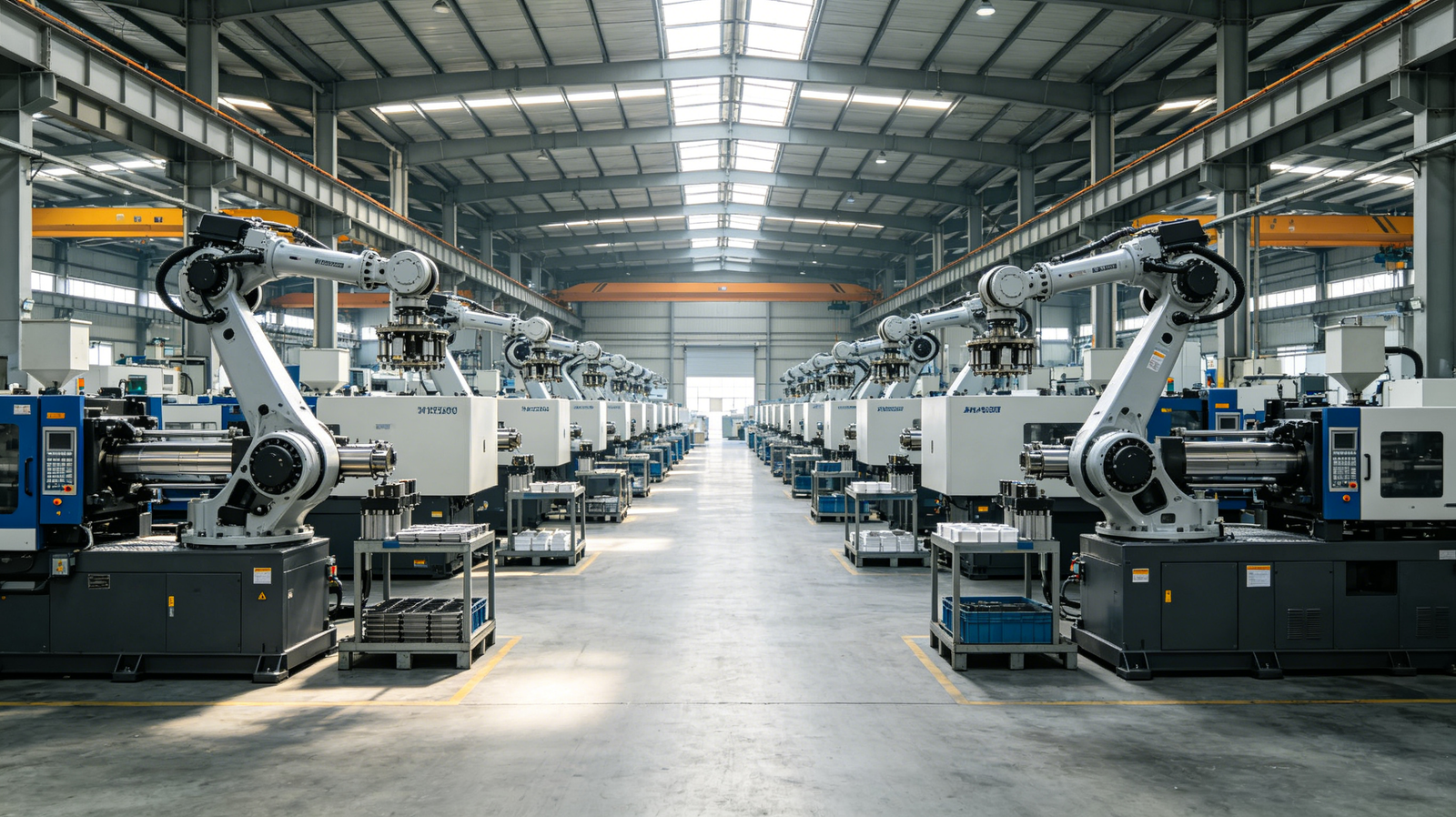
A supplier saying “we can expedite it” does not automatically mean the order can be completed on time. Buyers should verify the supplier’s actual production plan, tooling status, material readiness, machine availability, staffing, and inspection arrangements. A verifiable production schedule is more valuable than an unsupported promise of fast delivery. When Xiamen RuiCheng schedules an urgent project, we consider mold readiness, machine compatibility, order quantity, production capacity, and quality requirements before confirming a realistic delivery date.
Verify Mold Status: If a new mold has not been completed, simply adding production shifts cannot solve the overall project delay.
Check Material Availability: Special colors, engineering plastics, flame-retardant grades, and customized compounds may require additional sourcing time.
Confirm Machine Capacity: Machine tonnage, mold dimensions, and production requirements must be compatible before an alternative machine can be used.
Protect Quality Milestones: FAI, dimensional inspection, appearance inspection, and functional validation should retain sufficient time to prevent delivery pressure from creating batch-quality problems.
📋 A reliable expedited supplier should demonstrate how the promised delivery date will be achieved, not merely state that it is possible.
Expedited Production Options for Custom Injection Molding
| Option | Best Use Case | Lead-Time Benefit | Main Risk |
|---|---|---|---|
| Standard Scheduling | Routine orders | Most predictable | Limited schedule flexibility |
| Priority Scheduling | Moderately urgent projects | Moderate reduction | Potential additional cost |
| Parallel Production | Projects with multiple independent stages | Significant reduction | Higher coordination requirements |
| Emergency Expediting | Critical launch or delivery deadlines | Maximum compression | Higher cost and quality pressure |
If your customized injection molding project is already approaching a critical delivery deadline, Xiamen RuiCheng can evaluate the tooling, material, order quantity, production capacity, and target date to determine a practical expedited manufacturing plan. contact us to discuss your project requirements.
How Can Buyers Build a More Reliable Expedited Production Plan?
The most effective way to improve expedited production is to optimize the entire project decision path rather than simply reducing machine running time. When tooling development, material preparation, production scheduling, inspection, and logistics are coordinated earlier, some activities can be performed in parallel instead of waiting for each previous step to finish. For long-term manufacturing programs, safety stock, reserved production capacity, standardized quality documentation, and pre-approved materials can further improve emergency response speed. Building an expedited production mechanism before an urgent order occurs is usually more effective than negotiating under pressure after a delay has already happened.
1.Confirm Tooling Early: Review mold structure, steel selection, expected trial dates, and potential modification requirements during the initial development stage.
2.Prepare Materials Early: Confirm sourcing lead times for special materials, colors, and grades before the production deadline becomes critical.
3.Run Validation in Parallel: Where technically appropriate, dimensional inspection, appearance checks, documentation, and production preparation can be coordinated simultaneously.
4.Establish an Emergency Process: Long-term customers can define expedited-order procedures, production priorities, communication responsibilities, and escalation points in advance.
Frequently Asked Questions
Question 1: What should we check before requesting expedited production?
Answer: Before requesting an accelerated schedule, provide the supplier with the product drawing, material specification, order quantity, mold status, target delivery date, packaging requirements, and required quality documentation. This allows the manufacturer to identify the actual bottleneck instead of estimating the schedule from incomplete information.
Question 2: How much does expedited injection molding usually cost?
Answer: There is no universal expedited-production surcharge because the additional cost depends on how much lead time must be removed and which resources need to be added or rescheduled. The supplier should identify whether the additional cost comes from overtime, machine changes, material handling, additional inspection, tooling modifications, or expedited transportation.
Question 3: Can an injection molding supplier guarantee an extremely short delivery time?
Answer: A reliable supplier should first verify tooling readiness, material availability, machine capacity, production quantity, inspection requirements, and logistics before confirming a delivery date. Buyers should request a milestone-based production schedule rather than relying only on a final delivery promise.
Question 4: What happens if expedited production creates quality problems?
Answer: Expediting should not eliminate critical quality-control procedures. The supplier should maintain the agreed dimensional, material, functional, and appearance requirements while identifying administrative delays, waiting periods, and production activities that can safely be compressed.
Question 5: Can a customized injection molding project be expedited from the beginning?
Answer: Yes. Customers can provide complete drawings, material requirements, estimated quantities, quality specifications, and target launch dates at the beginning of the project. Xiamen RuiCheng can then evaluate tooling development, material preparation, production scheduling, inspection requirements, and logistics together to create a more realistic expedited manufacturing plan.
Conclusion
Negotiating expedited production for customized injection molded products is fundamentally a coordination challenge involving tooling, materials, production capacity, quality control, and logistics. Buyers who provide complete project information and clearly define their delivery priority give manufacturers more opportunities to create practical solutions. The best expedited production strategy is not simply making products faster, but removing unnecessary waiting time while protecting critical quality requirements. From mold development through mass production, Xiamen RuiCheng focuses on identifying production bottlenecks and developing realistic manufacturing schedules around the customer’s actual project deadline.
For expert assistance in implementing expedited custom injection molding production for your project, visit our resource center or contact us. Let’s help you scale up your manufacturing with precision and efficiency!