Introduction
Agricultural equipment operates outdoors under high loads and complex environmental conditions for extended periods. Parts must not only withstand mechanical impact but also resist ultraviolet exposure, moisture, chemical media, and temperature fluctuations. Compared with traditional metal materials, engineering plastics are becoming an increasingly important choice for agricultural machinery manufacturers seeking to optimize part performance and reduce maintenance costs.Choosing the right engineering plastics can help agricultural equipment manufacturers extend part service life while reducing long-term operational risks.
For product development engineers, material selection is not simply about comparing strength parameters. It requires comprehensive evaluation based on part function, operating environment, and manufacturing process. As a professional custom manufacturing supplier, Xiamen Ruicheng provides reliable plastic part solutions for global agricultural equipment customers through precision injection molding, material evaluation, and engineering support.Evaluating material compatibility during the design stage can prevent cracking, deformation, and performance degradation after mass production.
Why Does Engineering Plastic Selection Affect Agricultural Equipment Part Performance?
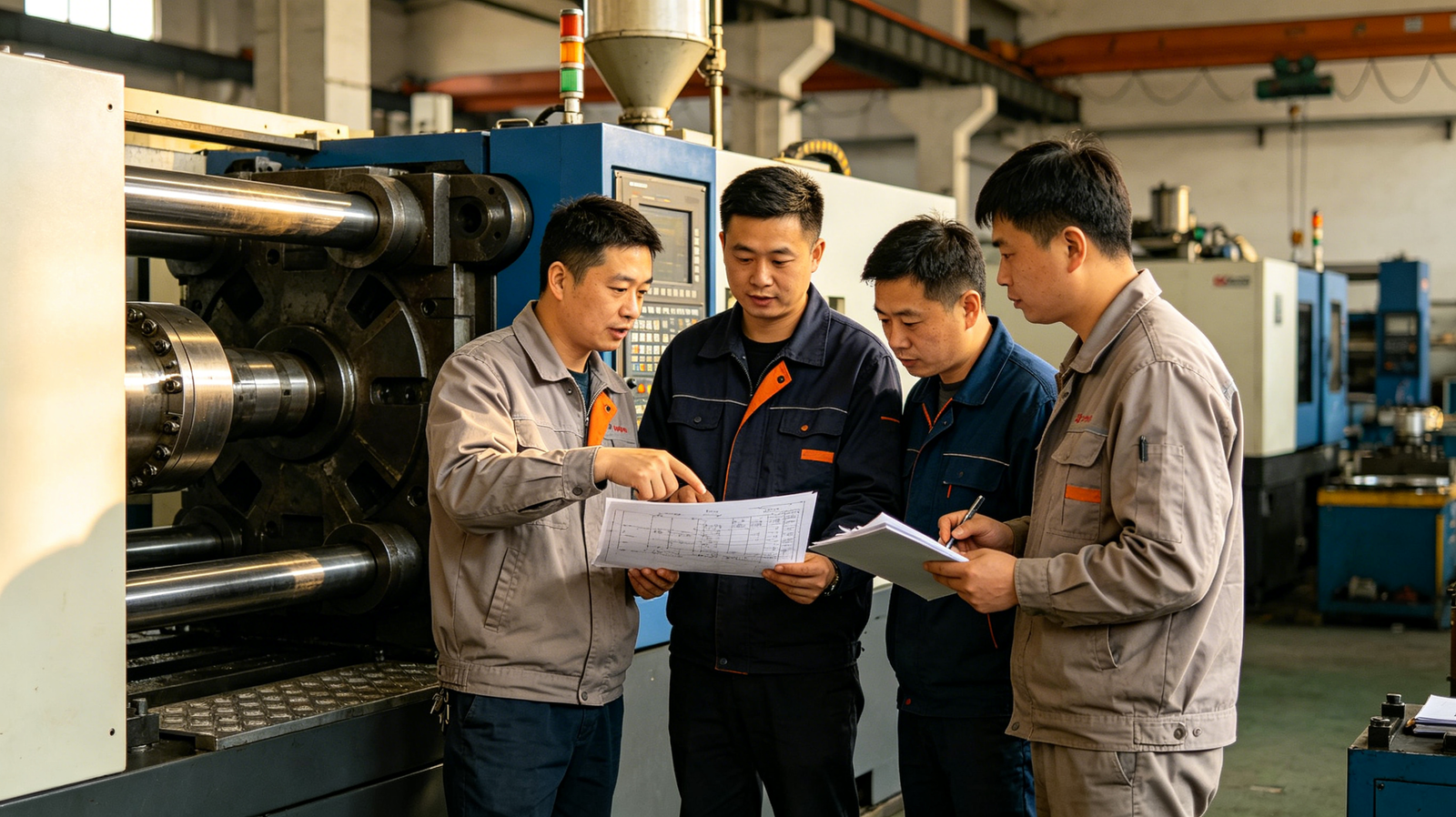
Plastic components in agricultural equipment are commonly used in protective covers, connectors, gears, bushings, sensor housings, and control system components. Therefore, material performance directly affects equipment reliability. When selecting engineering plastics, factors such as wear resistance, weather resistance, impact strength, and dimensional stability must be considered rather than focusing only on material cost. Engineering plastics suitable for agricultural environments must meet the requirements of mechanical performance, environmental adaptability, and long-term stability simultaneously.During agricultural equipment part development, Xiamen Ruicheng provides material analysis, DFM recommendations, and injection molding optimization based on customer application scenarios to help reduce trial-and-error costs.
Material Durability: Agricultural equipment parts must withstand soil, vibration, and continuous friction. Therefore, wear resistance and impact strength determine service life.
Environmental Adaptability: Outdoor agricultural equipment is exposed to sunlight and rain for long periods, requiring materials with excellent weather resistance and aging resistance.
Structural Compatibility: Different part structures require different levels of rigidity, toughness, and heat deformation resistance. Material selection must align with design objectives.
Manufacturing Stability: Engineering plastics affect not only final product performance but also dimensional control and production consistency during injection molding.
🌱 Engineering plastic selection should start from the actual working environment of agricultural equipment rather than relying on a single material parameter.
How to Select Suitable Materials Based on Agricultural Equipment Operating Conditions?
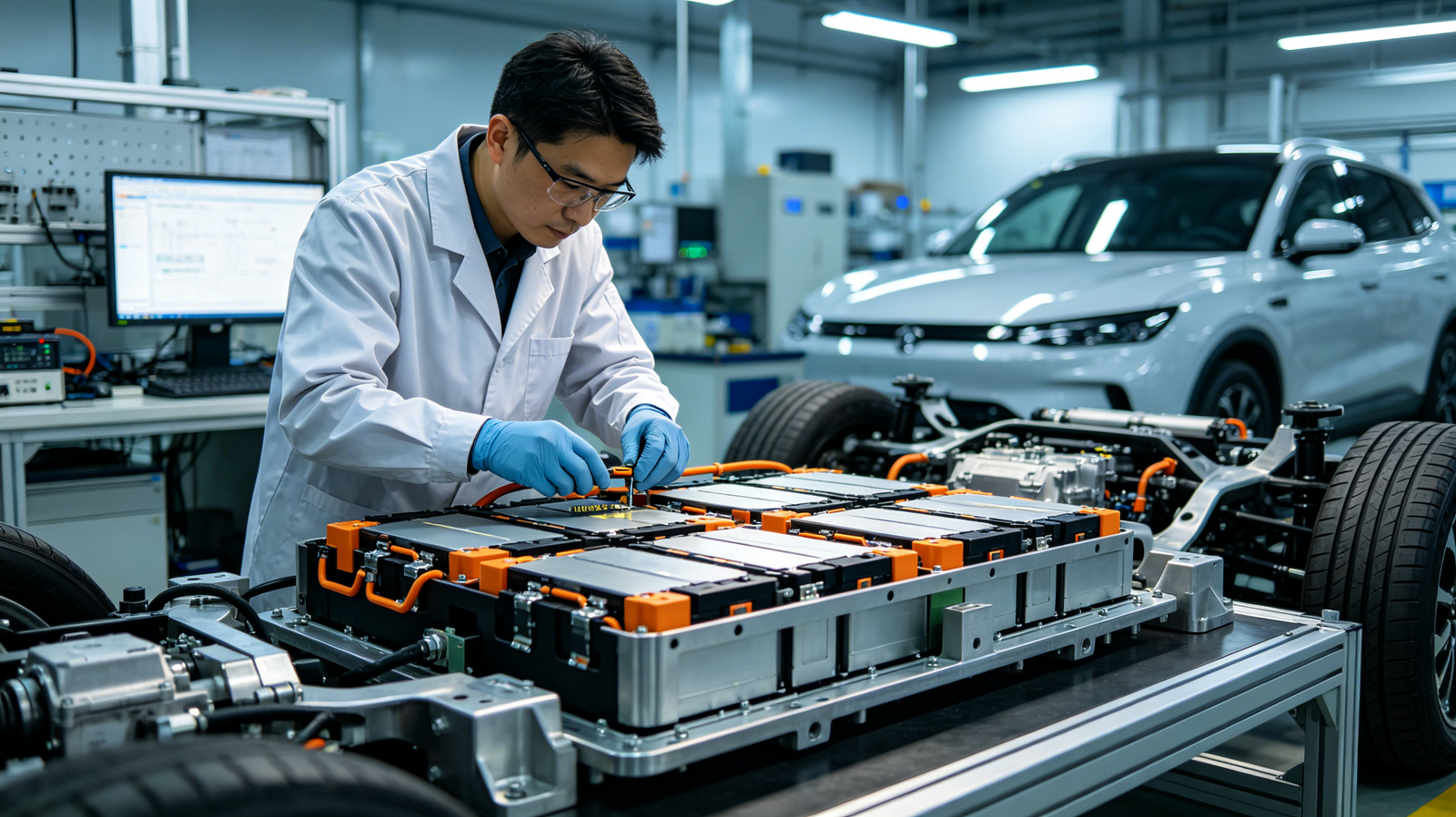
Agricultural equipment operates in complex environments, and different application areas have significantly different material requirements. For example, engine-adjacent components require heat resistance, outdoor housings require UV resistance, while transmission components focus more on wear resistance and low friction performance. Xiamen Ruicheng typically evaluates operating conditions provided by customers, including temperature range, load conditions, contact media, and service cycles, to recommend better-matched material solutions. Material selection should be based on actual operating conditions rather than simply choosing the highest-performance material available.
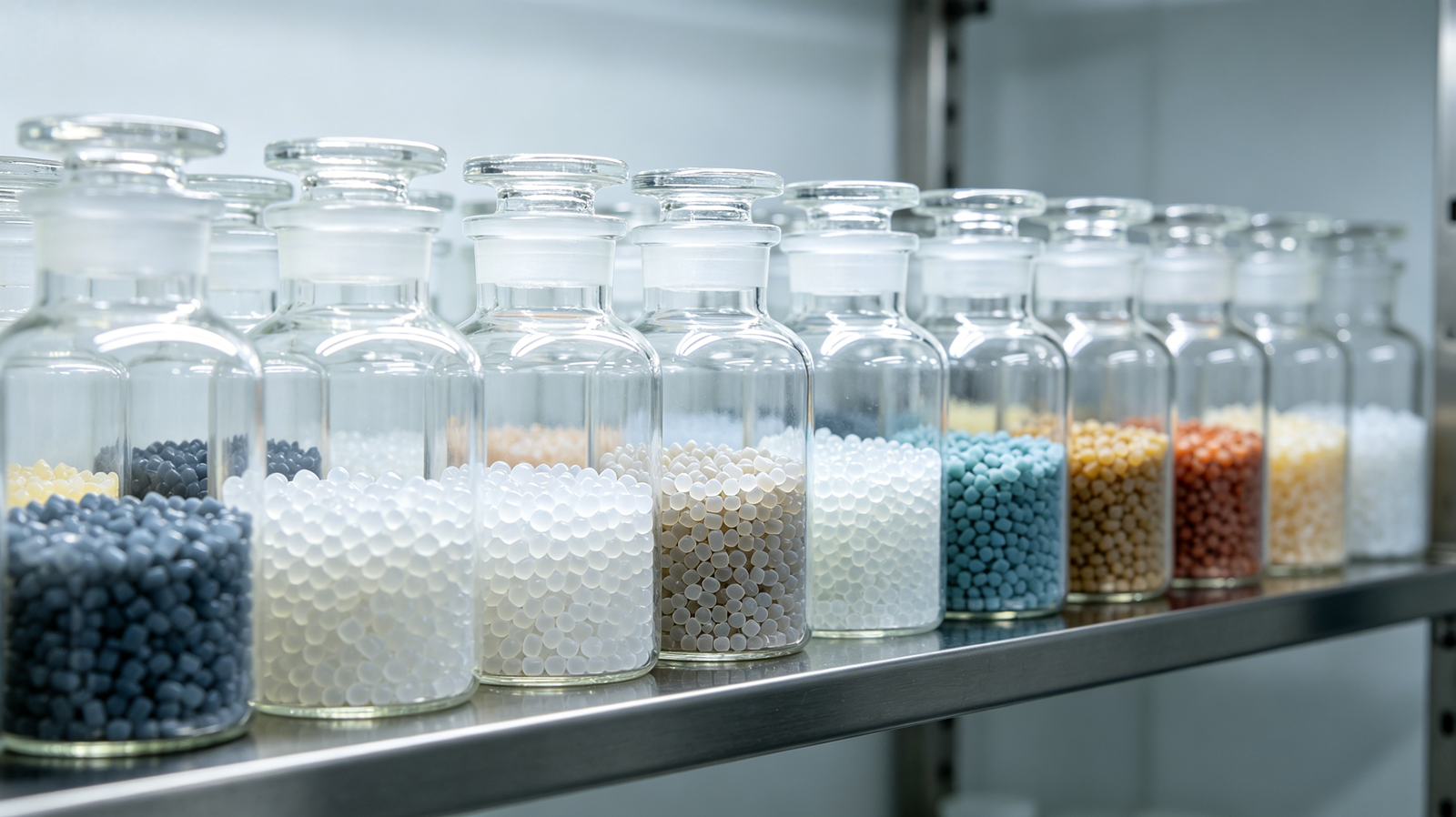
High-Strength Structural Parts: PA66 and POM engineering plastics are suitable for agricultural equipment parts requiring mechanical load capacity and long-term friction resistance.
Outdoor Protective Components: PC and ASA materials are more suitable for equipment housings requiring weather resistance and impact resistance.
Chemical-Resistant Parts: For environments involving pesticides, lubricants, and other chemicals, materials with excellent chemical stability can be selected.
Lightweight Design Requirements: Engineering plastics help equipment manufacturers reduce weight while maintaining sufficient structural strength.
🌾 Proper material and application matching can help agricultural equipment manufacturers reduce maintenance frequency and improve product competitiveness.
How to Ensure Engineering Plastic Parts Meet Mass Production Requirements?
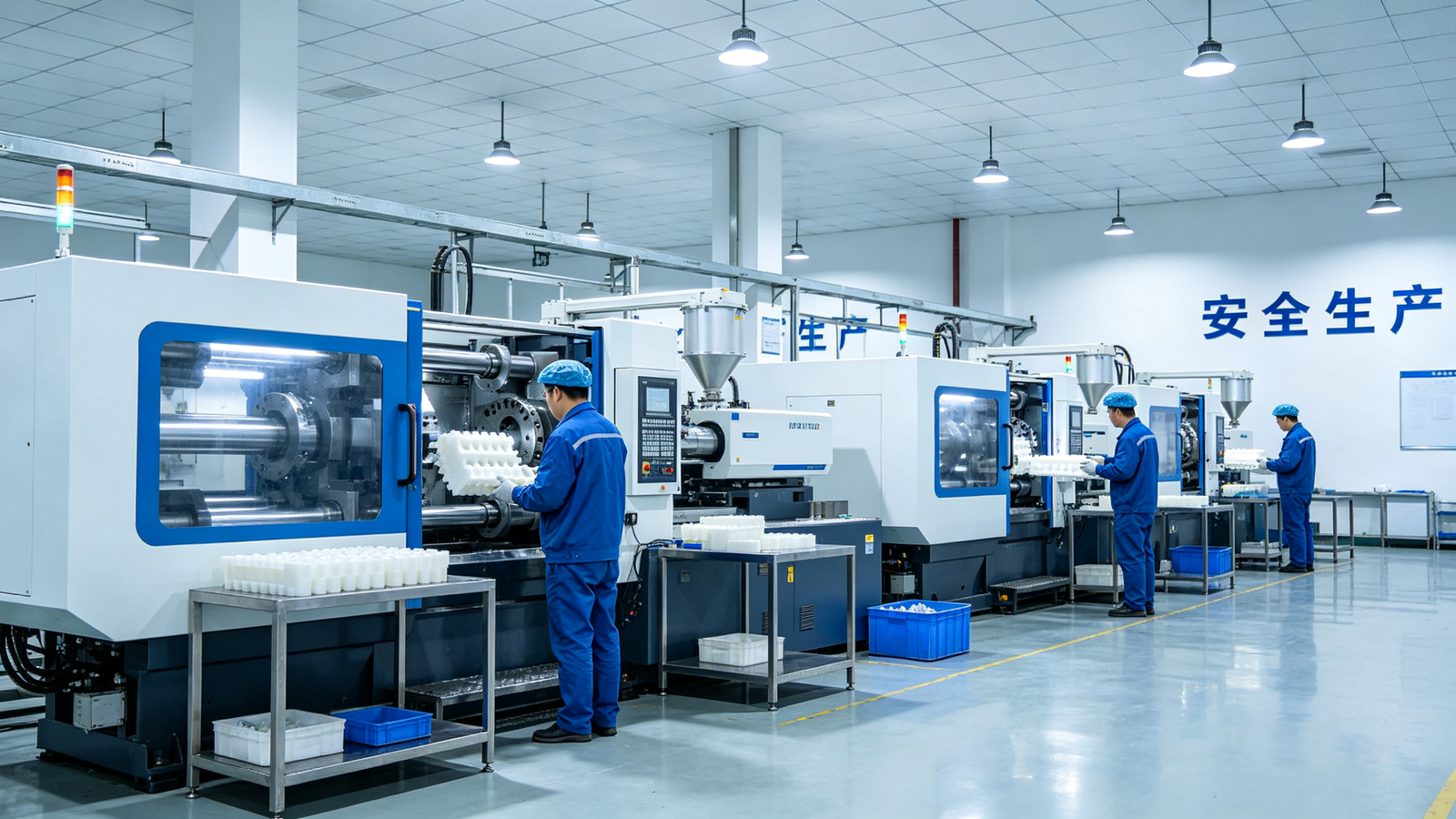
During the transition from prototypes to mass production, engineering plastic parts can be affected by material batches, mold design, injection parameters, and environmental changes. Therefore, supplier manufacturing capability is equally important. Xiamen Ruicheng uses ISO quality systems, precision injection molding equipment, and process control methods to perform dimensional inspection, performance validation, and production stability management for agricultural equipment plastic parts. A reliable material solution must be combined with stable manufacturing capabilities to achieve successful commercial production.
Material Validation Process: Material data analysis and practical testing are used to confirm that plastic performance meets equipment application requirements.
Mold Development Control: DFM analysis is used to optimize gate design, cooling systems, and structural design to improve production stability.
Quality Inspection System: Dimensional inspection, functional testing, and process monitoring help reduce mass production quality risks.
Supply Chain Support Capability: One-stop manufacturing capabilities reduce uncertainties caused by coordination among multiple suppliers.
🔧 When selecting suppliers, agricultural equipment manufacturers should evaluate material capability, engineering capability, and mass production assurance simultaneously.
Comparison of Different Engineering Plastics in Agricultural Equipment Parts
| Material Type | Main Advantages | Suitable Parts | Application Characteristics |
|---|---|---|---|
| PA66 | High strength and wear resistance | Gears, bushings | Suitable for high-load environments |
| POM | Low friction and stable performance | Transmission components | Suitable for precision moving parts |
| PC | High impact strength and transparency | Protective covers | Suitable for external structures |
| ASA | Excellent weather resistance | Housing components | Suitable for long-term outdoor use |
If you are developing agricultural equipment plastic parts requiring long-term stable operation, Xiamen Ruicheng can provide material evaluation and manufacturing solutions based on your application environment. contact us to receive professional engineering support.
How Can Engineering Plastic Selection Support Future Agricultural Equipment Upgrades?
As agricultural equipment moves toward automation and intelligence, part designs are evolving toward lightweight structures, higher reliability, and more complex geometries. Engineering plastics can replace certain metal components while enabling complex structural integration through injection molding, improving product development efficiency. When serving global customers, Xiamen Ruicheng provides complete manufacturing support from prototype development and small-batch validation to mass production based on product lifecycle requirements. An excellent material solution not only solves current challenges but also helps products adapt to future technological upgrades.
1.Reduce Equipment Weight: Engineering plastics can reduce the weight of certain metal structures, improving transportation and operation efficiency.
2.Increase Design Flexibility: Injection molding supports complex geometric designs and improves part integration capability.
3.Reduce Maintenance Costs: Wear-resistant and corrosion-resistant materials can extend replacement cycles.
4.Support Rapid Iteration: Professional manufacturing suppliers can help engineering teams complete design validation faster.
FAQ: Common Questions
Q1: Why do agricultural equipment parts need engineering plastics?
Answer: Compared with standard plastics, engineering plastics provide better strength, heat resistance, and wear resistance, making them suitable for long-term agricultural equipment operation. Specific material selection should be evaluated based on part loads, temperature range, and working environment.
Q2: What information is required when purchasing custom agricultural equipment plastic parts?
Answer: Customers usually need to provide part drawings, material requirements, operating environment, order quantity, and performance standards. The Xiamen Ruicheng engineering team will perform DFM analysis and manufacturing solution evaluation based on this information.
Q3: How are engineering plastic parts produced for different order quantities?
Answer: Small-batch projects are typically used for product validation, while mass production requires greater attention to mold life, production stability, and quality control systems. The specific solution will be developed according to project requirements.
Q4: How are quality issues handled if plastic parts fail?
Answer: Xiamen Ruicheng uses quality inspection processes to identify root causes and analyzes material, mold, and production data to provide corresponding improvement solutions.
Q5: Can materials be customized for special agricultural environments?
Answer: Yes. For high-temperature, outdoor, chemical exposure, or high-wear environments, customized solutions can be provided through material modification and structural optimization.
Conclusion
Selecting engineering plastics for agricultural equipment parts requires comprehensive consideration of material performance, operating environment, manufacturing processes, and long-term reliability rather than simply comparing material costs. Xiamen Ruicheng helps agricultural equipment companies reduce development risks and improve product stability through professional injection molding capabilities and engineering support systems.The right material decision can become an important foundation for the long-term competitiveness of agricultural equipment products.For companies seeking improved part performance and supply chain stability, cooperating with manufacturing partners experienced in material analysis and mass production is an essential step toward achieving high-quality manufacturing.
For expert assistance in implementing engineering plastic solutions for your production needs, visit our resource center or contact us. Let’s help you scale up your manufacturing with precision and efficiency!