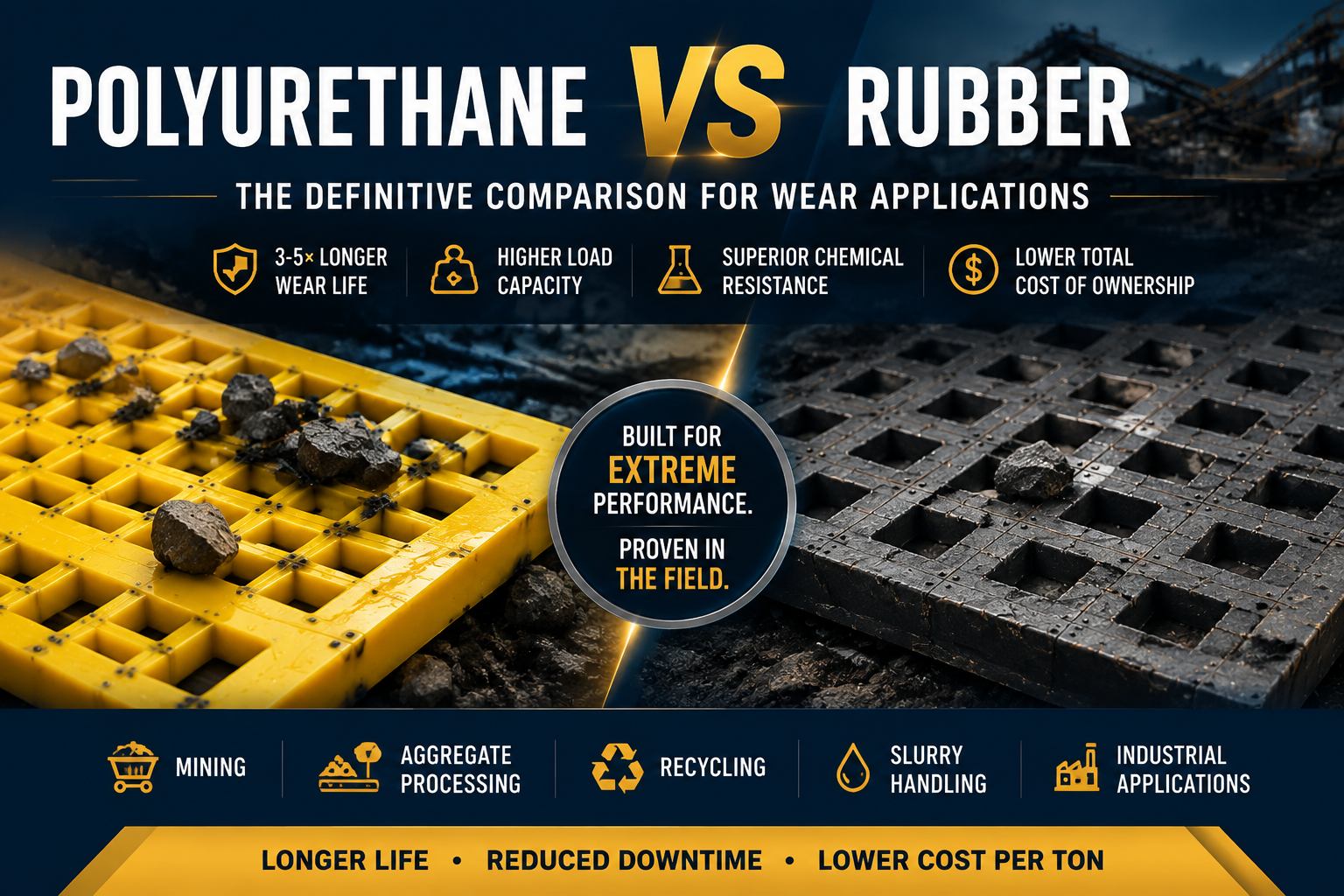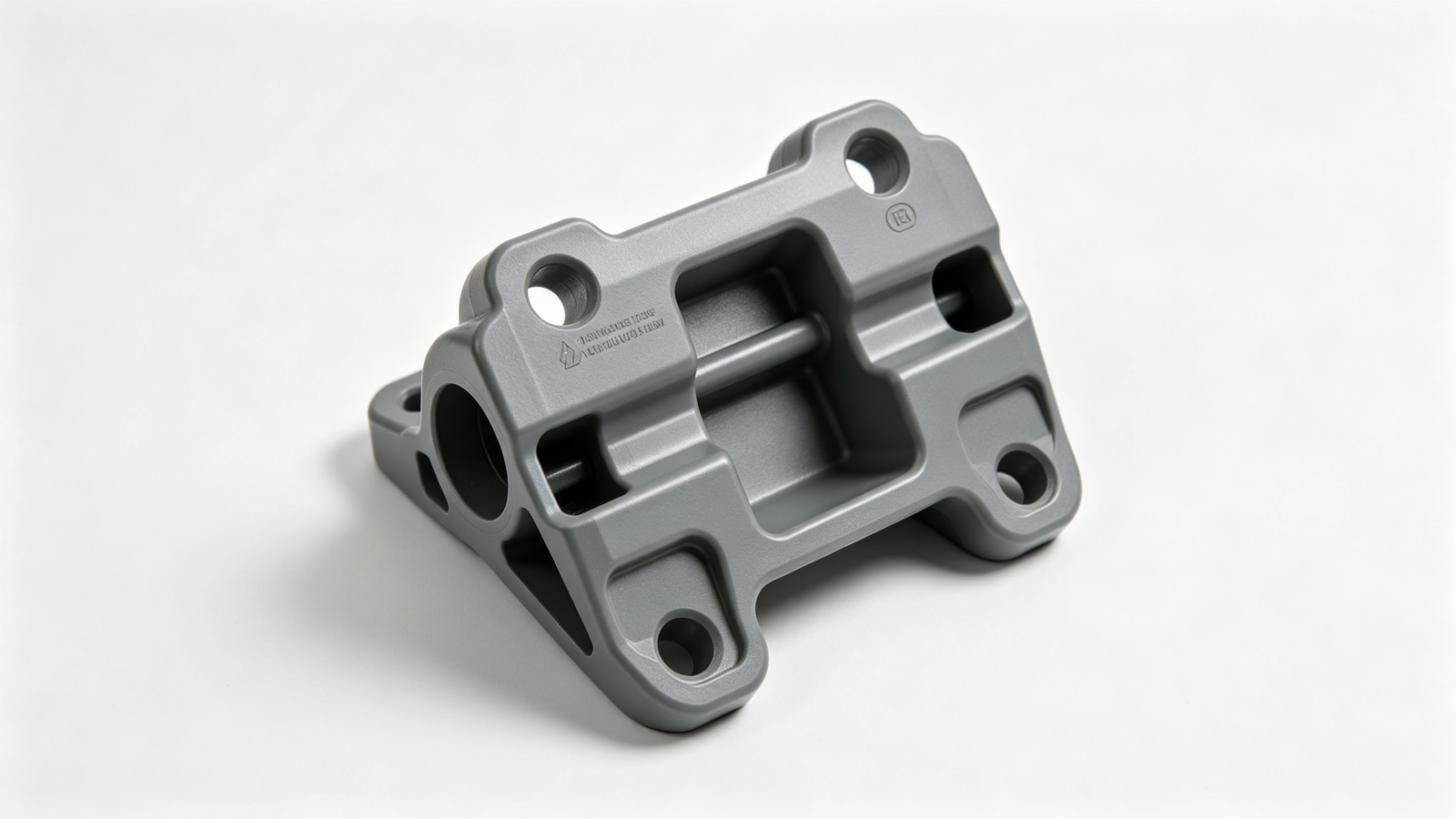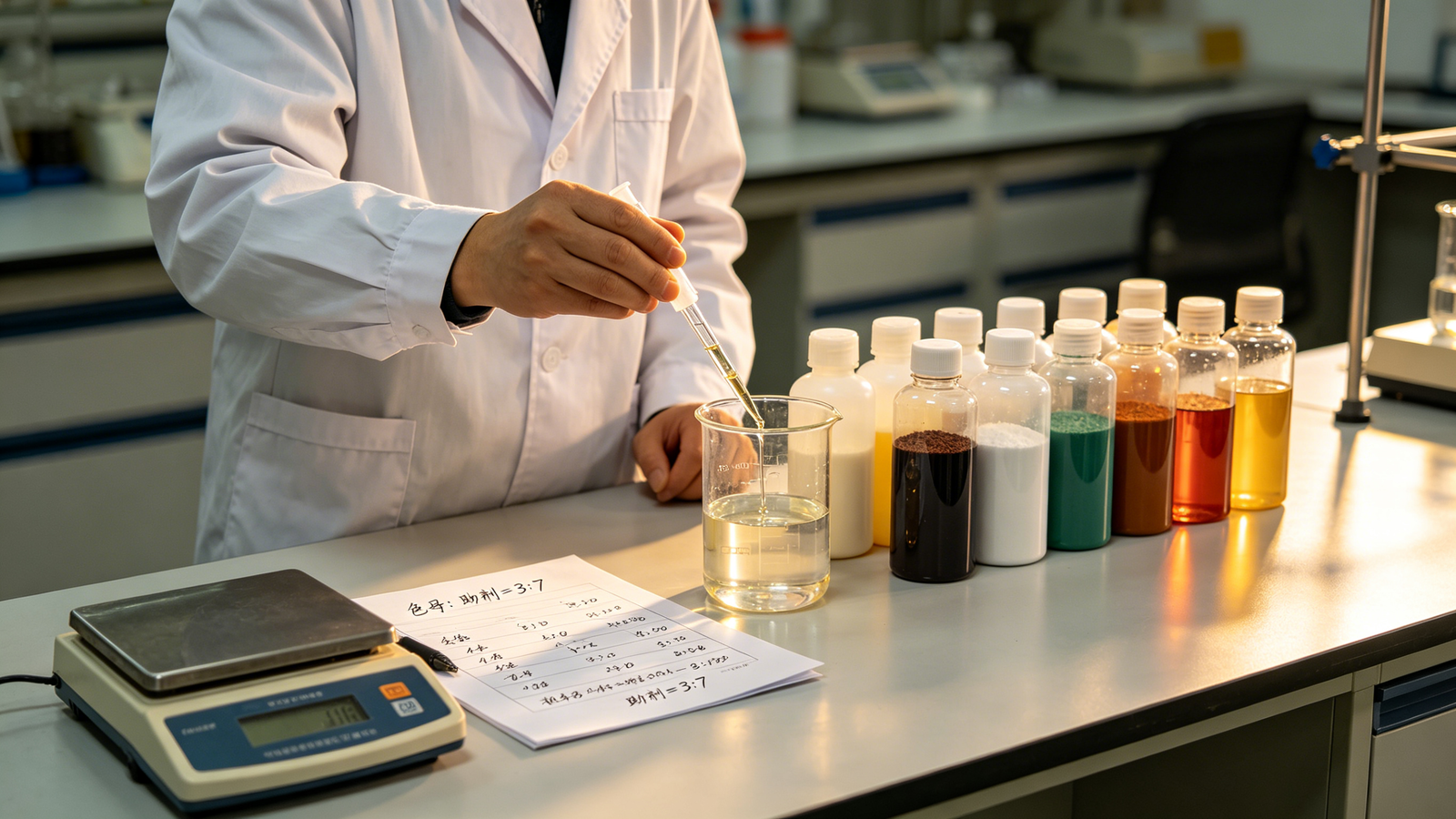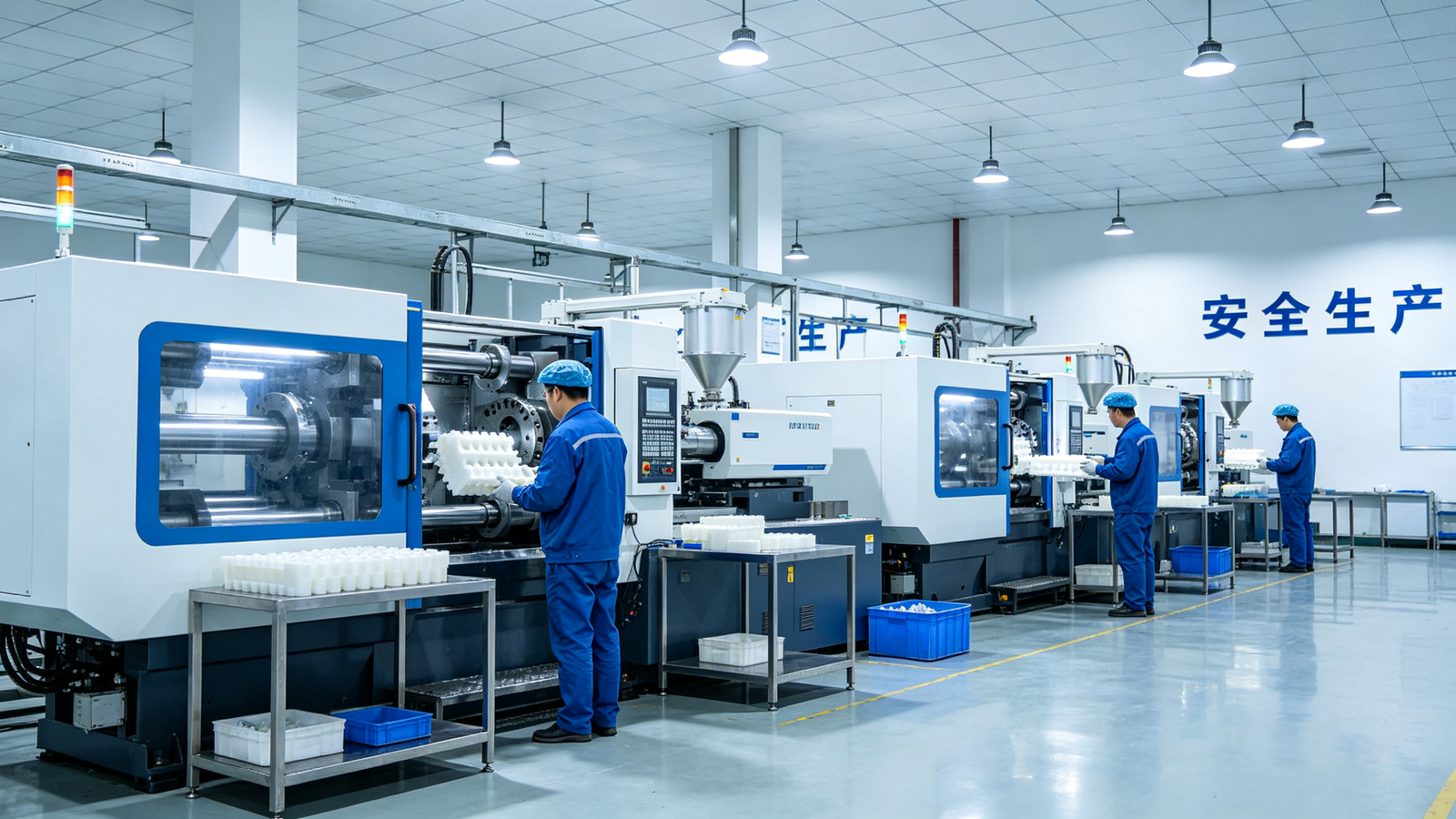
When engineers compare polyurethane and rubber for industrial wear applications, the choice is not always obvious. Both materials offer elasticity and impact resistance, but their performance differs significantly in key areas such as wear life, load capacity, chemical resistance, and total cost of ownership. This guide provides a direct comparison of polyurethane vs rubber across the properties that matter most, helping you make an informed material selection for your specific application.
The Core Difference Between Polyurethane and Rubber
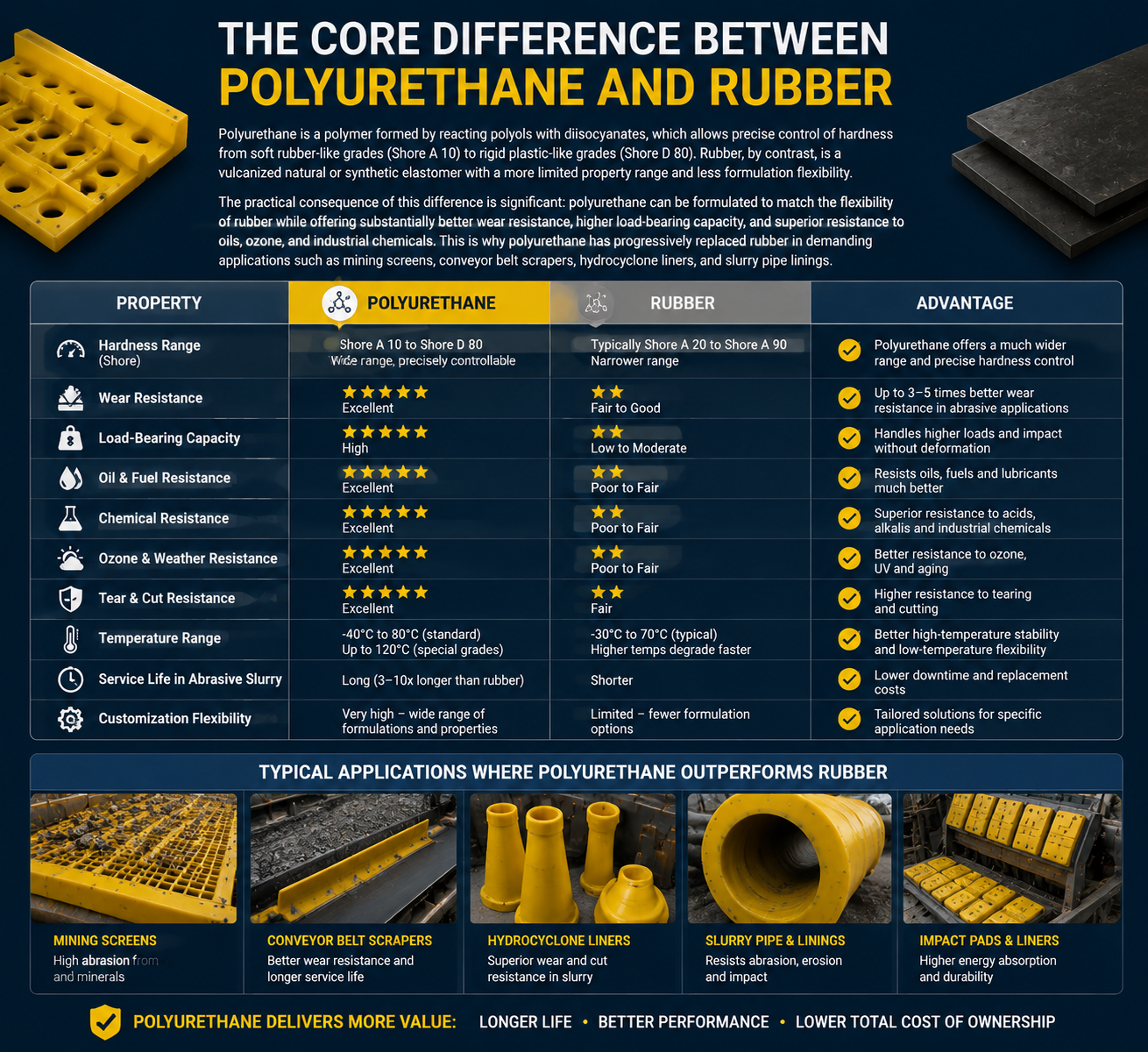
Polyurethane is a polymer formed by reacting polyols with diisocyanates, which allows precise control of hardness from soft rubber-like grades (Shore A 10) to rigid plastic-like grades (Shore D 80). Rubber, by contrast, is a vulcanized natural or synthetic elastomer with a more limited property range and less formulation flexibility.
The practical consequence of this difference is significant: polyurethane can be formulated to match the flexibility of rubber while offering substantially better wear resistance, higher load-bearing capacity, and superior resistance to oils, ozone, and industrial chemicals. This is why polyurethane has progressively replaced rubber in demanding applications such as mining screens, conveyor belt scrapers, hydrocyclone liners, and slurry pipe linings.
Wear Resistance: The Decisive Factor
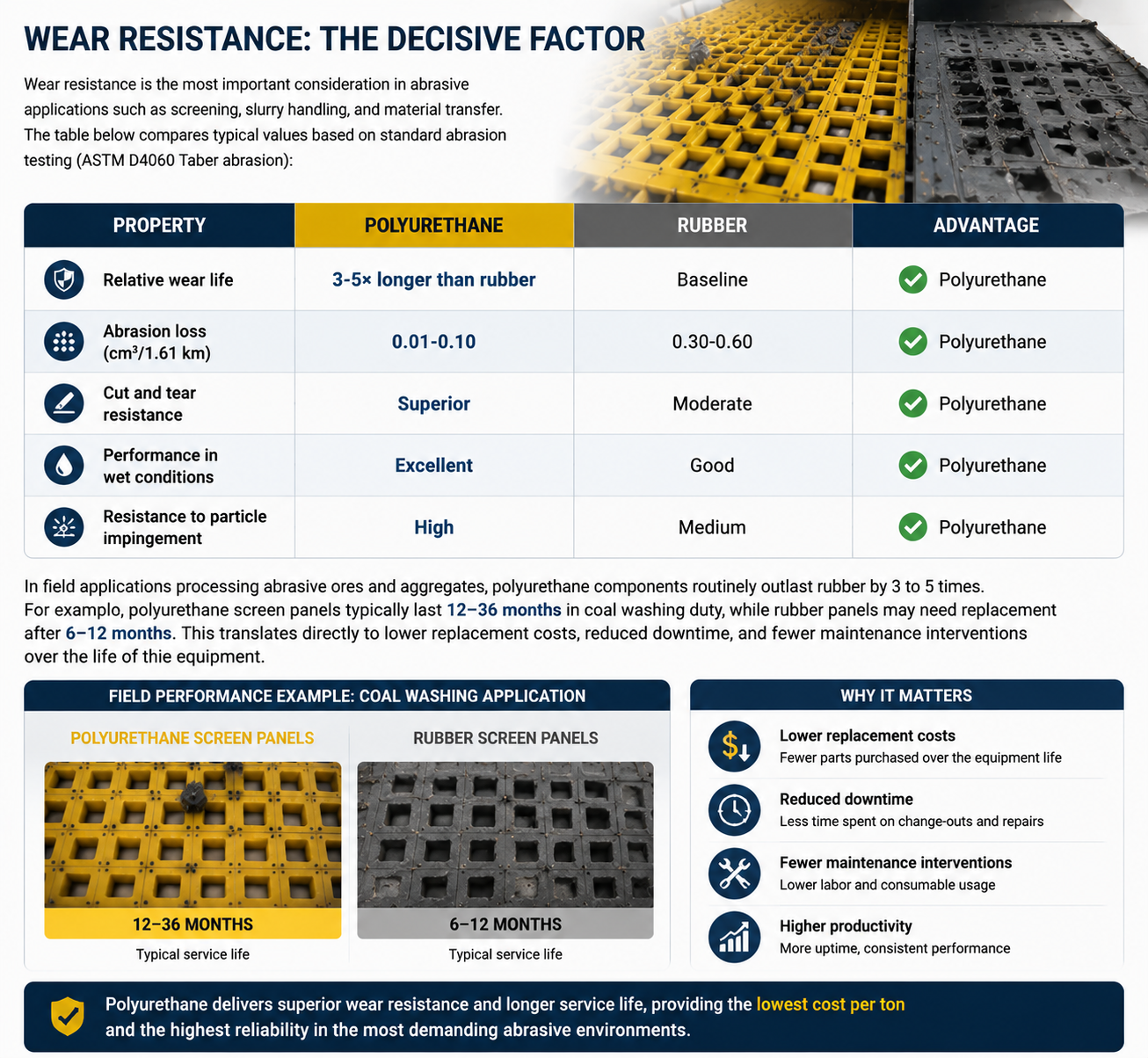
Wear resistance is the most important consideration in abrasive applications such as screening, slurry handling, and material transfer. The table below compares typical values based on standard abrasion testing (ASTM D4060 Taber abrasion):
| Property | Polyurethane | Rubber | Advantage |
|---|---|---|---|
| Relative wear life | 3-5× longer than rubber | Baseline | Polyurethane |
| Abrasion loss (cm³/1.61 km) | 0.01-0.10 | 0.30-0.60 | Polyurethane |
| Cut and tear resistance | Superior | Moderate | Polyurethane |
| Performance in wet conditions | Excellent | Good | Polyurethane |
| Resistance to particle impingement | High | Medium | Polyurethane |
In field applications processing abrasive ores and aggregates, polyurethane components routinely outlast rubber by 3 to 5 times. For example, polyurethane screen panels typically last 12-36 months in coal washing duty, while rubber panels may need replacement after 6-12 months. This translates directly to lower replacement costs, reduced downtime, and fewer maintenance interventions over the life of the equipment.
Mechanical Strength and Load Capacity
At equivalent hardness, polyurethane exhibits higher tensile strength and load-bearing capacity than rubber:
| Property | Polyurethane | Rubber |
|---|---|---|
| Tensile strength | 30-60 MPa | 10-25 MPa |
| Tear strength | 80-150 kN/m | 30-80 kN/m |
| Load capacity | Higher at same hardness | Lower |
| Elastic recovery | Excellent | Excellent |
| Compression set | Low (good recovery) | Variable |
The higher strength of polyurethane allows thinner sections to carry the same load, reducing component weight and material cost while maintaining performance. This is particularly valuable in applications like conveyor belt cleaners, where blade stiffness and tear resistance directly affect cleaning efficiency and service life.
Chemical and Environmental Resistance
Both materials behave differently when exposed to industrial fluids and environmental conditions, and this difference often determines which material is suitable for a given application:
| Exposure | Polyurethane | Rubber |
|---|---|---|
| Oils and fuels | Minimal swelling | Swells, degrades |
| Ozone and UV | Excellent resistance | Cracks over time |
| Water and moisture | Minimal absorption | Absorbs moisture |
| Acids and alkalis | Good (grade dependent) | Variable |
| High temperature | Up to 70-80°C continuous | Up to 100°C (specific grades) |
| Hydrolysis resistance | Grade dependent | Generally good |
Polyurethane's non-polar molecular structure resists the adsorption of ions and scale-forming compounds, making it particularly effective in slurry handling applications where scaling and chemical attack are common. However, it is important to note that standard polyester-based polyurethane grades can be susceptible to hydrolysis in hot, wet environments — for such conditions, polyether-based grades should be specified.
Cost Comparison: Total Cost of Ownership
While polyurethane components typically cost more upfront than rubber, the total cost of ownership is usually significantly lower:
| Cost Factor | Polyurethane | Rubber |
|---|---|---|
| Initial price | Higher (1.5-3× rubber) | Lower |
| Service life | 3-5× longer | Baseline |
| Replacement frequency | Less frequent | More frequent |
| Downtime cost | Lower | Higher |
| Cost per ton processed | 30-50% lower | Baseline |
For operations that run continuously, the reduced downtime alone often justifies the higher initial investment in polyurethane components. When calculating the real cost, buyers should always compare cost per ton of material processed or cost per operating hour, rather than the initial purchase price.
When Rubber Is Still the Right Choice
Rubber remains competitive in specific applications where its unique properties are required:
- Very high-temperature service above 80°C continuous operation
- Applications requiring extreme softness below Shore A 30
- Low-abrasion duties where initial cost is the only consideration
- Bonding to steel in certain impact absorption applications
- Applications requiring very high rebound resilience
For most other wear applications, polyurethane delivers superior performance and lower lifetime cost, which is why it has become the material of choice in modern mining and material handling operations.
Conclusion
Polyurethane consistently outperforms rubber in wear resistance, mechanical strength, chemical resistance, and total cost of ownership for industrial applications. While the initial purchase price is higher, the 3-5 times longer service life and reduced downtime make polyurethane the more economical choice for abrasive and high-wear duties.
With experience in polyurethane material selection and application engineering, PlasticXperts helps industrial customers choose the right material for their specific operating conditions. Contact our engineering team to discuss your application and receive a professional material recommendation.
FAQ
How many times longer does polyurethane last than rubber?
Polyurethane typically lasts 3 to 5 times longer than rubber in abrasive applications. In field conditions processing ores and aggregates, polyurethane components such as screen panels and scraper blades have demonstrated service life of 12-36 months compared to 6-12 months for equivalent rubber components.
Is polyurethane more expensive than rubber?
The initial purchase price of polyurethane is typically 1.5 to 3 times higher than rubber. However, because polyurethane lasts 3-5 times longer, the total cost of ownership is usually 30-50% lower when calculated on a cost-per-ton or cost-per-operating-hour basis.
Can polyurethane replace rubber in all applications?
No. Rubber remains the better choice for very high-temperature service above 80°C, extremely soft applications below Shore A 30, and low-abrasion duties where initial cost is the primary concern. For most wear-intensive applications, however, polyurethane is the superior choice.
Is polyurethane resistant to oil and chemicals?
Yes. Polyurethane has excellent resistance to oils, fuels, and ozone, with minimal swelling compared to rubber. Its non-polar molecular structure also resists scale formation in slurry applications. However, grade selection matters — polyether-based grades should be chosen for hot, humid environments to avoid hydrolysis.
What hardness range is available in polyurethane?
Polyurethane can be formulated from Shore A 10 (soft, rubber-like) to Shore D 80 (rigid, plastic-like). The most common industrial grades are Shore A 85-95, which offer an excellent balance of wear resistance and flexibility for applications like conveyor belt cleaners and screen panels.
How do I choose between polyurethane and rubber for my application?
Consider four factors: operating temperature (polyurethane suits up to 70-80°C), abrasiveness of the material handled (polyurethane wins), chemical exposure (polyurethane resists oils), and total cost of ownership (polyurethane is cheaper long-term). For a detailed recommendation, contact our engineering team with your application details.