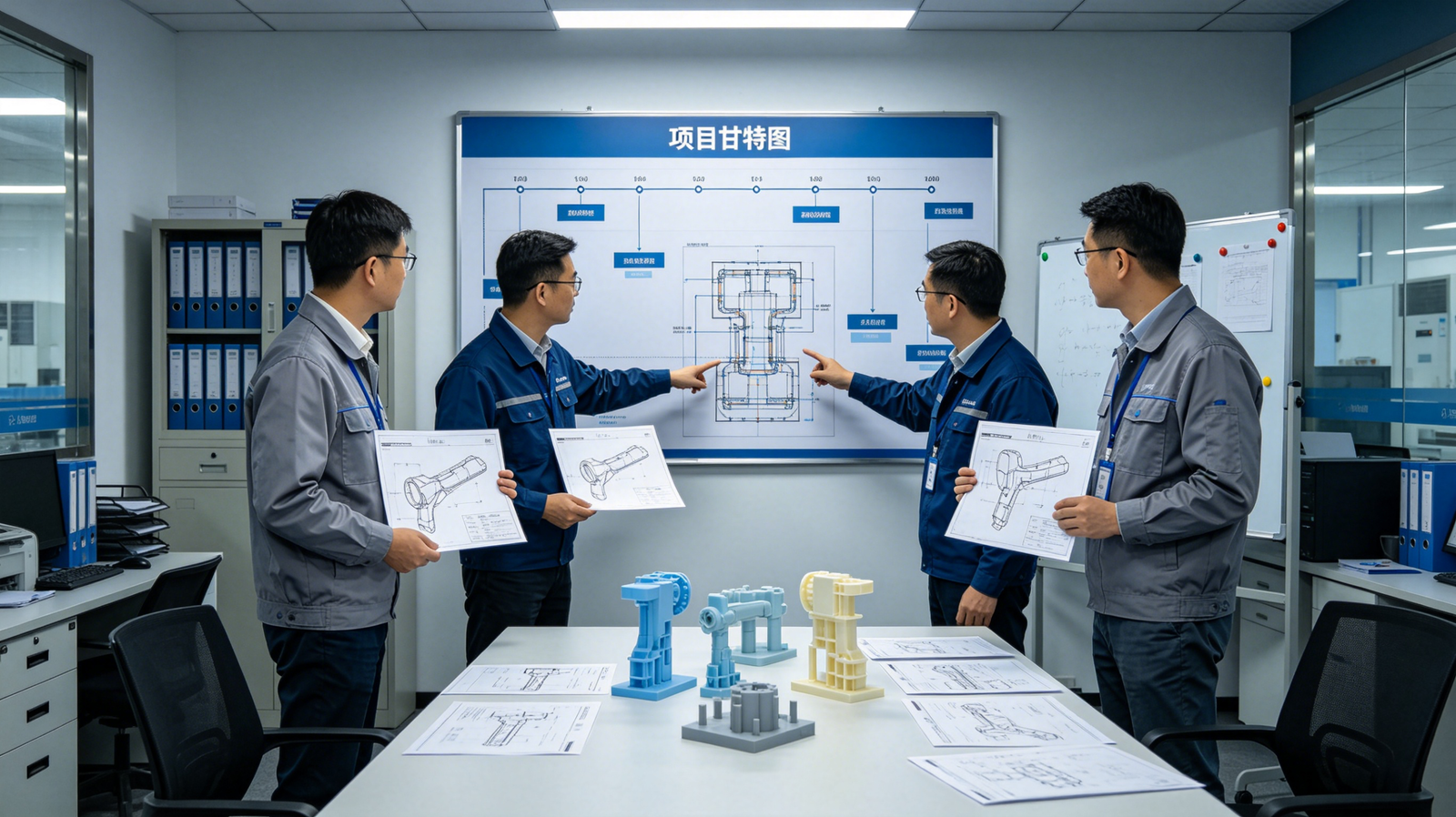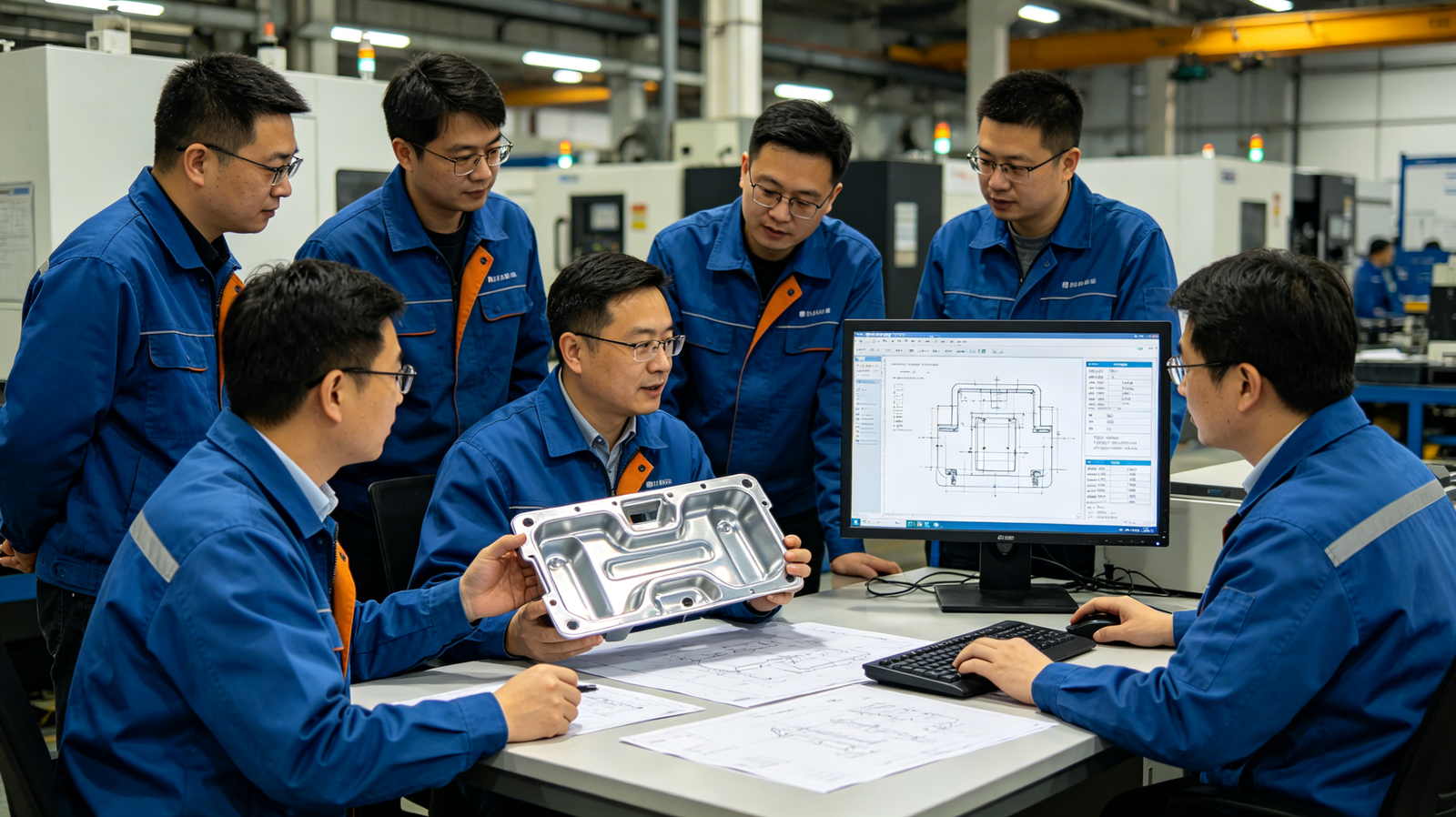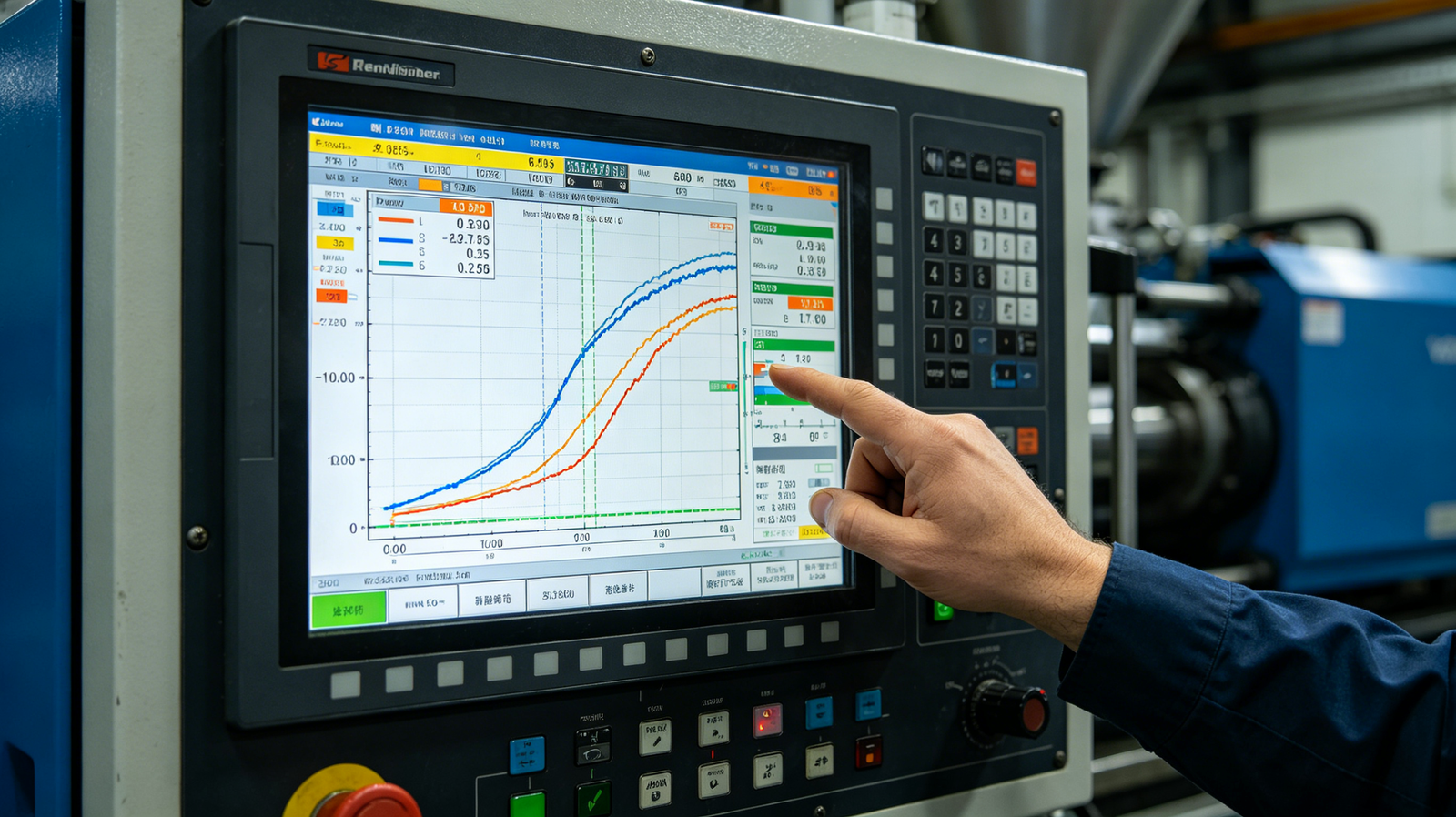
The automotive industry is one of the most demanding application fields for plastic injection molding. With the average modern vehicle containing over 300 plastic components — from engine sensors and connectors to dashboard structures and interior trim — the quality requirements for injection molded parts are exceptionally high. Every component must perform reliably for years under extreme conditions, which is why automakers and tier suppliers operate under strict quality frameworks including IATF 16949, the global automotive quality management standard. This guide explains what it takes to produce reliable automotive injection molded parts: the materials most commonly specified, the engineering tolerances required, the inspection methods used, and the quality systems that ensure every part meets specification.
Why Automotive Parts Demand Specialized Molding
Automotive plastic parts operate under some of the harshest conditions of any plastic application. Under-hood components endure temperatures reaching 150°C, constant vibration from the engine and road, and prolonged chemical exposure to fuels, coolants, and cleaning agents. Interior components face years of UV exposure, temperature cycling, and daily mechanical interaction. A single failed automotive component can trigger a recall costing millions of dollars and damaging brand reputation beyond repair. This is why automotive suppliers follow rigorous PPAP (Production Part Approval Process) protocols before a single part ships. Every batch must demonstrate consistent quality through documented process control, dimensional validation, and material traceability. The tolerance for variation is measured in microns, not millimeters.
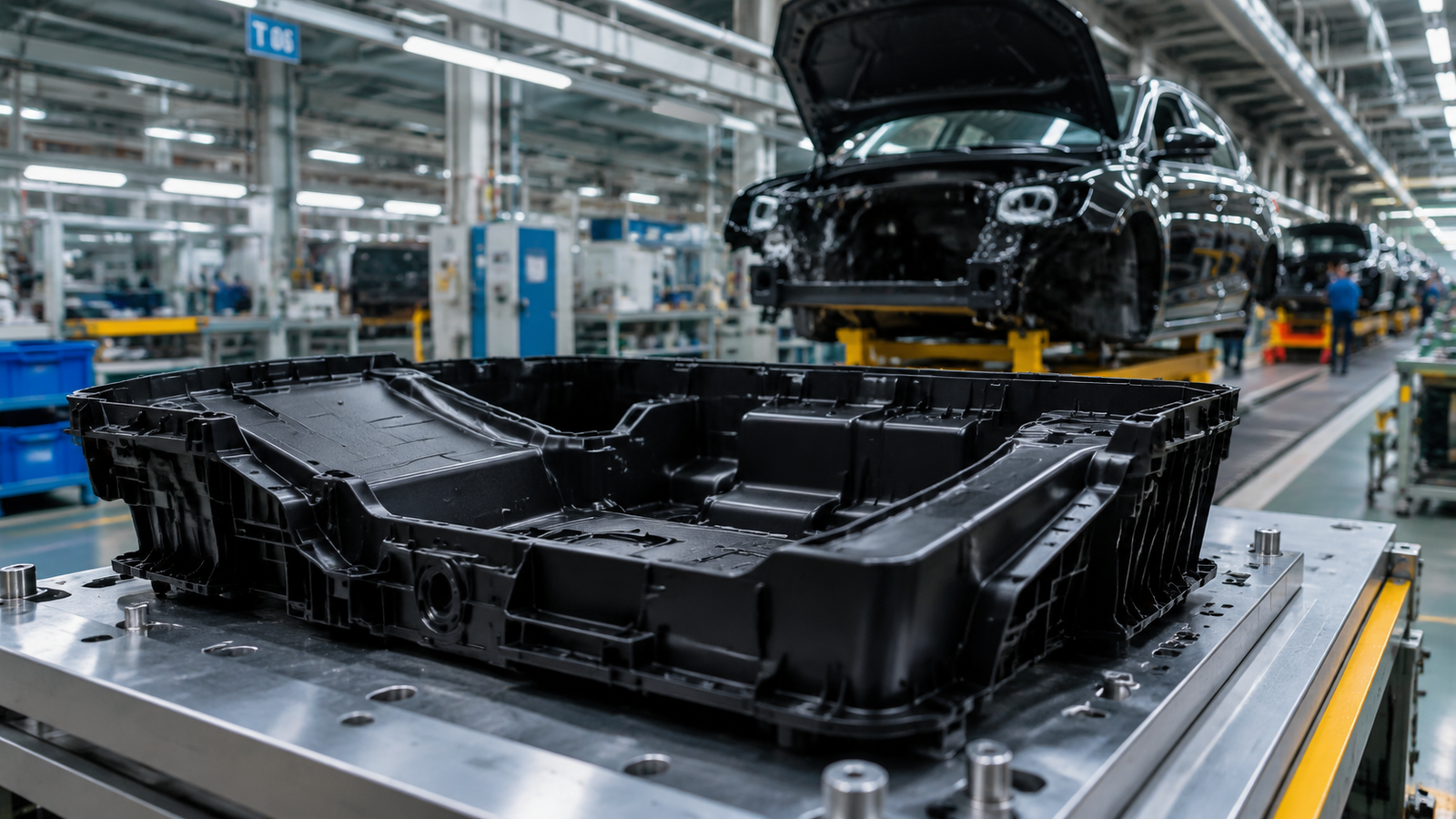
Key Engineering Plastics for Automotive
Different vehicle systems demand different material properties, and selecting the right engineering plastic is the first step toward a reliable part. Here are the materials most commonly specified in automotive applications:
| Material | Typical Applications | Key Properties |
|---|---|---|
| PA66 (Nylon 66) | Engine sensors, connectors | High strength, heat resistance |
| PBT | Electrical connectors | Dimensional stability |
| POM (Acetal) | Gears, fuel system parts | Low friction, high stiffness |
| LCP | Precision connectors | Extreme heat resistance |
| PPS | Pump housings, sensors | Chemical resistance |
| PPA | High-temperature connectors | Heat resistance, mechanical strength |
Each material family offers distinct trade-offs between heat resistance, mechanical strength, chemical compatibility, dimensional stability, and cost. For example, PA66 offers an excellent balance of strength and heat resistance for engine compartment applications, while LCP is specified where extreme temperatures and ultra-precise dimensions are required. Working with a molder that understands these material behaviors — including moisture absorption, shrinkage, and warp — is critical to avoiding costly field failures.
Engineering Tolerances & GD&T
Automotive parts are specified using GD&T (Geometric Dimensioning and Tolerancing), a system that defines the allowable variation of part geometry in a clear, unambiguous language shared between design, manufacturing, and quality teams. Typical automotive tolerances are far tighter than consumer product standards:
| Feature | Typical Tolerance |
|---|---|
| Critical dimensions | ±0.02 mm |
| Standard dimensions | ±0.05 mm |
| Flatness / parallelism | 0.05 mm |
| True position | 0.1 mm |
Holding these tolerances requires more than a capable molding machine. Mold design must account for material shrinkage, cooling uniformity, and gate placement. Process parameters such as injection pressure, holding pressure, mold temperature, and cooling time must be tightly controlled and monitored in real time. Even then, achieving consistent micron-level precision across millions of parts demands disciplined process engineering and statistical process control.
Quality Inspection & CMM
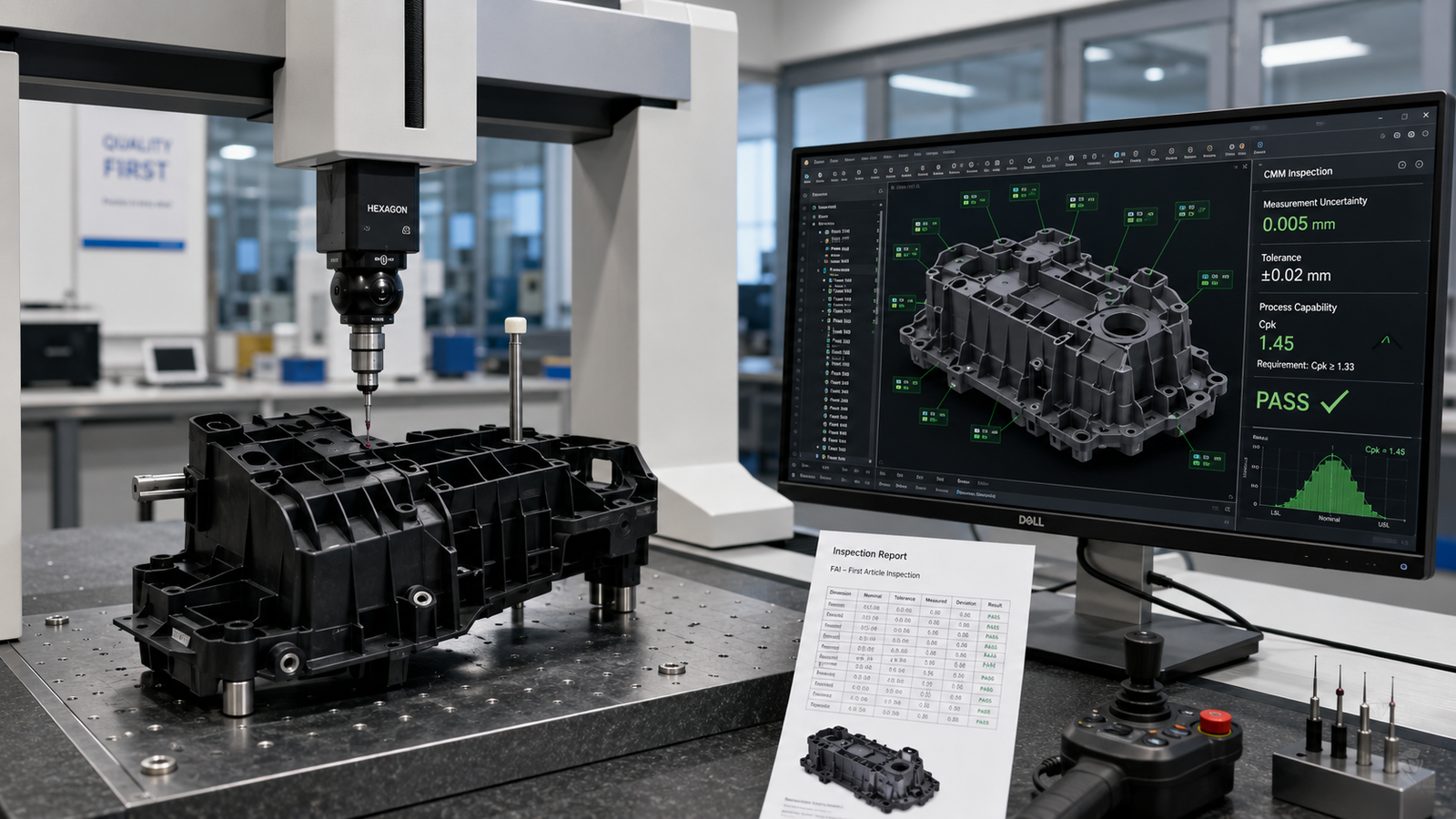
Verification of these tight tolerances requires precision measurement equipment. Coordinate Measuring Machines (CMM) are the industry standard for validating automotive plastic parts, with measurement uncertainty below 0.005 mm. Modern CMM systems can scan complex part geometries automatically, generating detailed dimensional reports that document compliance with every critical characteristic. Process capability is assessed using Cpk values, which measure how consistently a process produces parts within specification. Automotive customers typically require Cpk ≥ 1.33, meaning the process variation occupies less than three-quarters of the tolerance band. Parts are also subject to first article inspection (FAI), where every dimension on the drawing is measured and documented before production approval.
Testing Standards
Automotive plastic parts are validated against international testing standards to ensure material performance matches the design intent. These tests simulate the mechanical, thermal, and environmental loads the part will experience in service:
| Standard | Purpose |
|---|---|
| ISO 527 | Tensile properties |
| ISO 178 | Flexural properties |
| ASTM D638 | Tensile testing |
| UL 94 | Flammability rating |
| ISO 75 | Heat deflection temperature |
Beyond standard material testing, many automotive programs require additional validation: thermal cycling tests, vibration testing, chemical resistance testing against specific fluids, and accelerated aging tests. A molding partner with an in-house testing laboratory can execute these validations quickly and reduce project lead times significantly.
Choosing an Automotive Injection Molding Partner
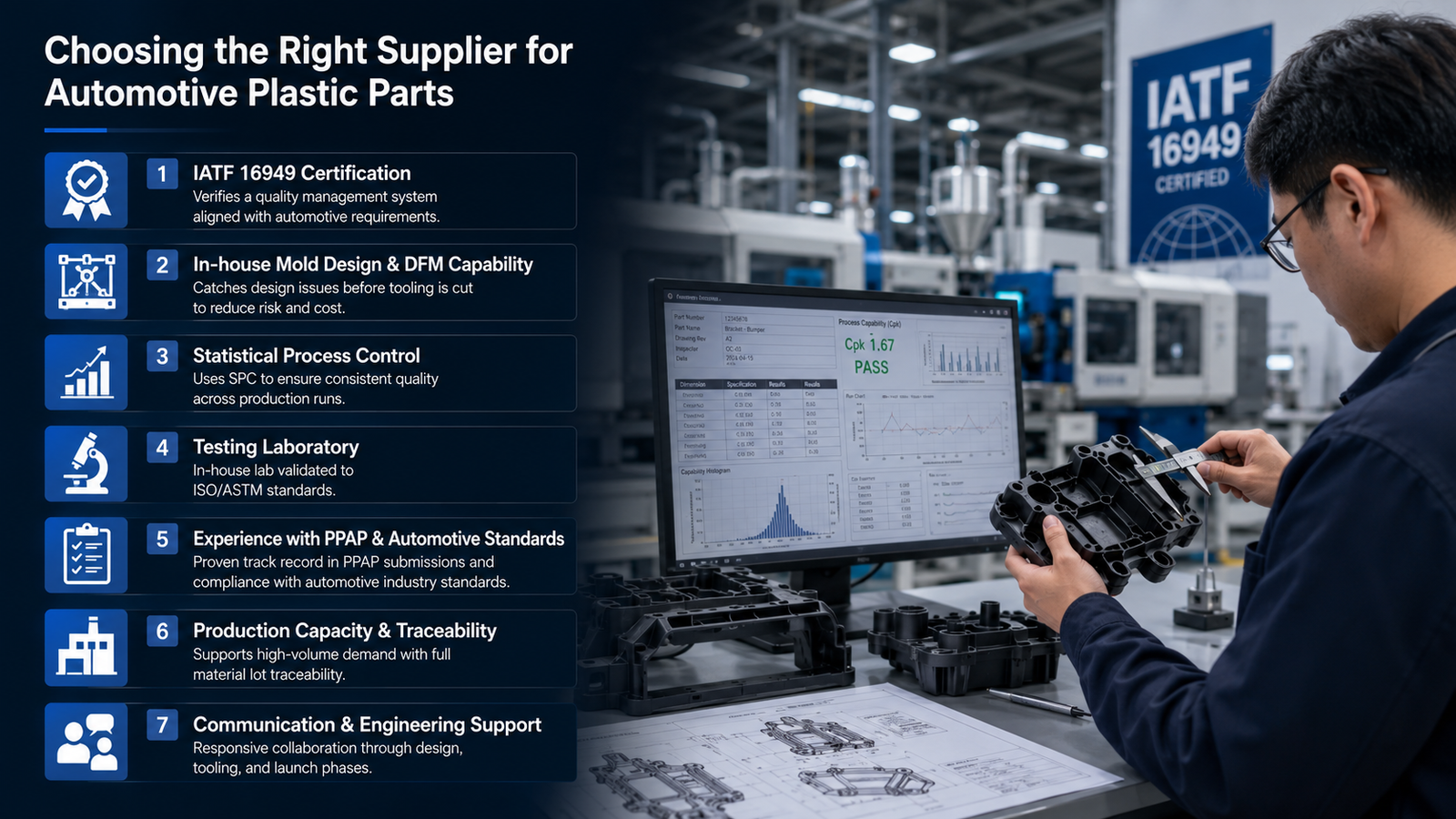
When selecting a supplier for automotive plastic parts, consider these factors carefully — the wrong choice can delay launch programs and create long-term quality risk:
- IATF 16949 certification — verifies a quality management system aligned with automotive requirements
- In-house mold design and DFM capability — catches design issues before tooling is cut
- Statistical process control — ensures consistent quality across production runs
- Testing laboratory — validated to ISO/ASTM standards
- Experience with PPAP and automotive industry standards — demonstrated through completed programs
- Production capacity and traceability — supports high-volume demand with full material lot traceability
- Communication and engineering support — responsive collaboration through design, tooling, and launch phases
Conclusion
Automotive injection molding demands a combination of material expertise, precision engineering, and rigorous quality systems. From selecting the right engineering plastic to holding ±0.02 mm tolerances, validating through CMM inspection, and documenting compliance through PPAP, every step affects the reliability and safety of the final vehicle. With extensive experience in automotive-grade injection molding, mold development, and quality management, PlasticXperts supports automotive OEMs and tier suppliers in delivering reliable plastic components. Our engineering team works alongside customers from concept through production, ensuring every part meets the demanding standards of the automotive industry. Contact our engineering team today to discuss your automotive project requirements and receive a free DFM review.