Introduction

Recycled plastics are increasingly used in automotive connectors and electronic housings, but maintaining UL 94 V0 flame retardant performance remains a critical concern in procurement and engineering decisions. Based on long-term manufacturing practice at Xiamen Ruicheng, material variability is often more dangerous than formulation itself in determining compliance stability. UL 94 V0 is fundamentally a controlled combustion behavior standard rather than a simple material label.
In real production environments, thermal degradation and contamination in regrind materials can significantly weaken flame retardant systems. The UL94 standard defines strict vertical burning time and dripping limits. Even minor fluctuations in recycled content can trigger a shift from V0 to V1 failure behavior.
Does Recycled Plastic Break UL94 V0 Performance?
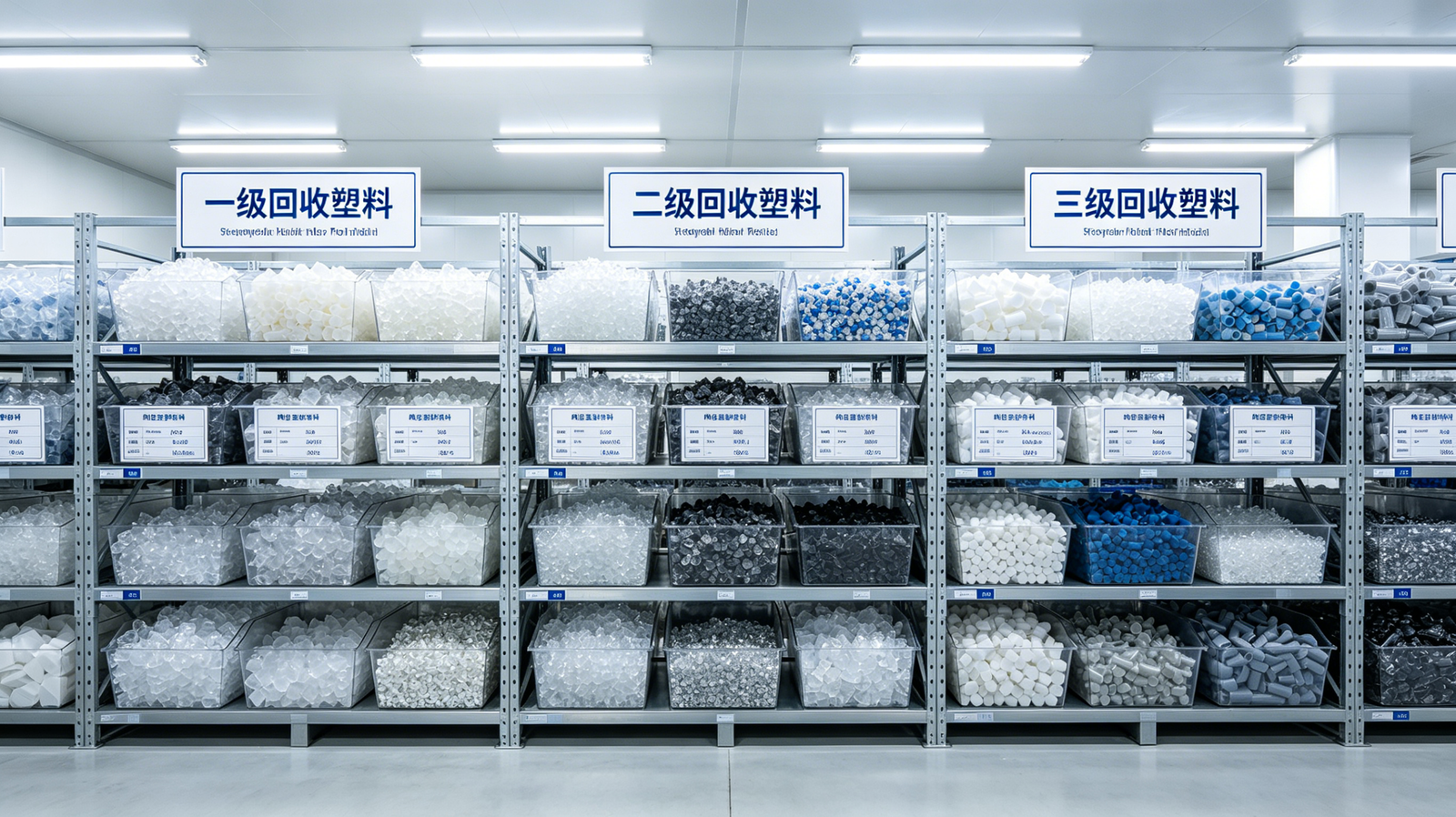
Whether recycled plastic breaks UL94 V0 performance depends on degradation level, additive stability, and compliance with test conditions defined in the UL94 standard . During repeated melting cycles, polymer chains shorten and impurities accumulate, while recycling processes cannot fully eliminate contamination. Xiamen Ruicheng observes that risk increases significantly when regrind content exceeds 20% in production parts.
Material Traceability: Batch-level control is required to avoid mixed-source instability.
Flame Retardant Drift: Additives may migrate or lose effectiveness after reprocessing.
Processing Window: Excess temperature amplifies molecular degradation effects.
Certification Sensitivity: UL94 V0 testing is highly sensitive to specimen consistency.
🔥 Regrind does not always fail, but the processing window becomes narrow
How to Control Flame Stability in Recycled Materials?

Maintaining UL94 V0 stability in recycled plastics depends on formulation redesign and strict process control. In Xiamen Ruicheng automotive sensor housing projects, graded regrind systems are used to isolate different melt histories. Since UL94 testing mechanisms require strict specimen uniformity, any variation can distort results. The real challenge is not whether recycled plastic can be used, but whether it can remain stable in mass production.
Formulation Reinforcement: Additional flame retardant masterbatch compensates degradation loss.
Regrind Segregation: Different quality streams are separated to reduce contamination.
Process Control: Injection temperature is strictly controlled to avoid secondary cracking.
Pre-Test Validation: Small batch burn tests filter unstable materials early.
⚙️ Stability comes from system engineering, not material selection alone
Why Does UL94 V0 Actually Fail?

UL94 V0 failure is rarely caused by a single factor; it is usually the result of cumulative system deviations. Moisture, contamination, and thermal history all influence combustion behavior. Xiamen Ruicheng long-term analysis shows that over 70% of failures are process-related rather than material-related. Failure is the combined result of material, process, and environmental interaction.
Moisture Effect: Water content accelerates combustion instability.
Contamination Impact: Oil or foreign particles disrupt flame consistency.
Thermal History: Repeated heating weakens polymer structure.
Mold Venting: Poor venting increases localized burning intensity.
⚠️ Failure is systemic, not isolated
Recycled Material UL94 V0 Comparison Table
| Material Type | V0 Stability | Cost Level | Risk Level | Application |
|---|---|---|---|---|
| Virgin FR Resin | High | High | Low | Medical / Automotive |
| 10% Regrind Blend | Medium-High | Medium | Low-Medium | Electronics Housing |
| 30% Regrind Blend | Medium-Low | Low | Medium-High | Industrial Parts |
| High Regrind Content | Low | Very Low | High | Non-critical Parts |
Cost advantages of recycled plastics must always be balanced with UL94 V0 certification risk. Any single-dimensional optimization may lead to system instability.
👉 For validation support and engineering review: contact us
Core Relationship Between Recycled Plastics and UL94 V0
The relationship between recycled plastics and UL94 V0 compliance is essentially a trade-off between material variability and certification boundaries. Based on automotive and electronics programs at Xiamen Ruicheng, the key controllable factor is not simply whether recycled content is used, but how it is structured and controlled. UL94 evaluation focuses on repeatable combustion behavior, making consistency more important than material origin.
Conclusion 1: Recycled plastics do not inherently break V0, but reduce process tolerance.
Conclusion 2: Flame retardant systems must be redesigned for recycled structures.
Conclusion 3: Supply chain control determines certification success rate.
Conclusion 4: System validation is more important than material choice.
FAQ Module Title
Question 1: Is recycled plastic allowed under UL94 V0 requirements?
Answer: Yes, but it must meet consistency and combustion stability requirements verified through UL94 testing.
Question 2: How does regrind ratio affect flame retardancy?
Answer: Higher ratios increase risk; above ~20% typically requires full revalidation.
Question 3: How to ensure recycled materials pass V0 certification?
Answer: Control sourcing, drying, processing temperature, and additive compensation systems.
Question 4: Can failed materials be re-certified?
Answer: Yes, after reformulation and retesting under UL94 procedures.
Question 5: Does Xiamen Ruicheng provide validation support?
Answer: Yes, we provide material evaluation, molding trials, and certification support.
Conclusion
The use of recycled plastics in UL94 V0 applications is not a simple pass-or-fail decision but a system engineering challenge. Based on real production experience at Xiamen Ruicheng, material consistency and process control are the dominant factors determining certification outcomes. The true determinant of UL94 V0 success is the stability of the entire manufacturing system rather than the material itself.
For expert assistance in implementing UL94 V0-compliant recycled material solutions for your production needs, visit our resource center or contact us. Let’s help you scale up your manufacturing with precision and efficiency!