Introduction

Global manufacturing is rapidly shifting toward supply chains that balance cost efficiency with high precision, and China has become a core hub for precision injection molding production. As cross-border trade becomes more complex, import regulations and compliance requirements are no longer optional—they are now critical decision-making factors that directly impact procurement efficiency and risk control. Compliance capability has become a key indicator of whether a supplier is truly reliable.
In real-world projects handled by Xiamen Ruicheng, procurement failures are rarely caused by price or technical limitations, but rather by misunderstandings or misexecution of regulatory requirements. Delays, returns, or even penalties can result from missing documents or non-compliant certifications. A structured understanding of import compliance is the first step toward building a stable supply chain.
How to Identify Core Import Regulations When Sourcing Precision Injection Molded Parts from China?
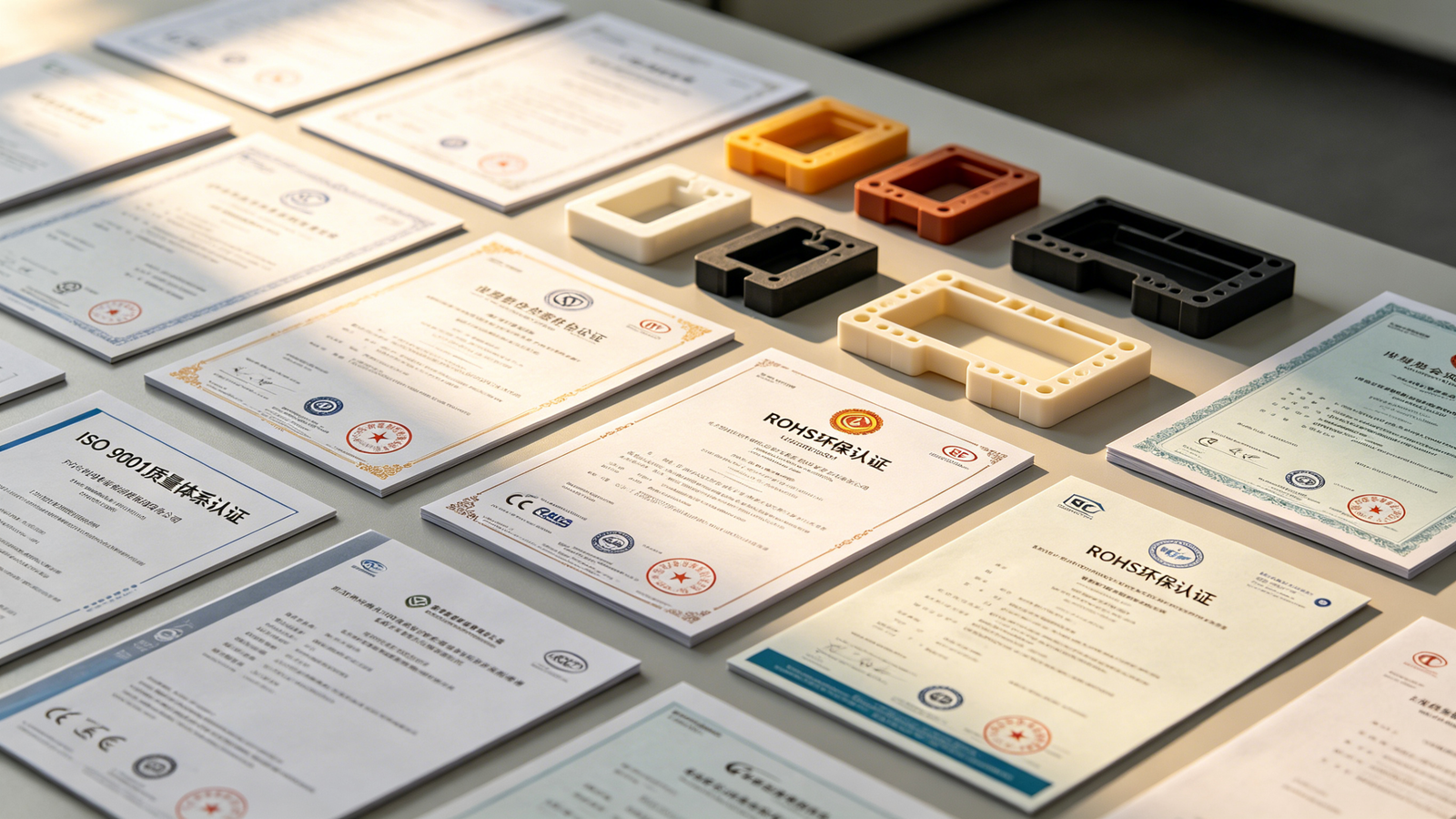
In practical sourcing scenarios, import regulations cover multiple dimensions including tariff classification, product safety, environmental standards, and industry access requirements. Buyers must establish a clear regulatory framework from the outset, such as using HS codes for product classification and referring to the RoHS Directive to evaluate material compliance. Regulatory differences across application fields directly determine whether products can enter target markets smoothly. Based on Xiamen Ruicheng’s project experience, early regulatory mapping significantly reduces downstream correction costs.
Regulatory classification: Different countries classify plastic components differently based on application and function.
Industry variation: Medical, automotive, and food-contact products are subject to entirely different regulatory systems.
Certification scope: Certifications such as CE and FDA are not universally applicable and must match the product use case.
Documentation readiness: Technical files and test reports are essential for compliance verification.
📌 Understanding regulatory frameworks is the first line of defense against import risks
How to Ensure Environmental and Material Compliance for Precision Injection Molded Parts?

Material compliance is one of the most overlooked yet high-risk aspects during import inspections, especially in electronics and consumer goods industries. It is essential to evaluate standards such as REACH regulation and UL certification, which directly relate to material composition and safety performance. Material non-compliance often remains hidden during production but is exposed during customs clearance or market inspections. Xiamen Ruicheng provides full material traceability and testing reports at the early stage to ensure compliance from the source.
Material traceability: Ensuring clear and traceable raw material sourcing is fundamental.
Environmental testing: Third-party testing reports help reduce compliance risks.
Standard alignment: Environmental requirements vary significantly across different markets.
Batch consistency: Maintaining material stability across mass production is critical.
🌱 Material compliance is the key threshold for market entry
How to Achieve Efficient Coordination Between Customs Clearance and Certification?
Efficient procurement processes depend not only on supplier capability but also on the coordination of customs documentation and certification workflows. For example, leveraging Certificates of Origin for tariff benefits and utilizing AEO certification to accelerate customs clearance can significantly optimize supply chain performance. Process coordination directly determines procurement cycle stability and predictability. Xiamen Ruicheng supports clients with standardized workflow management, ensuring seamless integration from production to customs clearance.
Document synchronization: Preparing production and customs documents simultaneously reduces delays.
Pre-certification: Completing certifications in advance avoids port congestion.
Logistics coordination: Working with experienced logistics partners improves efficiency.
Risk contingency: Establishing emergency plans helps handle unexpected inspections.
🚚 Process coordination defines delivery efficiency and supply chain stability
Key Compliance Factors Comparison for Importing Precision Injection Molded Parts
| Compliance Area | Key Focus | Common Risk | Ruicheng Solution |
|---|---|---|---|
| HS Code | Product classification | Misdeclaration | Professional classification support |
| Environmental Regulations | RoHS/REACH | Non-compliant materials | Certified testing reports |
| Certification | CE/UL/FDA | Missing certification | Certification assistance |
| Customs Documents | Invoice/Packing List | Incomplete files | Full-process support |
Get your full compliance solution now: contact us
Key Strategies to Build a Stable Import Supply Chain
In an increasingly competitive global trade environment, meeting basic compliance is no longer sufficient to support long-term partnerships. Companies must develop systematic supply chain strategies that create a closed loop from regulatory identification to execution. Xiamen Ruicheng integrates technical expertise with compliance experience to provide end-to-end support from design and production to export. True competitiveness lies in transforming compliance into operational efficiency.
1.Pre-evaluation: Match regulations and standards before project initiation.
2.Process control: Embed compliance checkpoints during production.
3.Data management: Build a complete documentation and testing system.
4.Continuous optimization: Improve supply chain performance through project reviews.
FAQ
Question 1: What quality standards do your precision injection molded parts meet?
Answer: Xiamen Ruicheng follows ISO-certified quality systems, with critical tolerances controlled within ±0.01mm and multi-stage inspections to ensure consistent performance for high-end industrial applications.
Question 2: What information is required to get a quotation quickly?
Answer: Please provide 3D drawings, material specifications, and application scenarios. We deliver initial evaluation within 12 hours and a detailed quotation with process analysis shortly after.
Question 3: What are your MOQ and lead times for different order volumes?
Answer: Prototype orders can be completed in 7 days, while mass production typically takes 10–15 days. Expedited orders are supported with flexible scheduling.
Question 4: How do you handle quality issues after delivery?
Answer: We support incoming inspection and respond within 48 hours if issues are confirmed, offering rework or replacement to ensure your production continuity.
Question 5: Do you support customization and additional services?
Answer: Yes, we provide design optimization, material substitution, and functional integration. Custom solutions are delivered within 3 working days with cost and timeline evaluation.
Conclusion
As global supply chains become more complex, import compliance has evolved from a passive requirement into a proactive capability. Companies that establish systematic regulatory understanding and execution can achieve both risk control and operational efficiency in cross-border procurement. Choosing a supplier with proven compliance experience is the most direct way to minimize procurement risks. Xiamen Ruicheng leverages real-world expertise to help clients build stable and sustainable sourcing systems for precision injection molded parts.
For expert assistance in implementing for your production needs, visit our resource center or contact us. Let’s help you scale up your manufacturing with precision and efficiency!