Introduction
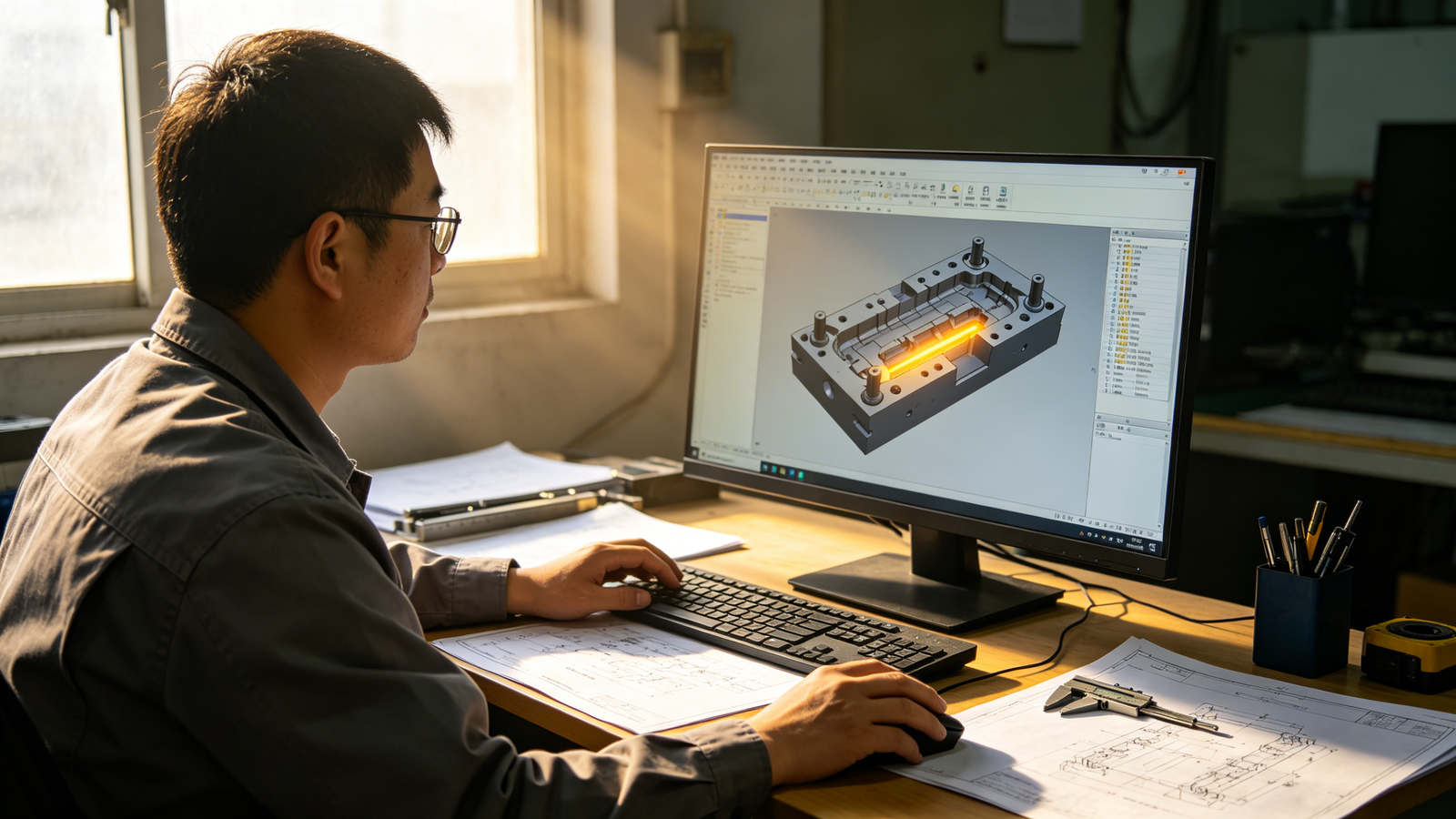
In high-frequency interaction scenarios such as smart home devices and automotive controls, the tactile feel and acoustic performance of rotary knobs directly shape users’ perception of product quality. Even minor stepping sensations or abnormal noises can quickly lead to negative feedback. Xiamen Ruicheng integrates rapid prototyping early in development to validate structure and materials through iterative testing, helping clients eliminate risks before mass production. Shifting problem-solving to the prototyping stage is the most effective way to control both quality and cost.
In real-world projects, these issues rarely stem from a single factor but instead result from the combined influence of structural fit, tolerance stacking, material friction behavior, and surface finishing. A systematic rapid prototyping process enables engineers to isolate each variable and optimize accordingly. Data-driven prototyping delivers far greater reliability than post-production fixes.
How can stepping feel in knobs be identified during prototyping?
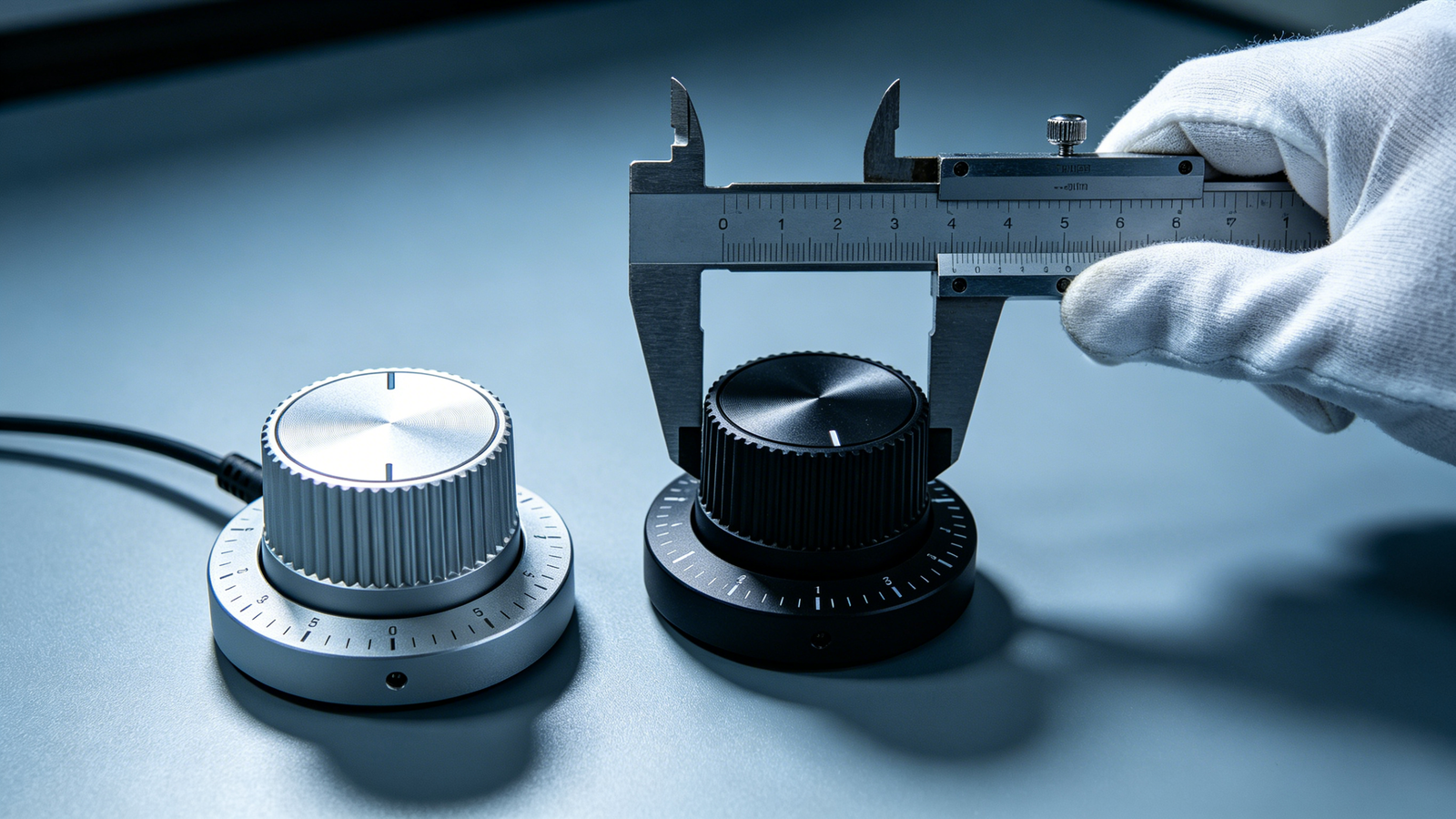
Stepping sensations in rotary knobs typically originate from discontinuities in contact surfaces or uneven friction resistance. Xiamen Ruicheng leverages rapid prototyping and precision tolerance control to replicate real assembly conditions early, combined with multi-material testing to evaluate tactile performance and pinpoint root causes. Accurately simulating real usage conditions during prototyping is essential to detecting stepping issues. Through iterative structural refinement and rotational life testing, optimal solutions can be validated before tooling investment.
Surface continuity: Optimizing tooth profiles or contact geometry ensures smoother force transition during rotation.
Tolerance stacking: Multiple validation rounds prevent cumulative deviations that lead to resistance jumps.
Material friction: Testing different material pairings helps identify the best friction balance.
Surface finishing: Polishing or coating improves smoothness and reduces resistance fluctuation.
🙂 Prototyping ensures stepping issues are eliminated before production
What factors in injection molding cause noise in rotary knobs?

Noise in rotary knobs is commonly caused by material friction, improper assembly clearance, or internal stress release. Xiamen Ruicheng applies expertise in friction behavior and injection molding optimization to simulate acoustic performance under different conditions during prototyping, enabling accurate identification of critical factors. Noise issues are typically the result of multiple interacting variables rather than a single cause. Comparative testingduring prototyping helps determine the best material and structural combination.
Material selection: Low-friction materials reduce noise sources.
Assembly clearance: Proper gaps prevent looseness or excessive tightness.
Stress control: Optimized cooling paths reduce internal stress.
Lubrication design: Integrated lubrication minimizes friction noise.
🔧 Noise control is fundamentally about material and structural synergy
How can structural and process optimization fully eliminate these defects?

Validating both structure and process parameters through rapid prototyping before mass production is the most effective approach to solving knob defects. Xiamen Ruicheng combines rapid prototyping services with DFM optimization to guide clients through multiple validation cycles and finalize optimal solutions. Co-optimizing structure and processing parameters is the key to achieving consistent tactile feel and silent operation. A systematic workflow ensures consistency from prototype to production.
Structural optimization: Adjusting contact paths improves smooth rotation.
Mold design: Optimized gating and flow reduce deformation.
Process control: Precise temperature and pressure management prevents defects.
Iterative validation: Multiple prototype cycles guarantee stability.
🚀 Systematic optimization eliminates defects before mass production
Rapid Prototyping vs Mass Production Outcomes
| Comparison Dimension | Direct Mass Production | Single Prototype | Multi-Iteration Prototyping | Xiamen Ruicheng Solution |
|---|---|---|---|---|
| Tactile consistency | Unstable | Basic validation | Significantly improved | Highly consistent |
| Noise control | High risk | Partial improvement | Predictable | Near-zero defects |
| Development cycle | Long | متوسط | Controlled | Fast response |
| Cost risk | High | Medium | Controlled | Minimized |
| Design optimization | None | Limited | Iterative | Systematic |
Get your customized knob optimization plan now: contact us
Why is rapid prototyping critical for knob quality control?
In knob product development, rapid prototyping is not just a validation tool but a core decision-making driver. Xiamen Ruicheng transforms design risks into quantifiable optimization paths through iterative prototyping and data testing, eliminating costly trial-and-error during mass production. Rapid prototyping ensures every design decision is backed by real data rather than assumptions. This approach shortens development cycles while significantly improving consistency and user experience.
1.Early validation: Identify and resolve issues before tooling.
2.Cost reduction: Avoid expensive mold modifications and rework.
3.Enhanced experience: Optimize tactile and acoustic performance.
4.Faster launch: Accelerate time-to-market advantage.
FAQ (B2B Procurement Guide)
Question 1: What are the key advantages and quality benchmarks of your knob rapid prototyping service?
Answer: Xiamen Ruicheng offers ±0.02mm precision control, multi-material validation, and rotational lifecycle testing, supported by standardized inspection processes to ensure prototypes meet real application requirements.
Question 2: What information is required to get a quotation quickly?
Answer: Provide 3D files (STEP/IGES), application details, and functional expectations via email or website; initial response within 2 hours and detailed quotation within 12 hours.
Question 3: What are the MOQ and lead time for different order volumes?
Answer: MOQ starts from 1 piece; small batch production ranges from 50–500 units; standard lead time is 3–7 days, with 48-hour expedited options available.
Question 4: How are quality issues handled after delivery?
Answer: Re-inspection is supported within 7 days; confirmed issues are resolved with re-prototyping within 48 hours to keep your project on track.
Question 5: Do you support customization for special requirements?
Answer: Yes, we offer customized materials and structural optimization based on your application parameters, with solutions provided within 3 working days.
Conclusion
Stepping feel and noise issues in rotary knobs are fundamentally caused by the lack of coordination between structure, materials, and processing. Rapid prototyping enables systematic validation and optimization at the design stage, ensuring a smooth transition to mass production. Xiamen Ruicheng helps clients eliminate risks early through data-driven processes. Solving problems at the prototyping stage is the most efficient way to ensure product quality and cost control. Choosing the right partner directly impacts your product’s market success.
For expert assistance in implementing solutions for your production needs, visit our resource center or contact us. Let’s help you scale up your manufacturing with precision and efficiency!