Introduction
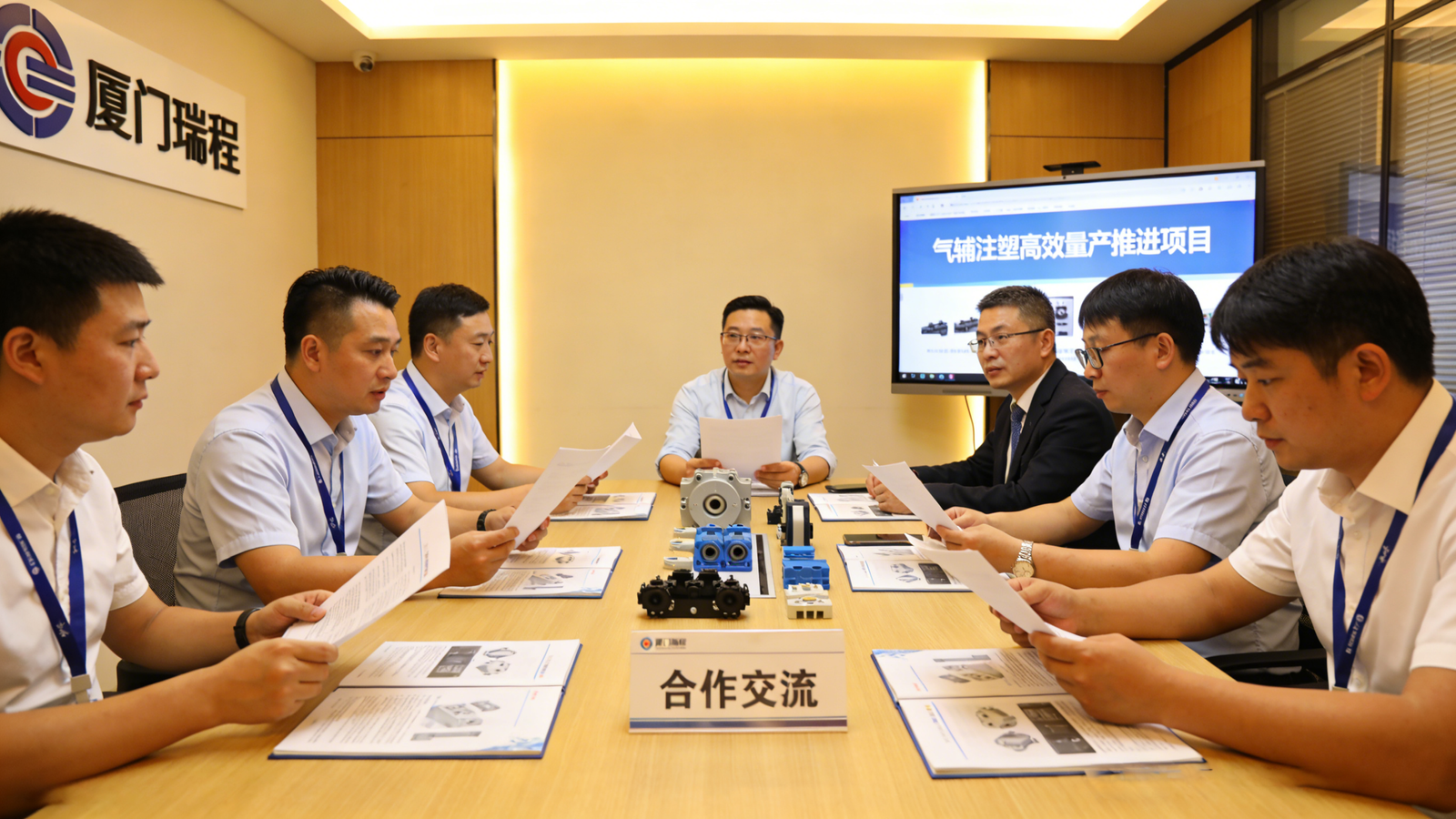
Large appliance housings with thick-wall structures frequently suffer from sink marks due to uneven cooling and insufficient internal pressure during molding. For premium refrigerators, washing machine panels, and air conditioner covers, surface defects directly impact brand perception and retail presentation. Sink marks are fundamentally the result of structural and process imbalance rather than simply a material issue.
At Xiamen Ruicheng, we focus on upstream design collaboration and downstream process optimization instead of increasing holding pressure blindly. Gas-assisted injection molding has proven effective in multiple mass-production appliance housing projects. Shifting from product display to decision support is how we help appliance manufacturers reduce risk and improve yield.
Can Gas-Assisted Injection Molding Truly Eliminate Sink Marks on Appliance Housings?
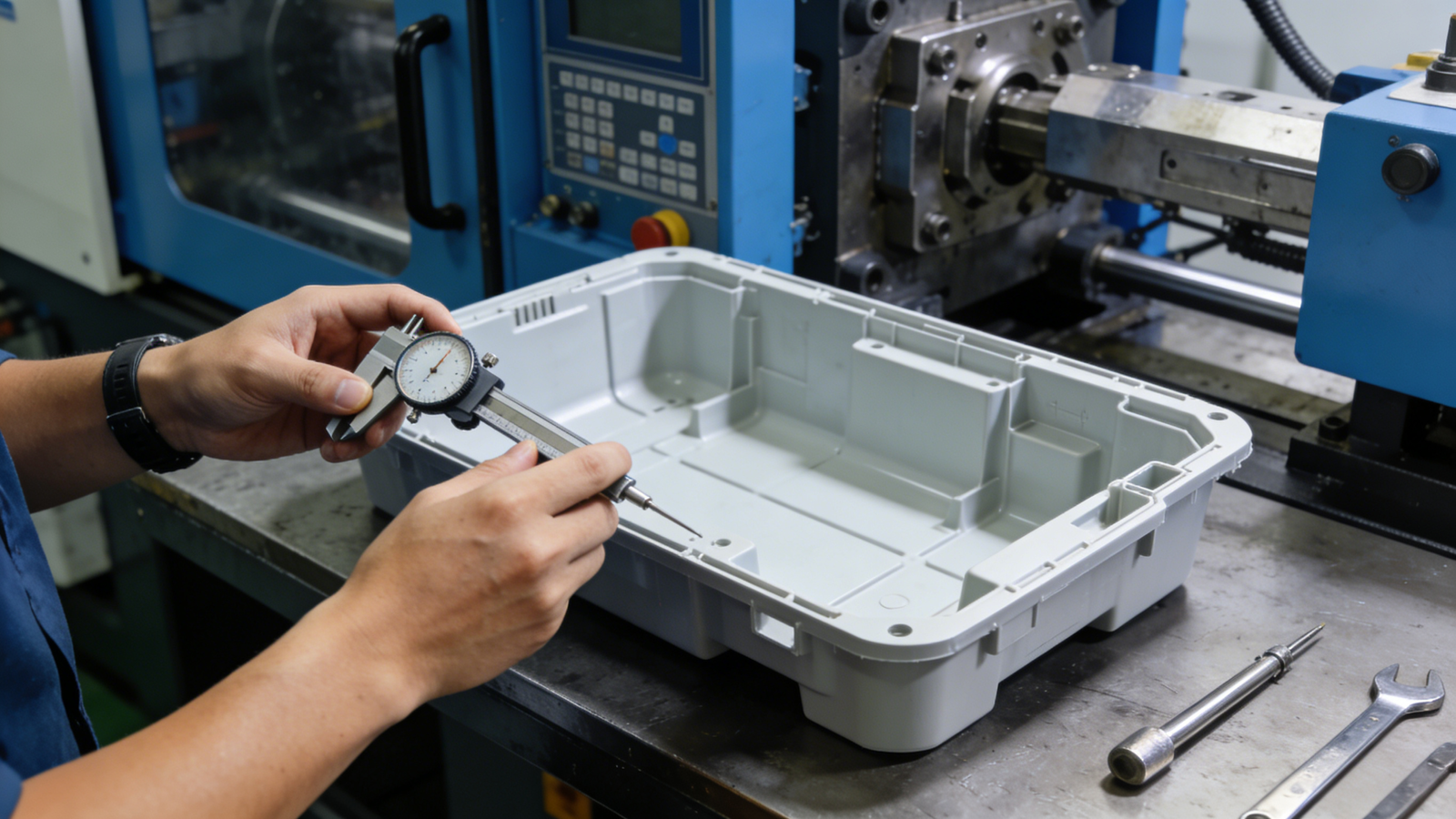
In conventional injection molding, thick-wall appliance parts are prone to surface depressions because molten resin shrinks unevenly during cooling. Gas-assisted injection molding introduces high-pressure nitrogen into the melt core, forming hollow channels that compensate for shrinkage and optimize internal pressure distribution. By replacing part of the holding pressure with controlled gas injection, the internal structure gains uniform support, significantly reducing visible sink marks. In our appliance panel projects at Xiamen Ruicheng, precise gas timing and pressure profiling have enabled stable Class-A surface finishes without visible shrinkage.
Structural Compensation: Gas forms internal hollow support zones that balance pressure in thick areas.
Weight Reduction: Maintains rigidity while reducing material accumulation and overall product weight.
Surface Improvement: Balanced internal pressure enhances gloss consistency and surface flatness.
Yield Enhancement: Stable process windows reduce batch variation and rework rates.
✨ Gas-assisted molding improves sink mark performance by restructuring internal pressure rather than overcompensating externally.
Can Increasing Holding Pressure or Changing Materials Replace Gas-Assist Solutions?

Many manufacturers first attempt to extend holding pressure or switch to low-shrinkage materials when sink marks appear. However, these approaches often increase cycle time and energy costs while failing to eliminate internal stress concentration in thick sections. By optimizing mold design and integrating nitrogen-assisted molding, the root cause of material collapse can be addressed structurally. Simply increasing holding pressure raises clamping force and energy consumption but does not correct uneven internal cooling. At Xiamen Ruicheng, we evaluate existing tooling and wall thickness distribution before recommending gas-assist upgrades.
Cost Perspective: Long-term high holding pressure increases operational expenses.
Structural Limitation: Thick ribs and support columns remain vulnerable to shrinkage.
Material Trade-offs: Switching materials may impact color consistency and durability.
Upgrade Path: Gas-assist systems can often be integrated with moderate mold modification.
🚀 Structural optimization delivers sustainable improvement beyond parameter adjustments.
Does Introducing Gas-Assisted Injection Increase Project Risk?
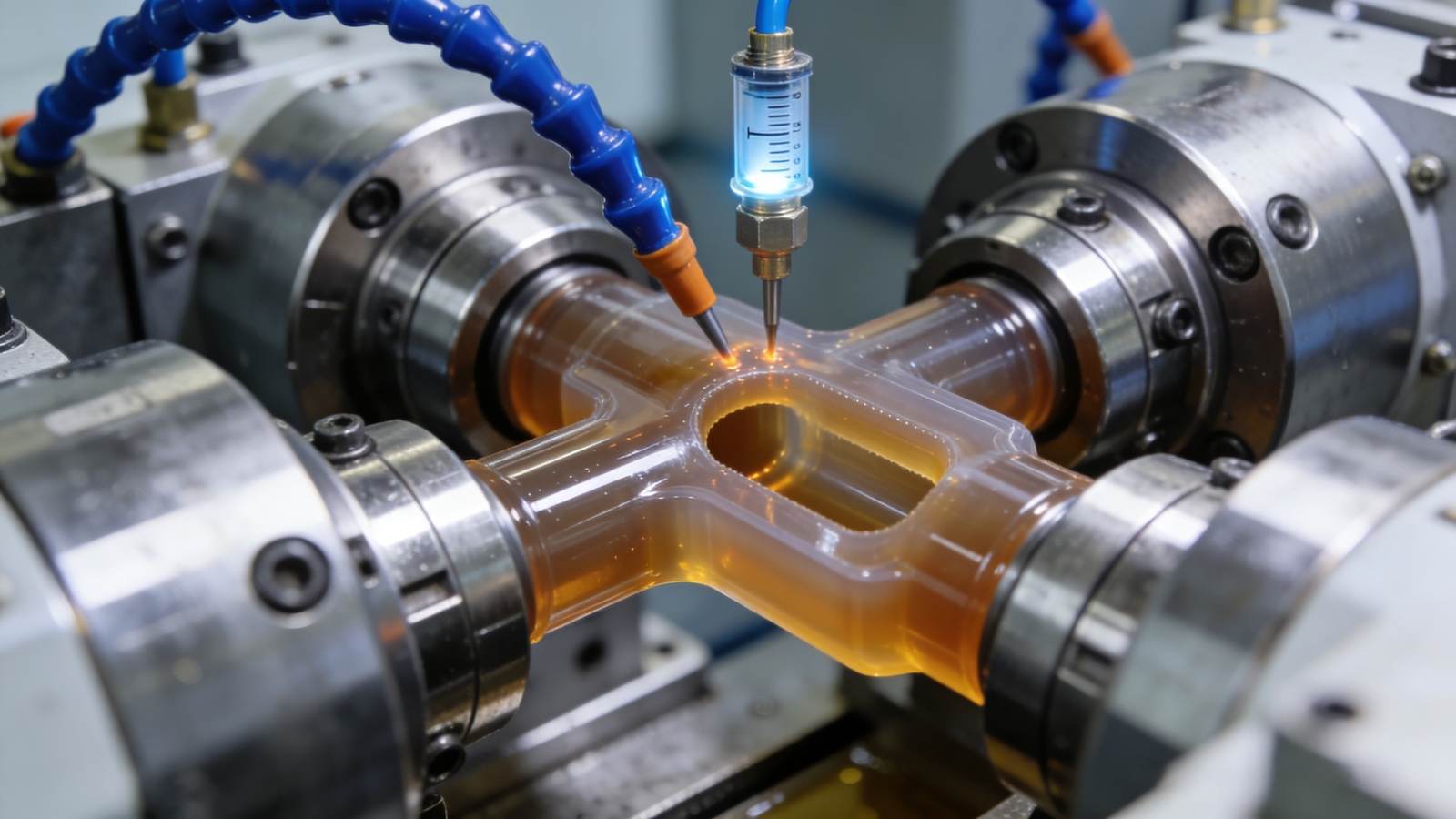
Gas-assisted molding requires precise gas channel design and pressure control; insufficient expertise may lead to gas marks or penetration defects. However, with standardized process control and mature injection molding workflows, implementation risks can be minimized. Successful gas-assist applications depend on data-driven pressure segmentation and monitoring rather than merely adding equipment. Xiamen Ruicheng applies a three-stage validation model—DFM review, prototype validation, and mass-production verification—to ensure controlled risk and predictable lead time.
Technical Validation: Prototype testing simulates gas channel stability in thick regions.
Equipment Assurance: Dedicated gas control modules ensure accurate pressure regulation.
Batch Stability: Process window databases minimize variation across production runs.
Lead-Time Control: Phased project execution prevents unexpected production downtime.
🔧 Risk is linked to inexperience, not to the technology itself.
Comparative Analysis of Appliance Housing Molding Solutions
| Evaluation Criteria | Conventional Molding | Extended Holding | Material Change | Gas-Assist Molding |
|---|---|---|---|---|
| Sink Mark Reduction | Medium | Medium | Medium | High |
| Cost Control | High | Low | Medium | Medium |
| Structural Strength | High | High | Medium | High |
| Energy Consumption | Medium | High | Medium | Low |
| Mold Modification | None | None | None | Minor |
If you are evaluating upgrade paths for appliance housings, aligning structural design with production targets is critical. We invite you to request a tailored feasibility assessment via contact us.
From Cosmetic Fixes to Structural Upgrade: A Smarter Decision Path
In today’s competitive appliance market, surface quality directly influences brand value and consumer trust. Parameter tweaks alone rarely deliver long-term stability in thick-wall housing designs. Xiamen Ruicheng integrates gas-assist technology with structural optimization to provide full-cycle support—from sample validation to mass production. True decision value lies in identifying structural risk early and establishing a stable process window through gas-assisted molding. Through cross-functional collaboration and data-backed validation, we help customers convert visible sink marks into manageable production variables.
1.Pre-Assessment: Analyze wall thickness distribution and rib design through flow simulation.
2.Solution Matching: Align gas-assist strategy with cost and volume targets.
3.Prototype Validation: Conduct pilot production to confirm appearance and strength.
4.Mass Production Support: Establish long-term process monitoring and optimization.
Frequently Asked Questions (FAQ)
Question: What are the core strengths and quality benchmarks of your gas-assisted appliance housing solutions?
Answer: Our projects follow strict process control standards, targeting Class-A surface appearance without visible sink marks and controlled internal support uniformity. We utilize segmented gas pressure curves and multi-point inspection systems to ensure consistent quality. These controls directly support appliance brands seeking high-end aesthetic and structural reliability.
Question: What information should we provide to obtain a quotation for gas-assisted appliance housing production?
Answer: Please submit 3D CAD files, material specifications, estimated annual volume, and details of any existing molds. Our engineering team conducts DFM analysis and provides feasibility feedback along with phased cost estimates. If mold modification is required, we include timeline and technical recommendations.
Question: How do minimum order quantities and lead times vary by order volume?
Answer: Prototype phases support small-batch validation to confirm structural and surface performance. Mass production scheduling depends on annual volume and product complexity. MOQ and lead time are defined collaboratively based on project scale and capacity planning.
Question: How do you handle quality deviations or delivery delays?
Answer: We apply structured root-cause analysis and quality verification procedures to determine responsibility and corrective actions. Mass-production projects operate under formal agreements specifying quality standards, response timelines, and risk-sharing mechanisms.
Question: Can you customize gas-assisted designs for special structural requirements?
Answer: Yes, we support customized gas channel layouts for unique rib structures, thick-wall distribution, or lightweight targets. Customers should provide detailed structural drawings and performance requirements. Our engineering team delivers feasibility reports and cost impact analysis within the agreed evaluation timeframe.
Conclusion
Sink marks on appliance housings cannot be fully resolved through parameter adjustments alone; structural and process integration is essential. Gas-assisted injection molding reconstructs internal pressure distribution to stabilize both surface quality and mechanical strength. In a competitive appliance market, early adoption of a structured gas-assist strategy leads to higher yield and lower long-term production costs. Xiamen Ruicheng remains committed to guiding customers from risk identification to stable mass production through practical engineering partnership.
For expert assistance in implementing solutions for your production needs, visit our resource center or contact us. Let’s help you scale up your manufacturing with precision and efficiency!