Introduction

In injection molding, the choice of plasticizer directly affects the flexibility, durability, and long-term stability of molded components. A high-quality plasticizer not only improves polymer processability but also enhances resistance to migration. With evolving environmental regulations, traditional phthalate-based plasticizers are being replaced by safer alternatives.
In industries such as consumer electronics, automotive interiors, and medical devices, migration resistance is a critical quality factor. When plasticizers migrate to the surface, issues like stickiness, discoloration, or functional failure can occur. Therefore, selecting the right plasticizer system is key to maintaining long-term product reliability.
Which Type of Plasticizer Offers Better Migration Resistance?

Common plasticizers used in injection molding include phthalates, fatty acid esters, polyol esters, and epoxy types. The polarity and molecular structure of each determine its compatibility and long-term stability within the polymer. Fatty acid esters and epoxy-based plasticizers, with higher molecular weights and polarity, reduce migration risk and are widely used in PVC and TPU systems.
- Advantages of High-Molecular Plasticizers: Their large molecular size slows diffusion and helps retain long-term properties.
- Low Volatility Design: Reduces losses during processing and enhances product durability.
- Epoxy Plasticizer Applications: Excellent compatibility and oxidation resistance.
- Polyol Ester Structure: Hydrogen bonding improves polymer–plasticizer interaction strength.
💡 Selecting stable, high-molecular-weight plasticizers is the key to ensuring migration resistance.
How to Balance Flexibility and Migration Resistance in Injection Formulations?

Achieving flexibility while maintaining migration resistance is a technical challenge. Optimizing molecular design and additive ratios ensures both plasticization efficiency and long-term stability. Overuse of low-molecular-weight plasticizers may improve flow but will shorten part lifespan and compromise surface quality.
- Molecular Design Optimization: Adjusting molecular branching improves polymer–plasticizer interaction and reduces migration.
- Proper Dosing Control: Balanced ratios maintain processability and durability.
- Co-Plasticization Systems: Multiple plasticizers working together enhance flexibility and migration resistance.
- Interface Compatibilizers: Reinforce interfacial stability between polymer and plasticizer.
🔧 A scientific formulation balance ensures optimal flexibility and long-term stability in injection-molded parts.
Which Testing Methods Can Verify Migration Resistance of Plasticizers?

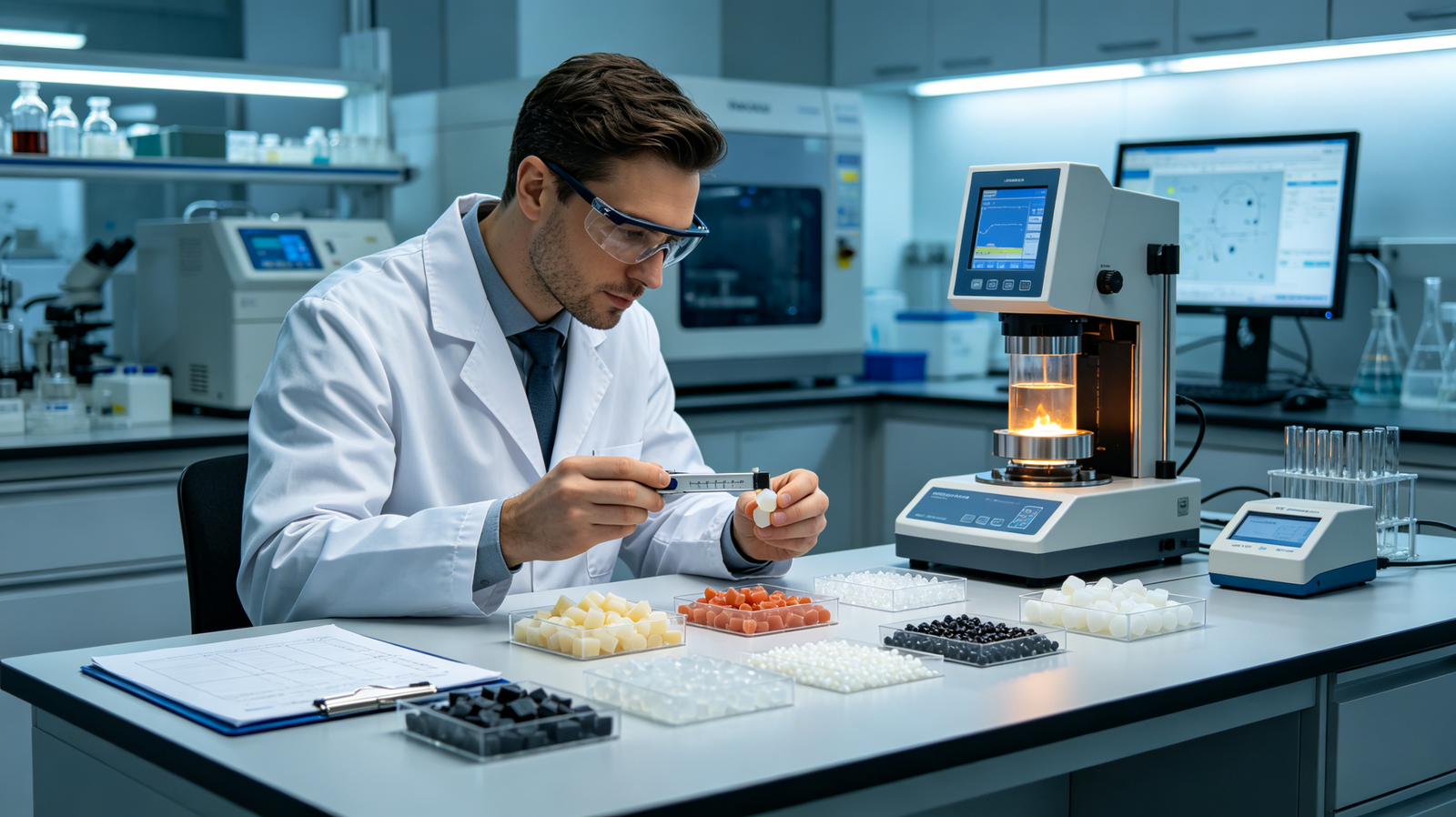
Evaluating plasticizer migration resistance requires both structural analysis and environmental simulation. Accelerated aging, solvent extraction, and surface exudation tests are widely used to assess long-term performance. These methods allow manufacturers to validate stability before mass production, reducing failure risks.
- Migration Rate Testing: Simulates long-term diffusion under heat and humidity.
- Thermal Stability Analysis: Determines retention rate at elevated temperatures.
- Surface Exudation Observation: Evaluates surface integrity after extended storage.
- Infrared Spectroscopy Tracking: Detects compositional changes in the polymer matrix.
🧪 Reliable testing is essential to ensure stable, migration-resistant injection-molded parts.
Comparison of Migration-Resistant Plasticizers
| Plasticizer Type | Molecular Weight | Volatility | Migration Risk | Application Field | Eco Rating | Thermal Stability | Cost |
|---|---|---|---|---|---|---|---|
| Phthalates | Low | High | High | General Plastics | ★ | Moderate | Low |
| Fatty Acid Esters | Medium | Low | Medium | Soft PVC | ★★ | Good | Medium |
| Epoxidized Soybean Oil | High | Low | Low | Cable, Automotive | ★★★ | Excellent | Medium |
| Polymeric Polyesters | High | Very Low | Very Low | Medical, Transparent Parts | ★★★★ | Superior | Slightly High |
📌 Looking for the ideal plasticizer system for your injection application? contact us today for customized formulation support!
Future Trends in Migration-Resistant Plasticizers
Driven by sustainability goals, bio-based and non-migrating polymeric plasticizers are emerging as the next frontier. These innovative materials not only enhance safety but also ensure consistent mechanical and optical properties over time. Future developments will rely heavily on molecular engineering and green chemistry integration.
1.Bio-Based Solutions: Derived from natural oils and fatty acids.
2.High-Molecular Encapsulation: Prevents migration while improving interface bonding.
3.Nano-Composite Systems: Reinforces interfacial strength and enhances durability.
4.Recyclable Compatibility: Supports sustainable and circular manufacturing.
Conclusion
Choosing the right plasticizer is essential to maintaining performance stability in injection-molded parts. By optimizing molecular structure, dosage, and testing validation, manufacturers can enhance both product quality and brand reliability. As the industry moves toward eco-friendly materials, high-molecular and non-migrating plasticizers will define the next generation of injection solutions. Smart selection ensures compliance, durability, and sustainability across applications.
For expert assistance in implementing for your production needs, visit our resource center or contact us. Let’s help you scale up your manufacturing with precision and efficiency!