Introduction

In injection molding, clamping force directly affects mold fit and cavity pressure stability, which in turn influences color consistency of plastic parts. Insufficient clamping force can cause melt leakage, increasing color variation and compromising product quality.If manufacturers do not dynamically adjust clamping force according to material, wall thickness, and part dimensions, pigment dispersion and colorant thermal stability can be negatively affected. Proper clamping strategies help reduce rework rates and improve the visual appeal of products.
Excessive clamping force can lead to localized stress in the mold, affecting material gloss and even damaging the mold itself. Precisely setting clamping force is a key technique to balance color consistency and production cost.Working with professional injection molding partners ensures consistent visual quality across large production batches.
What color risks occur with insufficient clamping force?

Low clamping force may prevent the mold from fully closing, causing melt leakage and surface color variations. Pigment dispersion performance decreases under unstable pressure, leading to noticeable differences between parts in the same batch. Temperature control also becomes more difficult, accelerating thermal degradation of colorants and further increasing color variation risks.
- Poor mold fit: The mold cannot fully close, causing uneven color distribution.
- Pressure fluctuations affect pigments: Unstable melt pressure impacts pigment dispersion.
- Increased flow marks: Uneven material flow results in visible streaks on surfaces.
- Reduced thermal stability: Temperature fluctuations can degrade pigment performance.
😊 Insufficient clamping force often reveals color inconsistency on the part surface
How does excessive clamping force affect color performance?

Excessive clamping force not only causes stress concentration but also narrows melt flow channels, changing shear rates and affecting surface gloss. Over-compression can subject pigments to excessive mechanical shear, resulting in local darkening or streaks.This increases material consumption and mold maintenance costs, impacting production efficiency.
- Excessive shear: High shear changes material gloss and color uniformity.
- Internal stress accumulation: Excessive clamping force increases internal mold stress.
- Higher costs: Overly high clamping force raises energy use and equipment wear.
- Pigment damage: Pigments may lose stability under strong mechanical forces.
🎯 Excessive clamping force can also subtly increase color variation
How to set optimal clamping force for color consistency?

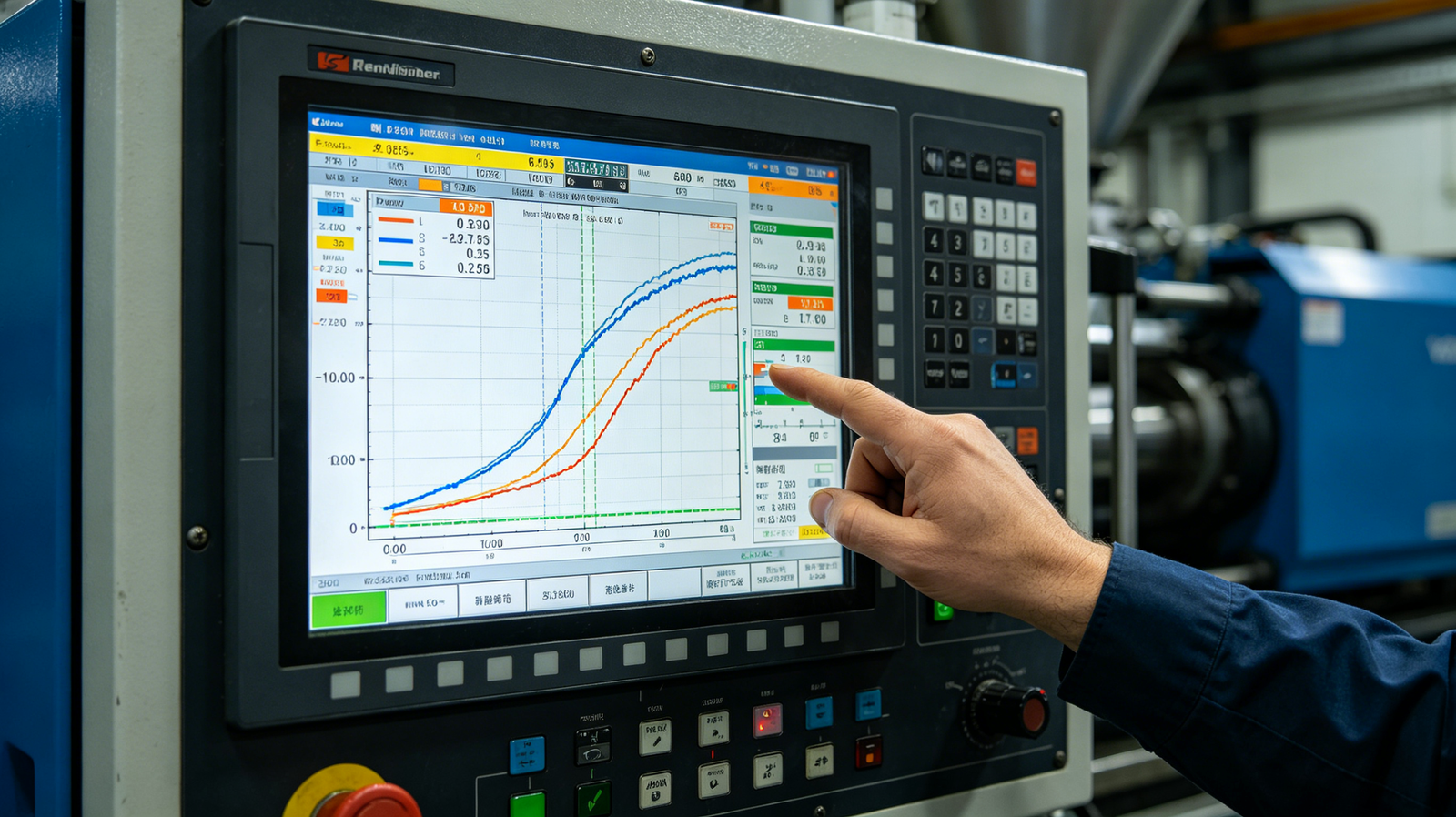
Optimal clamping force requires balancing melt temperature, flow length, wall thickness, and gate design to achieve even pressure. Optimized clamping force significantly improves pigment dispersion and part color consistency.Introducing sensors for monitoring helps maintain the optimal pressure curve in mass production.
- Smart parameter adjustment: Intelligent settings enable more stable color control.
- Real-time sensor monitoring: Monitoring clamping force ensures consistency for every part.
- Material compatibility assessment: Adjusting force based on material properties improves color performance.
- Mold structure optimization: Improving mold design reduces color variation risks.
✨ Optimizing clamping force is an effective tool for managing color consistency
Comparison of Clamping Force Effects on Color
| Item | Low Force | Optimal Force | High Force | Target |
|---|---|---|---|---|
| Color Variation | Severe | Minimal | Localized | Consistent |
| Surface Quality | Poor | Good | Potential defects | High-quality |
| Material Usage | Melt leakage | Moderate | Increased energy | Cost-efficient |
| Mold Life | Normal | Long | Shortened | Reliable |
Ensure your product achieves consistent color and performance ➜ contact us
How to balance cost and quality with clamping force?
Setting clamping force is critical for balancing production cost and quality, as precise control reduces scrap rates. Both too high and too low clamping force lead to additional rework costs.With production becoming increasingly automated, clamping force control is more data-driven, helping ensure consistent output and brand reputation.Partnering with experienced injection molding specialists can accelerate production efficiency and improve yield.
1.Reduce scrap: Accurate clamping force minimizes product defects and rework costs.
2.Enhance stability: Optimized clamping ensures consistent product appearance.
3.Smart adjustments: Data-driven parameter control provides precise production management.
4.Professional support: Expert teams offer optimized clamping strategies to secure output.
Conclusion
Clamping force is both a core parameter for molding quality and a key strategy for controlling color variation. Companies should use equipment optimization, process monitoring, and material matching to dynamically regulate force. Professional services can ensure consistent appearance and reliable large-batch delivery.Precise clamping force control reduces rework and enhances product competitiveness. Continuous attention to clamping parameters helps achieve the optimal balance between quality and cost.
For expert assistance in implementing for your production needs, visit our resource center or contact us. Let’s help you scale up your manufacturing with precision and efficiency!