Introduction

In the new product development stage, small-batch injection molding is not merely about producing samples, but about validating structure, function, and manufacturability under real production conditions. R&D teams often focus heavily on design feasibility while overlooking the supplier’s engineering collaboration and risk control capabilities. What truly determines development efficiency is not machine specifications, but integrated service capability.
Based on our experience at Xiamen Ruicheng, small-batch customization succeeds when it supports rapid iteration, low-risk validation, and seamless transition to mass production. We have shifted from being a processing-focused supplier to becoming a decision-support partner throughout the development cycle. In compressed development timelines, supplier responsiveness and technical depth directly impact project success.
Does Your Small-Batch Injection Molding Supplier Have True R&D Collaboration Capability?

During new product development, selecting a supplier experienced in Injection molding is critical because small-batch projects require flexibility, structured validation, and engineering interaction rather than pure output volume. At Xiamen Ruicheng, we conduct early-stage Design for manufacturability analysis to optimize wall thickness, gate positioning, and material selection before tooling begins. R&D collaboration capability determines whether sampling accelerates validation or creates downstream rework risks. Without early engineering involvement, dimensional instability, warpage, and assembly interference often emerge only after pilot production, resulting in delays and budget overruns.
Early Design Review: We organize structured drawing evaluations to identify manufacturability risks before tooling investment is finalized.
Rapid Sampling System: With in-house tooling support, we deliver prototype parts within 5–7 days to match development milestones.
Cross-Functional Coordination: Engineering, tooling, and production teams collaborate simultaneously to reduce communication gaps.
Mass Production Foresight: Even at small volumes, we establish baseline process parameters aligned with future scaling plans.
🚀 Strong engineering collaboration transforms small-batch molding into a strategic development advantage.
How Can Small-Batch Orders Balance Cost Efficiency and Quality Stability?

Small-batch injection projects often struggle with higher unit costs and inconsistent quality due to limited production runs and frequent parameter adjustments. At Xiamen Ruicheng, we optimize Injection moulding tool design and material strategies to minimize waste while ensuring dimensional consistency. Cost efficiency in small batches comes from systematic process optimization rather than aggressive price reduction. Through structured Quality control procedures and first-article inspection protocols, we create traceable datasets that support future mass production decisions.
Material Optimization: We recommend alternative resins that meet performance needs while reducing prototype cost exposure.
Stable Process Window: We define controlled molding parameters to prevent frequent machine adjustments that introduce variation.
Tooling Reusability Planning: Molds are designed with scalability in mind to avoid duplicate tooling investment later.
Data Documentation: Each sampling run is recorded and analyzed to build a reliable manufacturing database.
💡 Real cost control in small-batch injection comes from engineering discipline, not price compression.
How Does Small-Batch Injection Molding Seamlessly Connect to Future Mass Production?
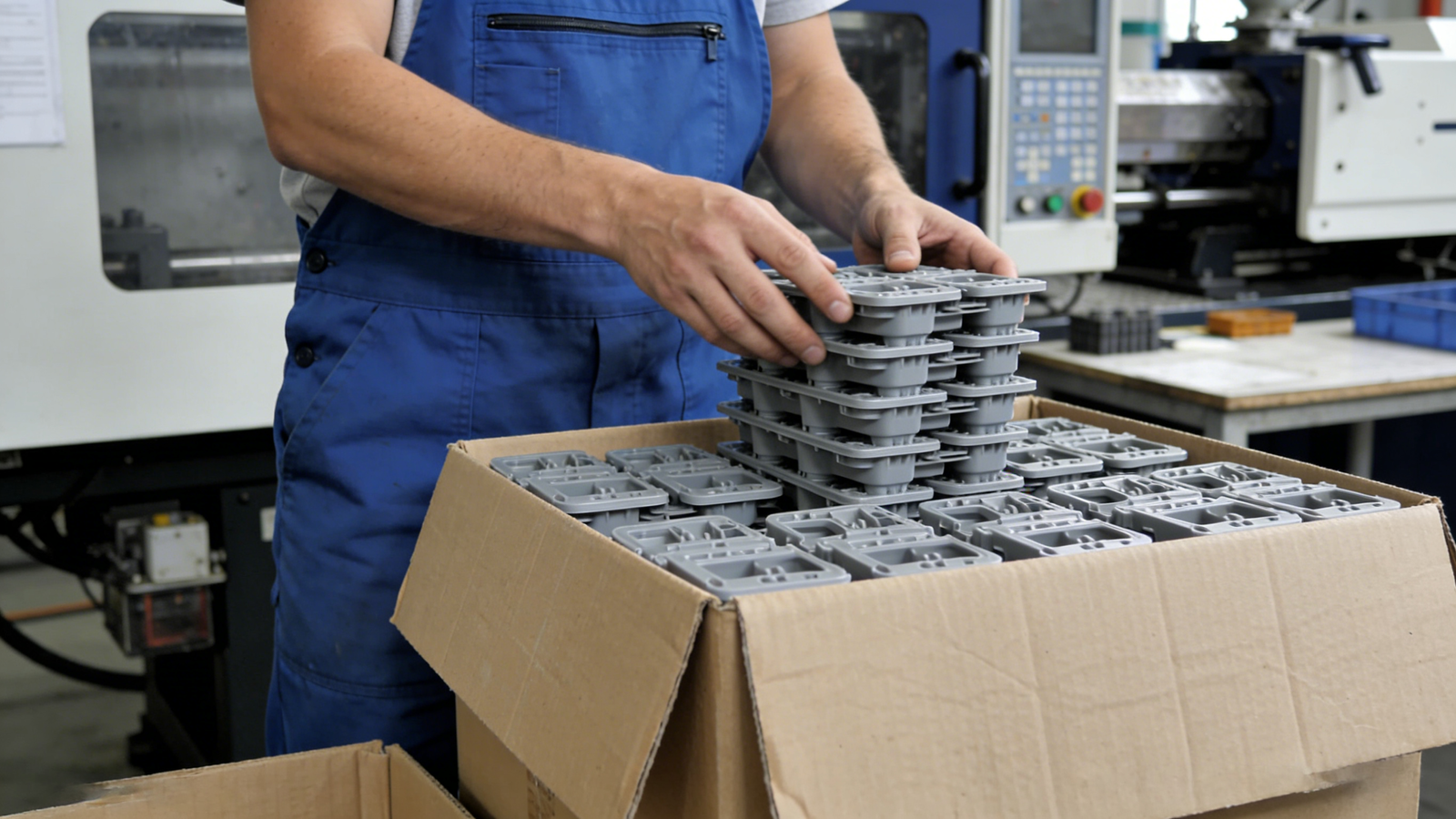
Small-batch injection molding should function as a controlled pre-production rehearsal rather than an isolated sampling stage. At Xiamen Ruicheng, we align every small-batch project with standardized Injection molding practices and structured Production planning strategies from the beginning. Planning the mass production pathway during the sampling phase prevents redundant tooling, repeated validation, and unexpected reinvestment. By evaluating mold life, equipment allocation, and projected demand curves early, we enable customers to transition smoothly once market validation is achieved.
Flexible Capacity Planning: Equipment and workforce allocation are reviewed against projected demand scenarios.
Mold Durability Assessment: Tool steel selection and structural reinforcement are evaluated for long-term scalability.
Process Scaling Validation: Small-batch data is analyzed to simulate large-scale production stability.
Supply Chain Integration: Material and logistics partners are coordinated to support volume expansion without disruption.
📈 Seamless production scaling begins with disciplined small-batch execution.
Key Capability Comparison for Small-Batch Injection Molding Services
| Capability Dimension | Xiamen Ruicheng | Traditional Factory | Trading Company | Tooling-Only Shop |
|---|---|---|---|---|
| DFM Support | Full-process engineering | Basic feedback | None | Mold-focused only |
| Sampling Lead Time | 5–7 days | 10–15 days | Outsourced | Capacity dependent |
| Production Scaling | Direct expansion ready | Requires re-optimization | No capacity control | Needs secondary factory |
| Data Traceability | Full documentation | Partial | None | Mold-only records |
| Minimum Order | Flexible | Higher MOQ | Unstable | Undefined |
If you are evaluating partners for your next development project, connect with our engineering team today through contact us and let Xiamen Ruicheng support your decision-making process.
Upgrading from “Processing Vendor” to “R&D Decision Partner”
In the development stage, companies require more than manufacturing execution; they need structured technical partnership and risk-sharing support. Xiamen Ruicheng builds its service model around engineer-led project management and transparent collaboration workflows. We focus on improving your product launch success rate rather than merely fulfilling orders. Through structured milestone reviews, cost transparency, and scalability planning, we help align R&D, pilot production, and commercialization stages under one coherent manufacturing strategy.
1.Engineering Co-Creation: We actively participate in structural refinement and manufacturability enhancement.
2.Risk Prevention Strategy: Potential failure points are identified during sampling and corrected proactively.
3.Flexible Delivery Planning: Multiple small runs are supported to match evolving development schedules.
4.Scalable Production Roadmap: Expansion pathways are defined early to prevent redundant investment.
FAQ: Small-Batch Injection Molding Procurement Guide
Question 1: What is the core strength of your small-batch injection molding service?
Answer: Our strength lies in engineering-driven execution, offering minimum orders starting from 50 pieces, 5–7 day sampling cycles, structured DFM analysis, and multi-stage dimensional inspections to ensure prototype reliability and scalability.
Question 2: What information should we provide to receive a quotation quickly?
Answer: Please submit 3D CAD files, material requirements, estimated order volume, and application description. Our engineering team conducts feasibility evaluation within 12 hours and provides a structured quotation including process analysis and lead time details.
Question 3: What are the minimum order quantity and delivery timelines for different volume levels?
Answer: For pilot runs, the MOQ starts at 50 units with 5–7 day delivery. For volumes above 500 units, structured small-batch production can be arranged with 7–10 day delivery depending on material availability.
Question 4: How do you handle quality issues or delivery delays?
Answer: Quality claims can be initiated within 7 days of receipt. Once verified, corrective action is implemented within 48 hours, including remanufacturing or replacement, supported by documented responsibility agreements.
Question 5: Can you provide customization for special technical requirements?
Answer: Yes, we support material substitution, structural reinforcement, and functional enhancements. Detailed environmental conditions and performance targets are required, and feasibility analysis is delivered within 3 working days with cost implications clearly outlined.
Conclusion
Small-batch injection molding in new product development is a comprehensive test of a supplier’s engineering depth, responsiveness, and scalability planning. Selecting a partner with integrated service capabilities reduces development risk and shortens time-to-market significantly. At Xiamen Ruicheng, we position ourselves as a decision-support partner embedded in your development lifecycle. When manufacturing expertise aligns with strategic collaboration, injection molding becomes a catalyst for successful product commercialization.
For expert assistance in implementing solutions for your production needs, visit our resource center or contact us. Let’s help you scale up your manufacturing with precision and efficiency!