Introduction

Overmolding and multi-material injection molding are widely used in automotive, consumer electronics, and industrial products, but bonding failure remains one of the most critical risks in mass production. Delamination, weak interfaces, and stress cracking are often caused by subtle mismatches in material behavior and process control. Bonding strength is not a single-parameter issue but a system-level engineering outcome.
In real manufacturing projects, many customers focus only on material selection while ignoring mold design and process interaction. At Xiamen Ruicheng, a China-based OEM/ODM manufacturer, we integrate engineering validation into early-stage development to reduce bonding risks. Reliable bonding strength is achieved only when material, structure, and process are controlled together.
Why Does Bonding Fail in Overmolding?
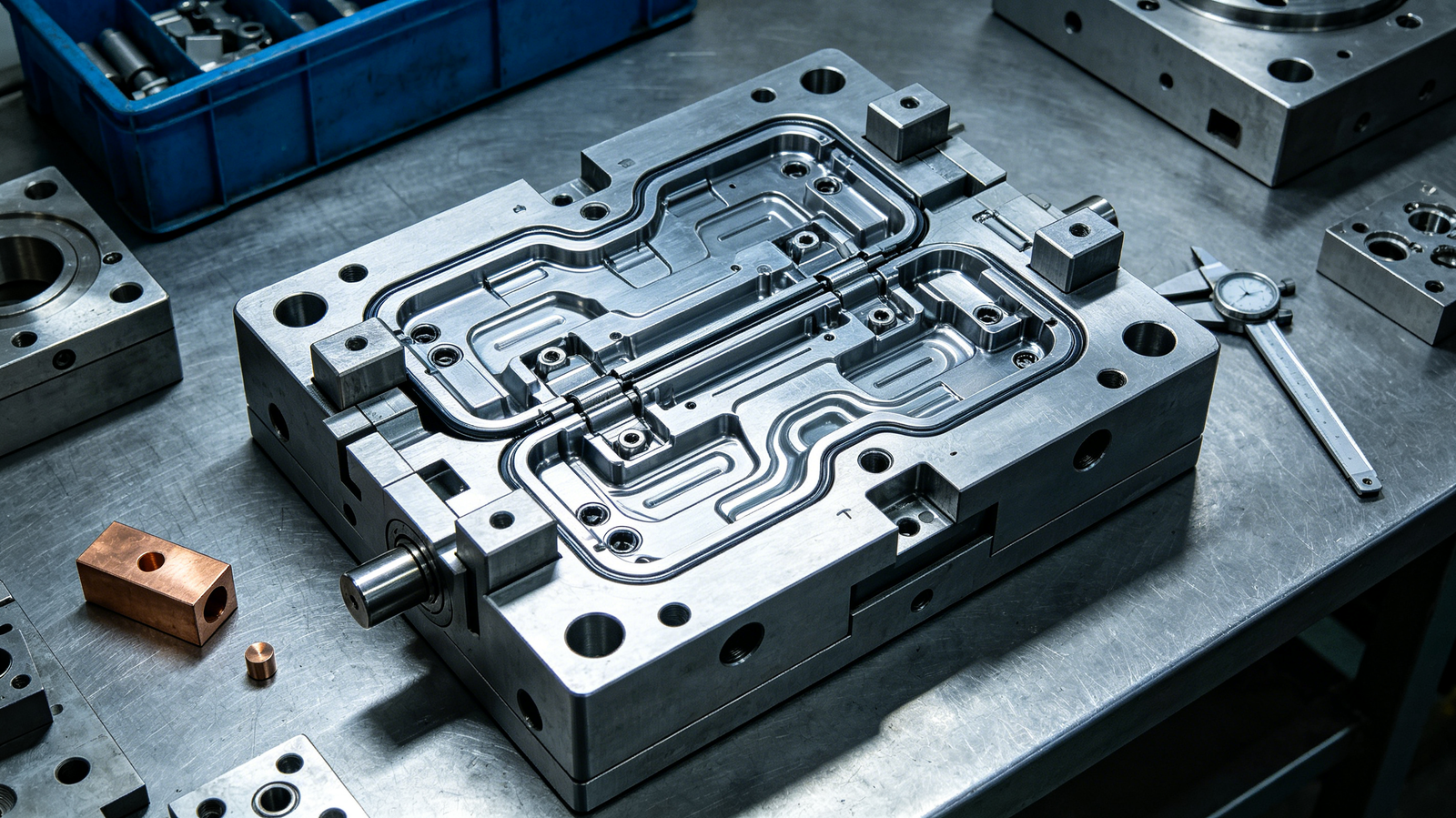
Bonding failure in overmolding is not usually caused by material strength alone, but by instability at the interface under thermal stress, shear force, and shrinkage mismatch. Through injection molding process control, many of these risks can be reduced, but only with a structured engineering approach. Most bonding failures originate from microscopic interface behavior rather than visible design errors.
Material incompatibility: Differences in polarity reduce molecular interlocking at the interface.
Insufficient interface temperature: Low thermal energy prevents proper fusion between materials.
Uneven injection pressure: Pressure imbalance creates weak bonding zones.
Cooling shrinkage conflict: Different shrinkage rates generate internal stress and separation.
📌 Bonding failure is often a design-stage oversight rather than a production defect.
How Does Material Selection Improve Bonding Strength?

Material selection is the first critical step in overmolding success. Different polymer systems behave differently at the interface level, and compatibility determines bonding potential. At xiamenruicheng, material validation is performed through both database screening and real sample testing. Material compatibility defines the theoretical ceiling of bonding strength.
Polarity matching principle: Similar polarity materials tend to form stronger molecular bonds.
Melting temperature alignment: Prevents thermal degradation during secondary injection.
Additive impact evaluation: Flame retardants and plasticizers may weaken bonding.
Interface adhesion testing: Real sample validation confirms actual performance.
📌 Without material compatibility, no process optimization can fully compensate.
How Do Mold Design and Process Affect Bonding?
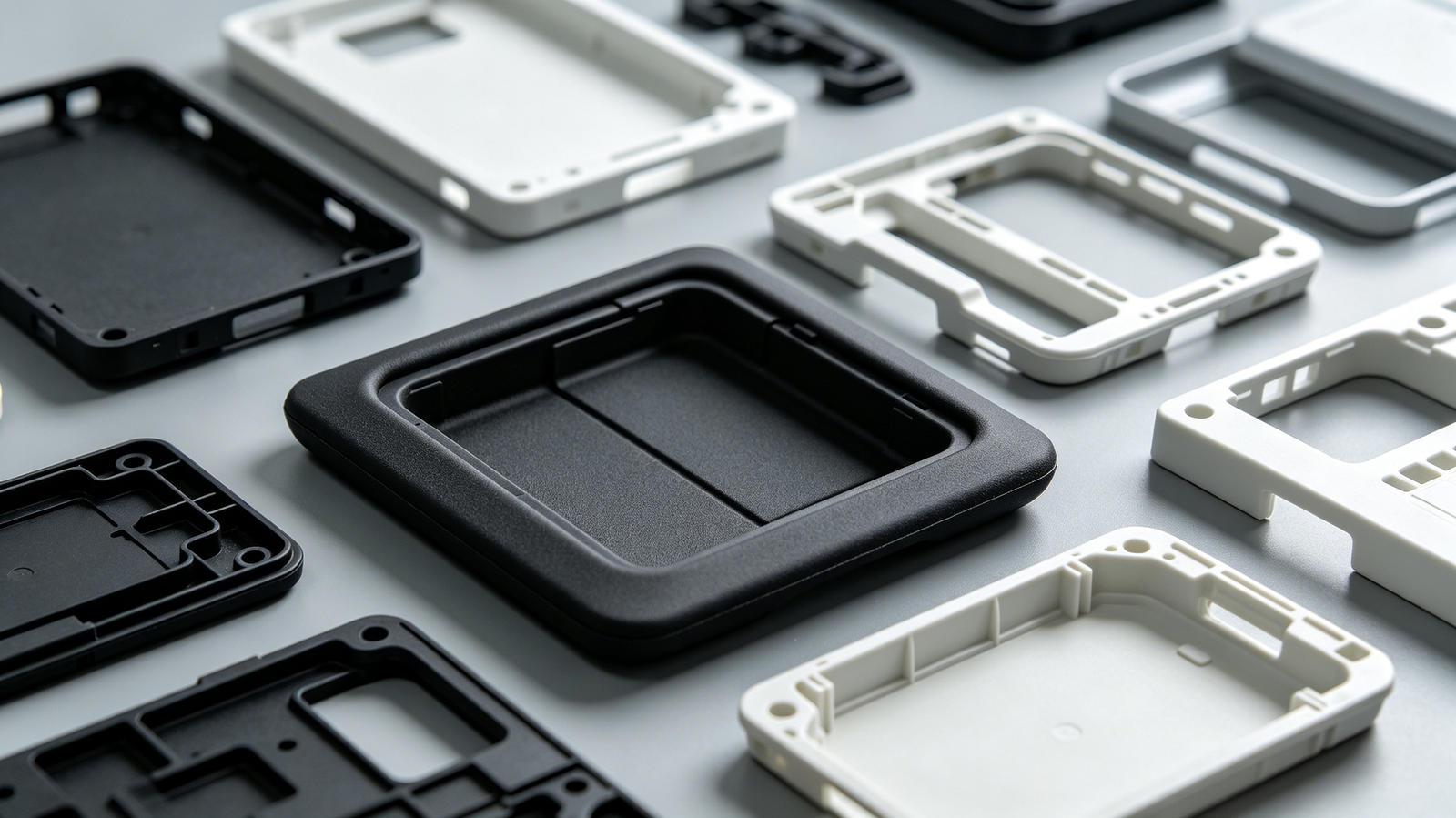
Mold structure determines melt flow behavior and interface contact quality, while process parameters define whether sufficient energy is delivered during bonding. Using injection molding engineering principles, manufacturers can significantly improve bonding consistency. Mold design defines structure, while process defines final bonding quality.
Interface locking design: Mechanical interlocks improve physical bonding strength.
Gate location optimization: Ensures complete material coverage at bonding zones.
Temperature control strategy: Maintains optimal fusion window during molding.
Stable pressure curve: Prevents micro-cracks at the interface.
📌 Mold engineering is not just forming—it is bonding architecture design.
Overmolding Bonding Optimization Comparison
| Strategy | Focus Area | Risk Level | Cost Impact | Stability |
|---|---|---|---|---|
| Material Optimization | Compatibility | Medium | Medium | Medium |
| Mold Optimization | Structural design | Low | High | High |
| Process Optimization | Parameter control | Medium | Low | Medium-High |
| Integrated Control | Full system | Low | Medium | Very High |
In multi-material injection molding projects, relying on a single optimization approach rarely solves bonding instability. Engineering integration is required across all stages. If you are evaluating a multi-material project, contact us for DFM engineering support.
How to Evaluate a Multi-Material Injection Supplier?
A supplier’s true capability in overmolding is not defined by whether they have 2K machines, but whether they can systematically analyze bonding failure mechanisms. Real engineering capability is the ability to explain why bonding fails.
1.Material validation system: Check whether compatibility testing is structured.
2.Mold engineering capability: Evaluate experience in interface structure design.
3.Sample testing data: Confirm availability of bonding strength reports.
4.Mass production consistency: Ensure batch-to-batch stability.
FAQ: Overmolding Bonding Strength
Q1: How do I know if bonding strength is reliable?
A: It should be verified through peel testing, interface inspection, and long-term environmental validation combined with material compatibility analysis.
Q2: Why does delamination occur in multi-material molding?
A: It is mainly caused by thermal mismatch, insufficient interface temperature, or uneven pressure distribution preventing proper molecular fusion.
Q3: Which materials are best for overmolding?
A: Materials with similar polarity and overlapping melting temperature ranges, such as TPE and ABS systems, generally perform better.
Q4: How can I improve consistency in mass production?
A: Stable mold temperature, controlled injection curves, and SPC-based process monitoring are key methods.
Q5: How does Xiamen Ruicheng ensure bonding quality?
A: Through DFM analysis, material validation, tooling trials, and mass production monitoring to build a full engineering control loop.
Conclusion
Overmolding bonding strength is fundamentally a system engineering challenge rather than a single-material or single-process issue. Material compatibility, mold design, and process control must work together to achieve stable production outcomes. Only a fully integrated engineering system can eliminate long-term bonding risks in multi-material injection molding.
For expert assistance in implementing advanced overmolding solutions for your production needs, visit our resource center or contact us. Let’s help you scale up your manufacturing with precision and efficiency!