Introduction
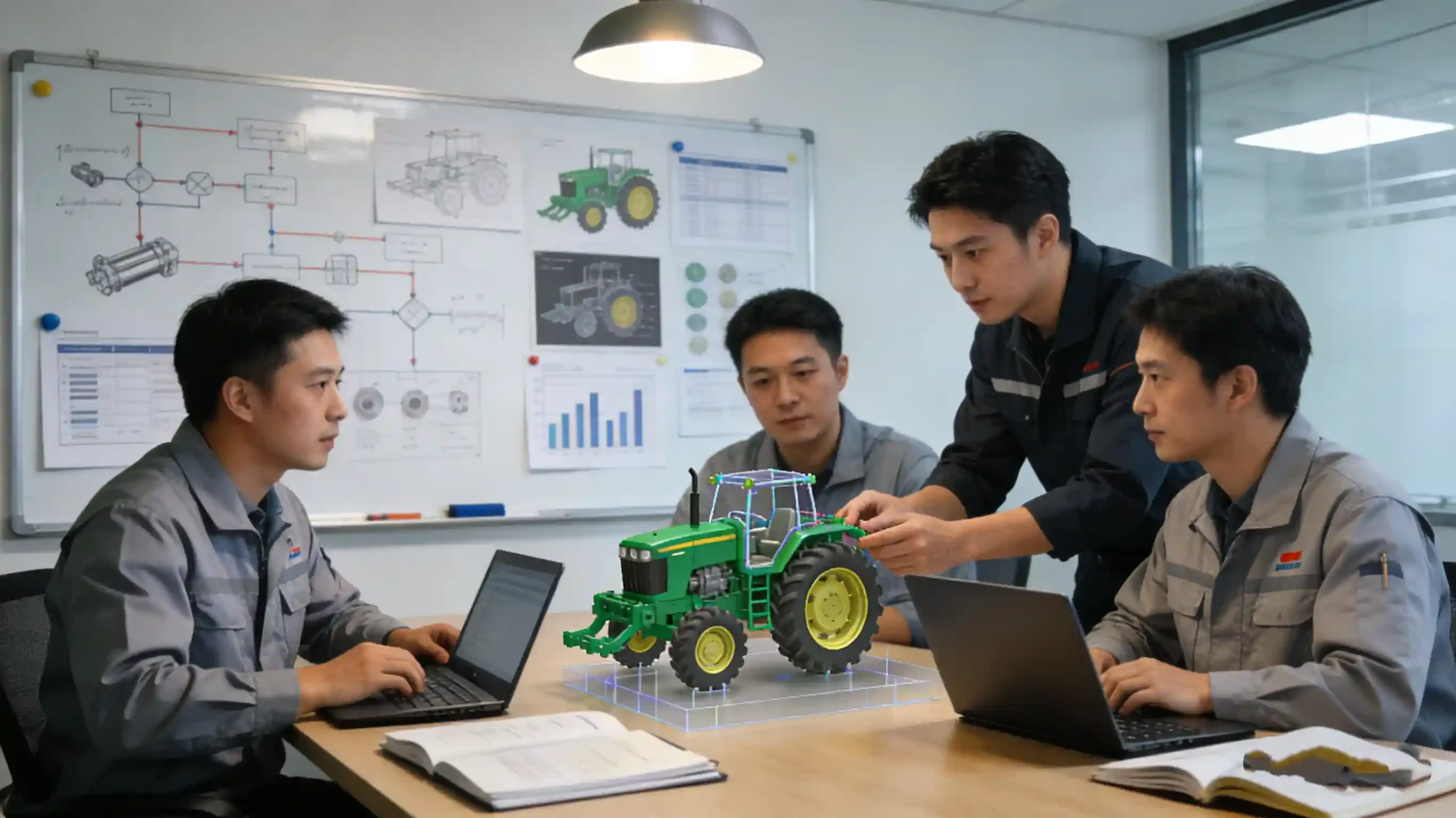
In agricultural machinery component manufacturing, long-term exposure to lubricating oil leads to hidden costs such as material aging, swelling, and performance degradation, which many manufacturers underestimate. Although PA66 is a widely used engineering plastic, its oil resistance is not inherently consistent across different grades and formulations, and wrong material choices often reveal risks only after mass production.What truly determines the reliability of agricultural machinery components is not the material name, but its stability under real operating conditions.
As agricultural equipment evolves toward higher loads and longer duty cycles, relying solely on datasheets can no longer support sound procurement decisions. Based on extensive injection molding experience, Xiamen Ruicheng has found that only by systematically evaluating material selection, process compatibility, and application scenarios can long-term failures be effectively avoided.Shifting from product presentation to decision companionship is now an inevitable trend in injection-molded component procurement.
Is the Oil Resistance of All PA66 Materials Really the Same?
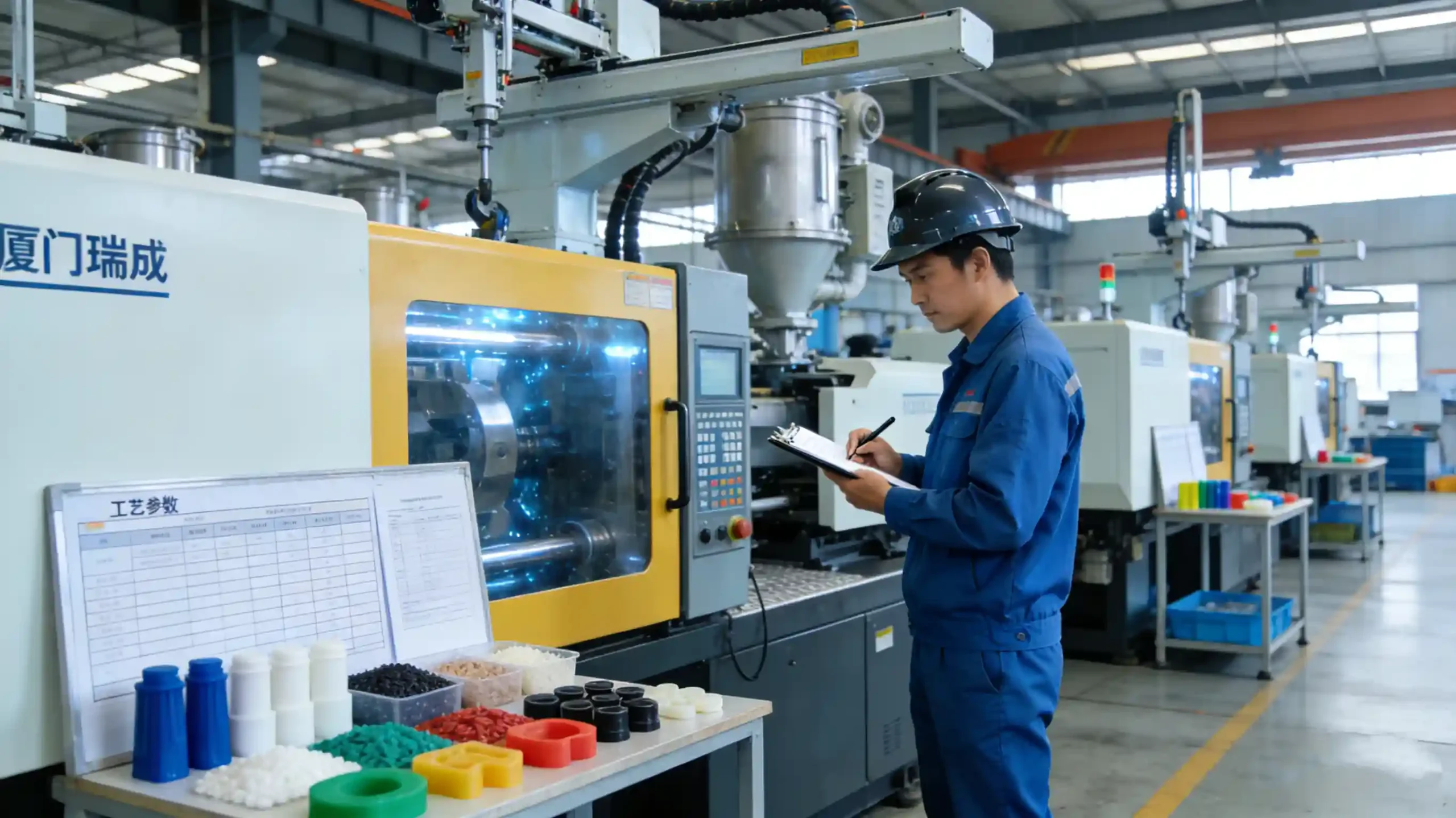
In agricultural machinery applications, PA66 shows significant performance differences under various oil environments, with some materials passing short-term tests but suffering mechanical degradation after long-term oil immersion. Oil corrosion is not a single chemical effect, but the combined result of temperature, additives, and mechanical stress. Therefore, material selection should focus on real-world responses related to oil resistance and chemical stability, rather than relying solely on brand labels. During injection molding projects, Xiamen Ruicheng integrates operating condition simulations to identify potential failure risks early.
Base formulation differences: Different PA66 formulations show noticeable variation in oil swelling resistance and must be verified through immersion testing.
Additive influence: Stabilizers and modification systems directly affect long-term oil resistance performance.
Stress coupling effect: Residual stress from injection molding can amplify oil-induced material degradation.
Application suitability: Matching material behavior to actual temperature and oil type ultimately determines service life.
🔧 The key to material selection lies not in “whether it is PA66,” but in whether it can withstand real oil exposure over time.
Which Operating Factors Amplify Oil Corrosion Risks in Agricultural Machinery?
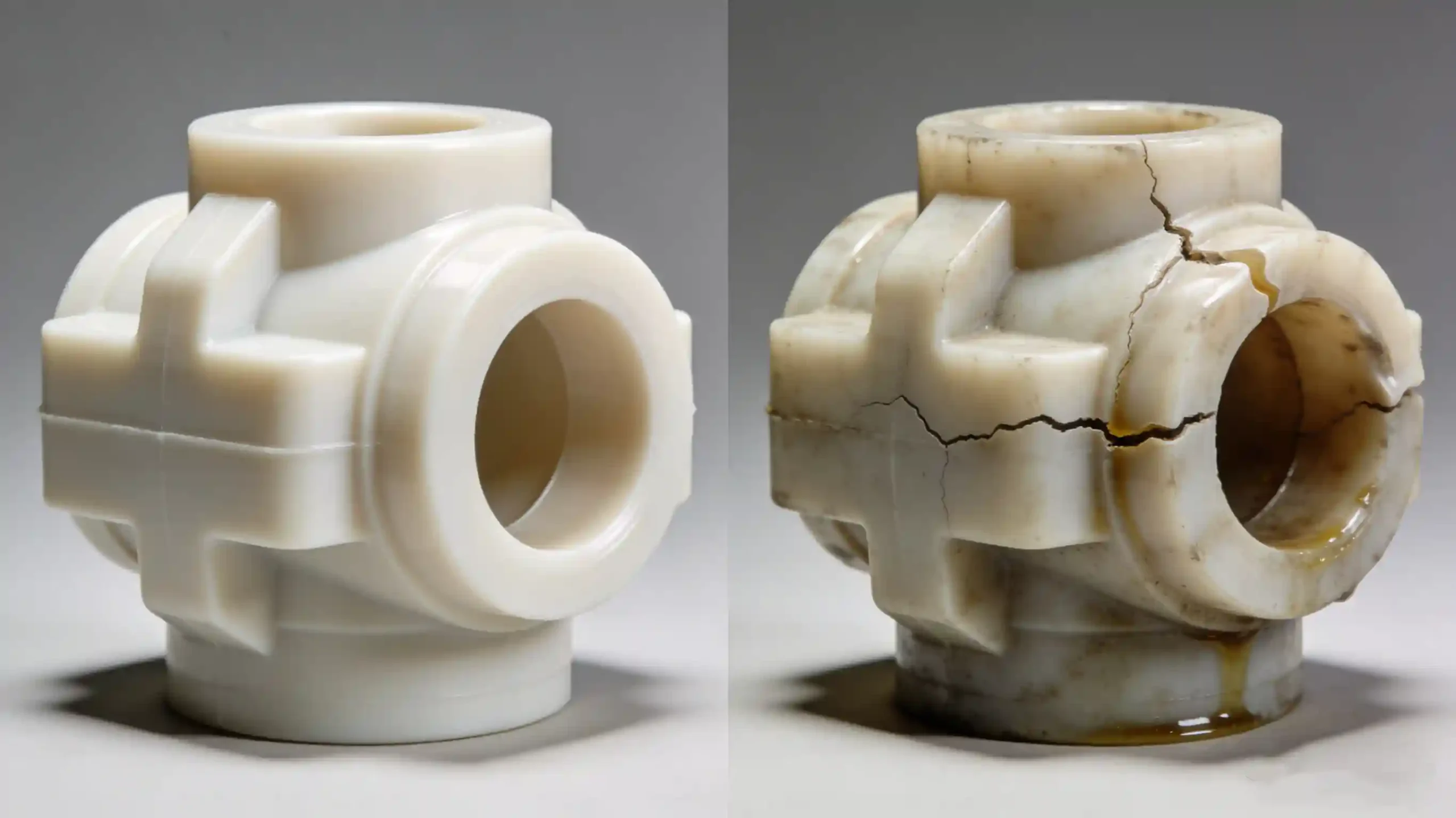
Agricultural machinery components often operate under high temperatures, vibration, and continuous oil contamination, all of which accelerate PA66 performance degradation. Prolonged exposure to hot oil alters internal crystalline structures, directly affecting dimensional and mechanical stability. Therefore, evaluations must also consider factors such as thermal aging and material fatigue, not just isolated oil resistance tests. Xiamen Ruicheng recreates multidimensional operating conditions to help customers identify risk points in advance.
Temperature accumulation: High oil temperatures accelerate molecular relaxation and long-term strength loss.
Vibration loads: Dynamic stress promotes faster oil penetration into the material structure.
Oil formulation variability: Different oil brands and additive packages affect plastics differently.
Operating cycles: Continuous operation places far higher demands on material stability than intermittent use.
⚙️ Understanding real operating conditions is more effective than memorizing material parameters.
How Does Injection Molding Affect Oil Resistance Performance?
Even with the right PA66 material, improper injection molding can significantly weaken oil resistance. Shear stress, temperature control, and cooling strategies during molding directly affect internal material density and structure. In practice, process optimization must align injection molding principles with crystallinity control. Xiamen Ruicheng participates early in process evaluation to ensure that material properties are fully retained after molding.
Melt temperature control: Excessive temperatures can damage molecular chains and reduce oil resistance.
Mold cooling design: Uneven cooling induces internal stress that amplifies oil corrosion effects.
Cycle time management: Both overly fast and slow cycles negatively influence crystalline structure.
Post-processing strategies: Proper annealing can significantly enhance long-term stability.
🛠️ Oil resistance performance is often decided right beside the injection molding machine.
Key Differences Among PA66 Solutions for Oil-Resistant Agricultural Applications
| Comparison Aspect | Standard PA66 | Modified PA66 | Glass-Fiber Reinforced PA66 | Xiamen Ruicheng Customized Solution |
|---|---|---|---|---|
| Oil resistance stability | Medium | Relatively high | High | Optimized for application |
| Long-term dimensional stability | Average | Good | Very good | Controlled and stable |
| Injection molding adaptability | High | Medium | Medium | Process-synchronized |
| Agricultural application fit | Limited | Stronger | Strong | Highly matched |
Selection does not end with comparison. The most suitable solution is often hidden in specific operating details. Learn more and contact us.
A Systematic Decision Path from Material Selection to Mass Production
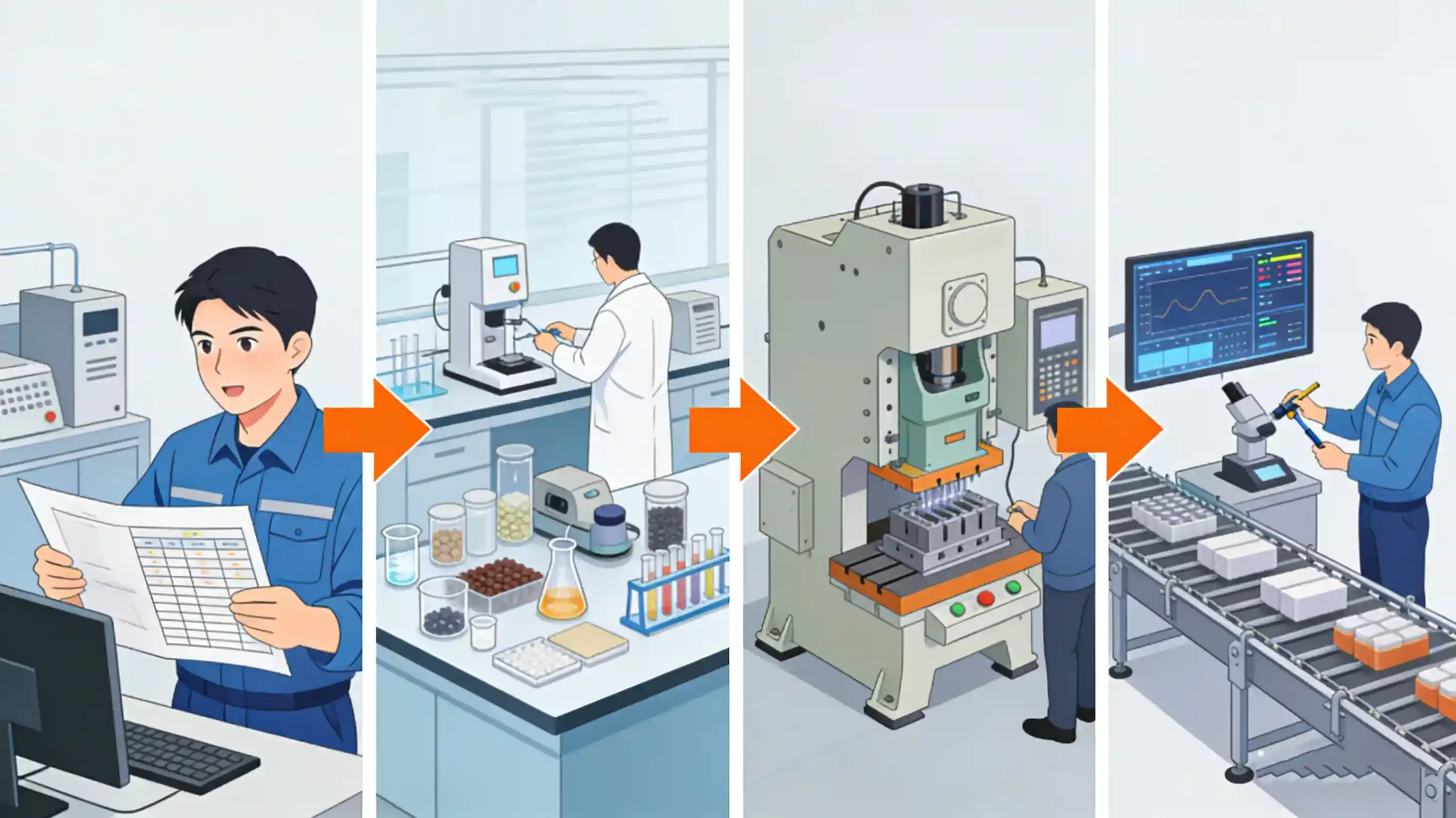
For agricultural machinery components, selecting oil-resistant PA66 should not be an isolated action but a continuous decision-making process spanning design, pilot runs, and mass production. Shifting validation earlier in the project significantly reduces later rework and warranty risks. Through integrated injection molding support, Xiamen Ruicheng helps customers establish actionable selection paths from the start.
1.Operating condition breakdown: Clearly define temperature, oil type, and load requirements.
2.Material screening: Shortlist materials based on real conditions, not datasheets alone.
3.Process validation: Confirm compatibility through trial molds and pilot runs.
4.Mass production assurance: Continuously monitor consistency during scaled production.
Frequently Asked Questions (FAQ)
Question: What is the core quality assurance for your oil-resistant PA66 injection-molded components?
Answer: Based on specific agricultural operating conditions, Xiamen Ruicheng defines oil resistance test criteria and cycles, combined with strict process control and finished-part inspection to ensure long-term stability and reduce hidden failure risks for buyers.
Question: What information is required for customizing an oil-resistant PA66 solution?
Answer: We recommend providing component drawings, application position, oil type, operating temperature, and expected service life. Upon receiving this information, Xiamen Ruicheng can quickly evaluate feasibility and provide a tailored solution with pricing.
Question: How are lead times and minimum order quantities handled for different procurement volumes?
Answer: For both pilot runs and mass production, Xiamen Ruicheng offers flexible MOQ and lead-time arrangements, supported by scalable production capacity.
Question: How are oil resistance deviations handled after mass production?
Answer: Issues are assessed based on predefined inspection standards. If necessary, material or process reviews are initiated, followed by corrective actions such as rework, replacement, or optimization after responsibility is clarified.
Question: Do you support deep customization for special agricultural operating conditions?
Answer: Yes, material and process co-customization is available for high-temperature, high-load, or special oil environments, provided detailed operating data is supplied to ensure feasibility and stability.
Conclusion
Selecting oil-resistant PA66 injection materials is essentially a system-level decision centered on real operating conditions rather than simple material comparisons. By integrating material performance, injection molding processes, and agricultural machinery applications, manufacturers can effectively prevent long-term failures and cost overruns. Choosing a partner with strong operating-condition insight is key to ensuring reliable long-term performance of agricultural machinery components. Xiamen Ruicheng leverages its injection molding expertise to accompany customers through every step from material selection to mass production.
For expert assistance in implementing for your production needs, visit our resource center or contact us. Let’s help you scale up your manufacturing with precision and efficiency!