Introduction

Injection molding technology has become a crucial bridge between structure and functionality in electronic devices. It not only provides solid housing support but also delivers multi-functional properties like thermal management and insulation. High-performance injection materials make electronic products lighter, more durable, and smarter.
For a closer look at the material selection, flammability and ESD requirements behind these parts, see our guide to electronics injection molding.
With the rise of 5G and IoT technologies, performance requirements for molded parts are increasing rapidly. Manufacturers are now focusing on balancing precision, appearance, and electrical safety. Injection molded parts are no longer just structural—they’re the functional backbone of modern electronics.
How to Improve the Structural Stability of Molded Parts in Electronics?

Injection molded parts in electronic structures play key roles in fastening, protection, and insulation. Selecting the right engineering plastics and optimizing molding processes can significantly reduce stress and deformation. Precise mold design and material control are the foundations of mechanical stability.
- High-Strength Material Selection: Use PBT, PA66, or PC+ABS to enhance structural rigidity.
- Moldflow Analysis Optimization: Predict stress points and cooling imbalance during molding.
- Rib Reinforcement Design: Add ribs strategically to prevent stress concentration.
- Assembly Tolerance Control: Maintain precise fitting to reduce residual stress.
😊 Stability is the physical foundation of reliable electronic performance.
How to Enhance Thermal Management in Injection Molded Parts?

During operation, electronic devices generate heat that must be dissipated efficiently. Using thermally conductive fillers, inserts, or hybrid molding technology can significantly boost thermal performance. Efficient heat management allows electronic components to operate at peak performance for longer.
- Thermally Conductive Materials: Use conductive nylon or carbon fiber composites for better heat transfer.
- Metal Insert Integration: Combine metal inserts with plastic parts to form heat paths.
- Optimized Wall Thickness: Reduce hot spots and promote even heat distribution.
- Advanced Cooling Channel Design: Maintain consistent part temperature during molding.
🔥 Thermal control defines both efficiency and durability in electronics.
How to Balance Insulation and Conductivity?

In electronics, molded parts must prevent short circuits while ensuring conductivity where needed. Through composite formulations or multi-shot molding, functional zoning can be achieved. Balancing insulation and conductivity reflects the technical sophistication of modern injection molding.
- Dual-Material Molding Technology: Combine conductive and insulating resins for functional partitioning.
- Conductive Filler Precision: Fine-tune carbon black or silver powder ratios to control resistivity.
- Surface Coating Methods: Protect non-conductive areas with dielectric coatings.
- Precision Mold Partition Design: Accurately define conductive and insulating regions.
⚡ Balancing insulation and conductivity is central to smart electronic design.
Performance Comparison of Injection Materials in Electronics
| Material Type | Thermal Conductivity | Insulation | Heat Resistance | Dimensional Stability |
|---|---|---|---|---|
| PC+ABS | Moderate | Excellent | Moderate | Good |
| PBT | Good | Excellent | High | Excellent |
| LCP | Excellent | Excellent | Very High | Excellent |
| Conductive Nylon | Superior | Moderate | High | Good |
Each material provides unique advantages depending on product goals and performance needs. Interested in selecting the best-fit material for your project? Reach out today at contact us for custom engineering advice.
Smart Molding Driving Electronic Innovation
As electronics become smaller and more multifunctional, injection molding is advancing toward smart manufacturing. Embedded sensor molding, IMD processes, and automated assembly are redefining both appearance and functionality.With real-time molding parameter control and intelligent mold temperature systems, manufacturers achieve higher consistency and yield. This integration enables flexible and sustainable electronic production.
1.Smart Monitoring Systems: Enable real-time process control.
2.Automated Assembly: Minimize human error and assembly time.
3.Multi-Material Integration: Combine structure and functionality.
4.Green Manufacturing: Promote recyclable and eco-friendly materials.
Conclusion
Injection molded parts are no longer just enclosures—they’re essential to enhancing electronic performance. Through material innovation, precise tooling, and process control, the reliability and longevity of electronic devices have improved drastically. The future of electronics manufacturing will depend on the intelligence and customization of molding technologies.Companies that master this synergy between design and injection molding will lead the next wave of smart electronics.
For expert assistance in implementing injection molding solutions for your production needs, visit our resource center or contact us. Let’s help you scale up your manufacturing with precision and efficiency!
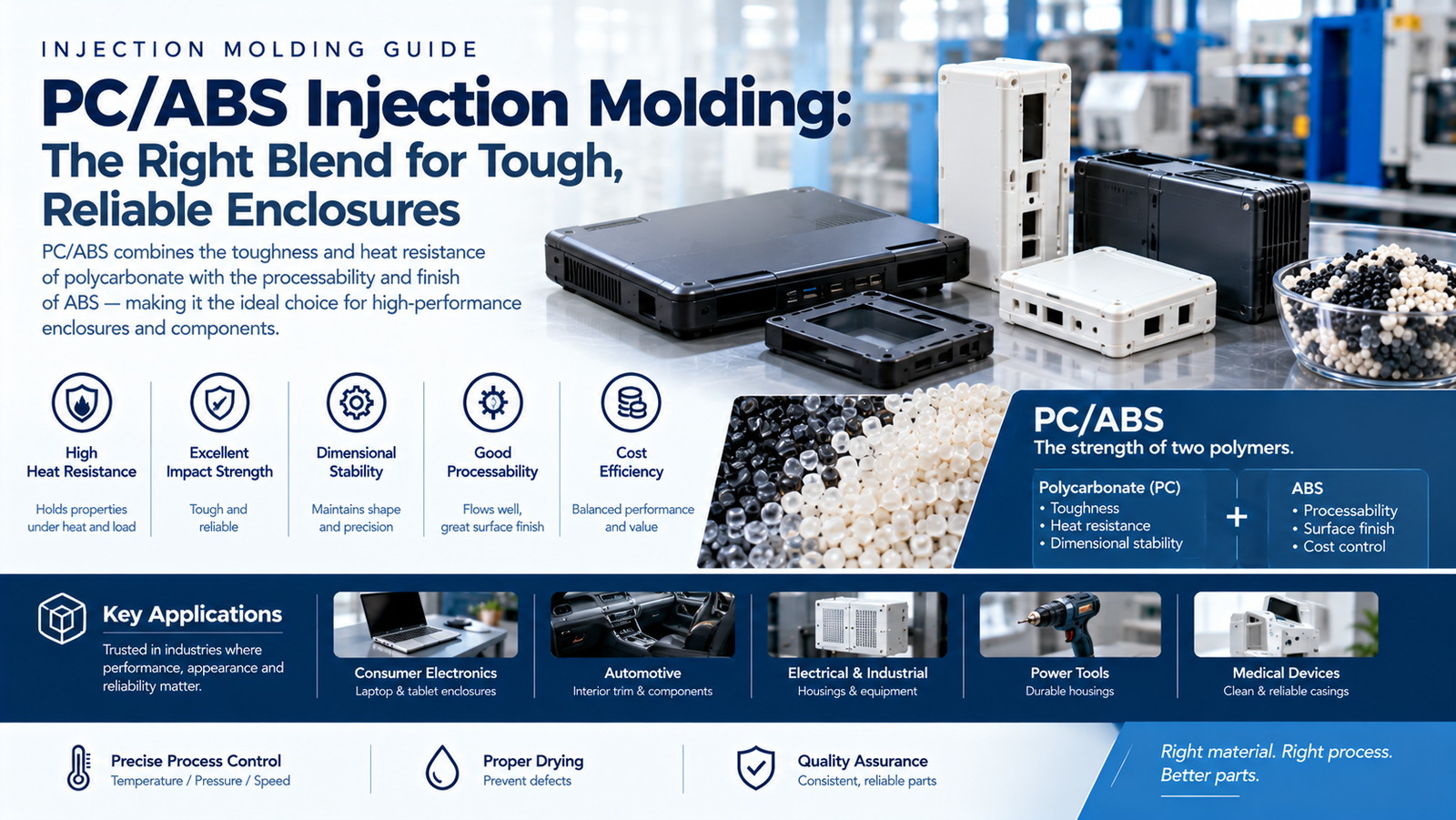
PC/ABS is one of the materials behind those results — our guide to PC/ABS injection moulding covers blend ratios, drying, defects and design rules.