Introduction
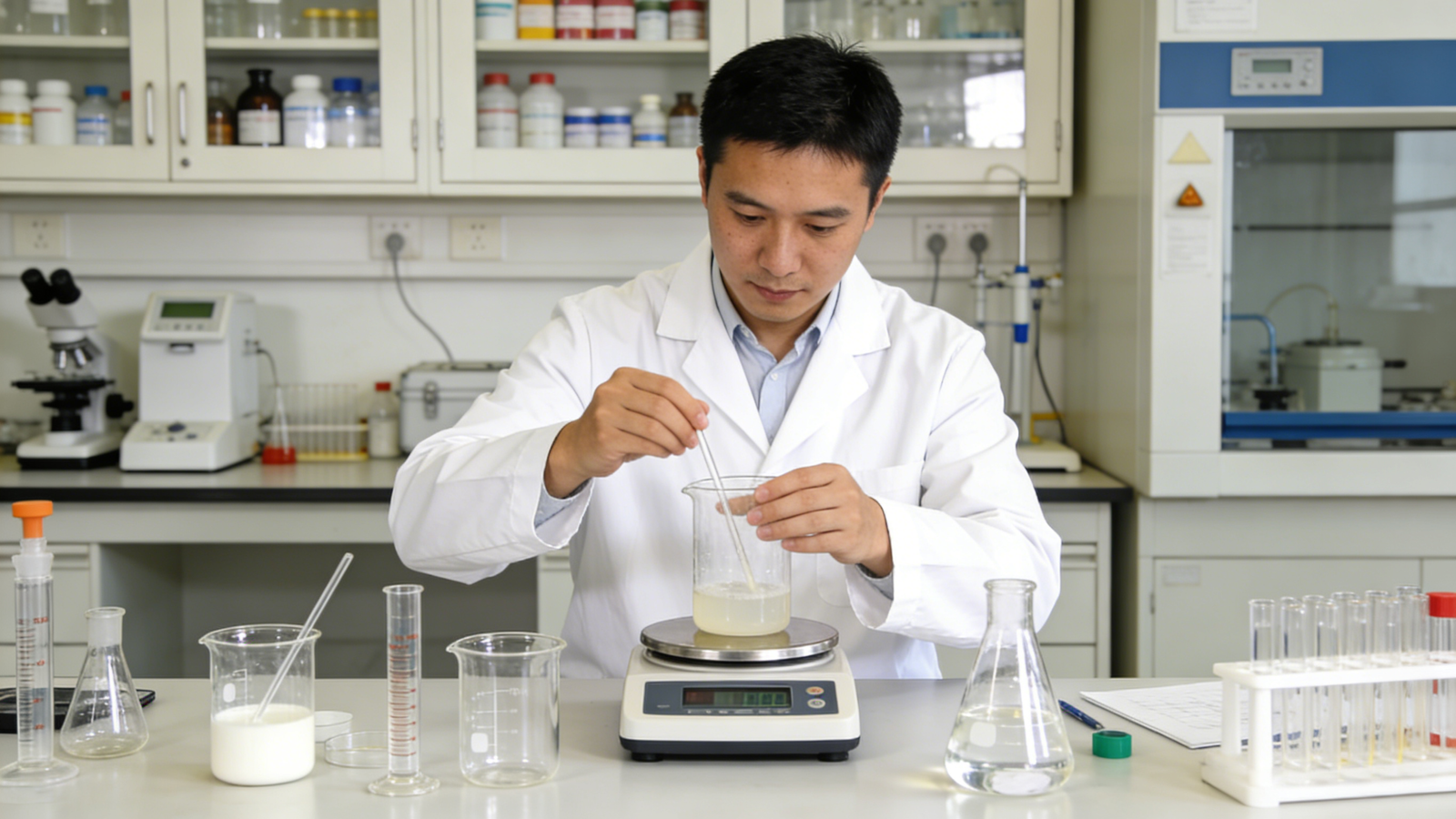
In the cultural creative toy market, visual appeal is increasingly driven by color expression, yet TPR materials often suffer from fading under long-term use, light exposure, and friction. Color stability has become a critical bottleneck when cultural creative toys move from design concepts to mass production.
From Xiamen Ruicheng’s hands-on manufacturing experience, relying solely on material datasheets or pigment parameters is not enough to ensure lasting color performance. Only a systematic TPR injection molding solution that integrates material selection, process control, and quality verification can deliver long-term, consistent color results in real-world applications.
Why Are Cultural Creative TPR Toys Prone to Color Fading?
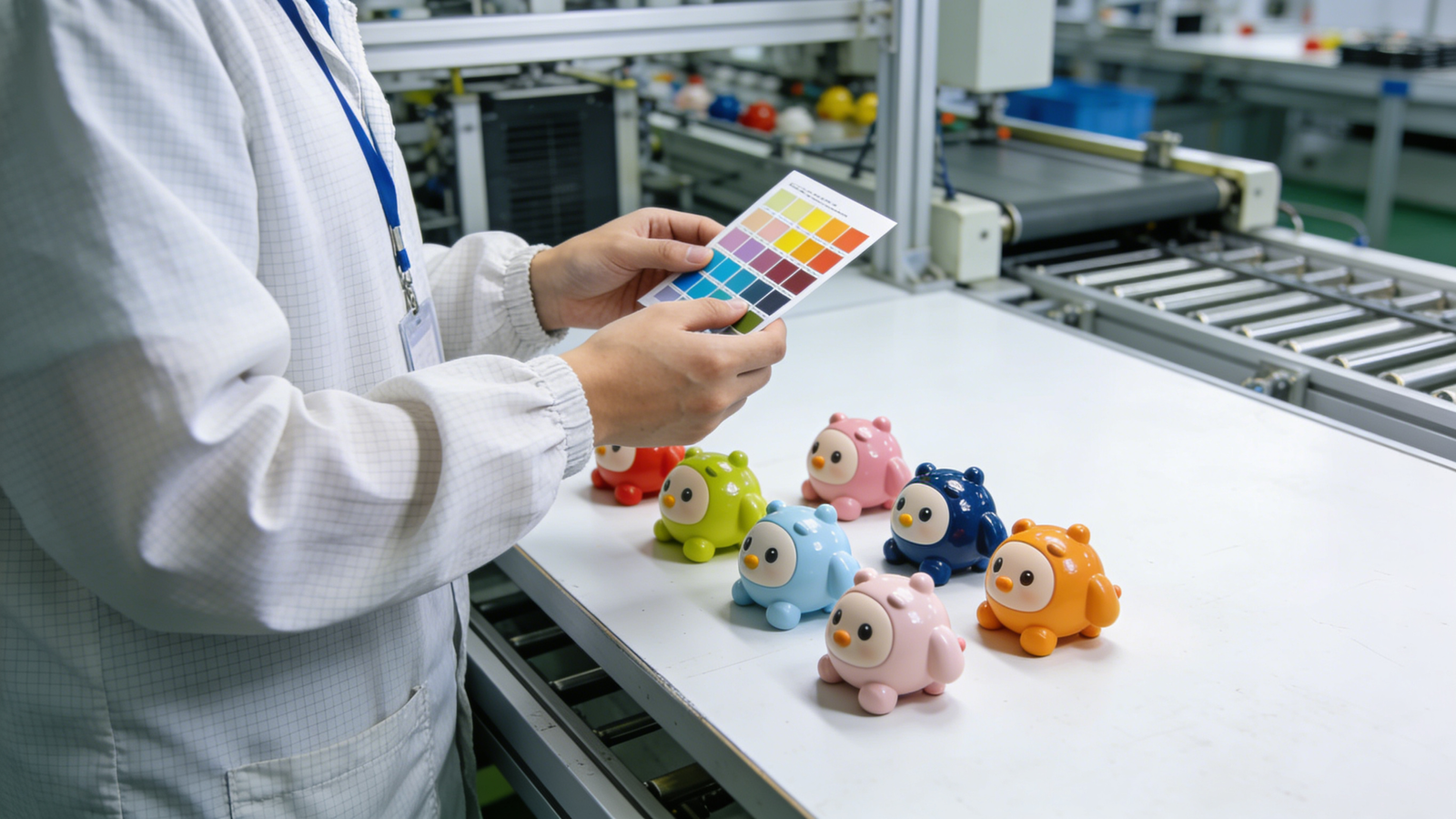
Color fading in mass-produced TPR cultural toys is rarely caused by a single factor; it is usually the combined result of material compatibility, pigment dispersion, and molding conditions. In Xiamen Ruicheng’s projects, most fading issues originate from insufficient compatibility between the pigment system and the TPR substrate. In addition, ignoring key aspects of TPR material behavior and injection molding process stability significantly increases the risk of color migration and aging.
Material compatibility: Different TPR formulations vary in their ability to encapsulate pigments, directly affecting color retention.
Dispersion uniformity: Poor pigment dispersion leads to uneven coloration and localized fading.
Thermal history control: Excessive or unstable melt temperatures accelerate pigment degradation.
Application simulation: Skipping light and abrasion tests during sampling delays risk exposure until mass production.
😊 Understanding the fading mechanism is the foundation of a stable color solution.
How Can Material and Formulation Selection Improve TPR Color Stability?
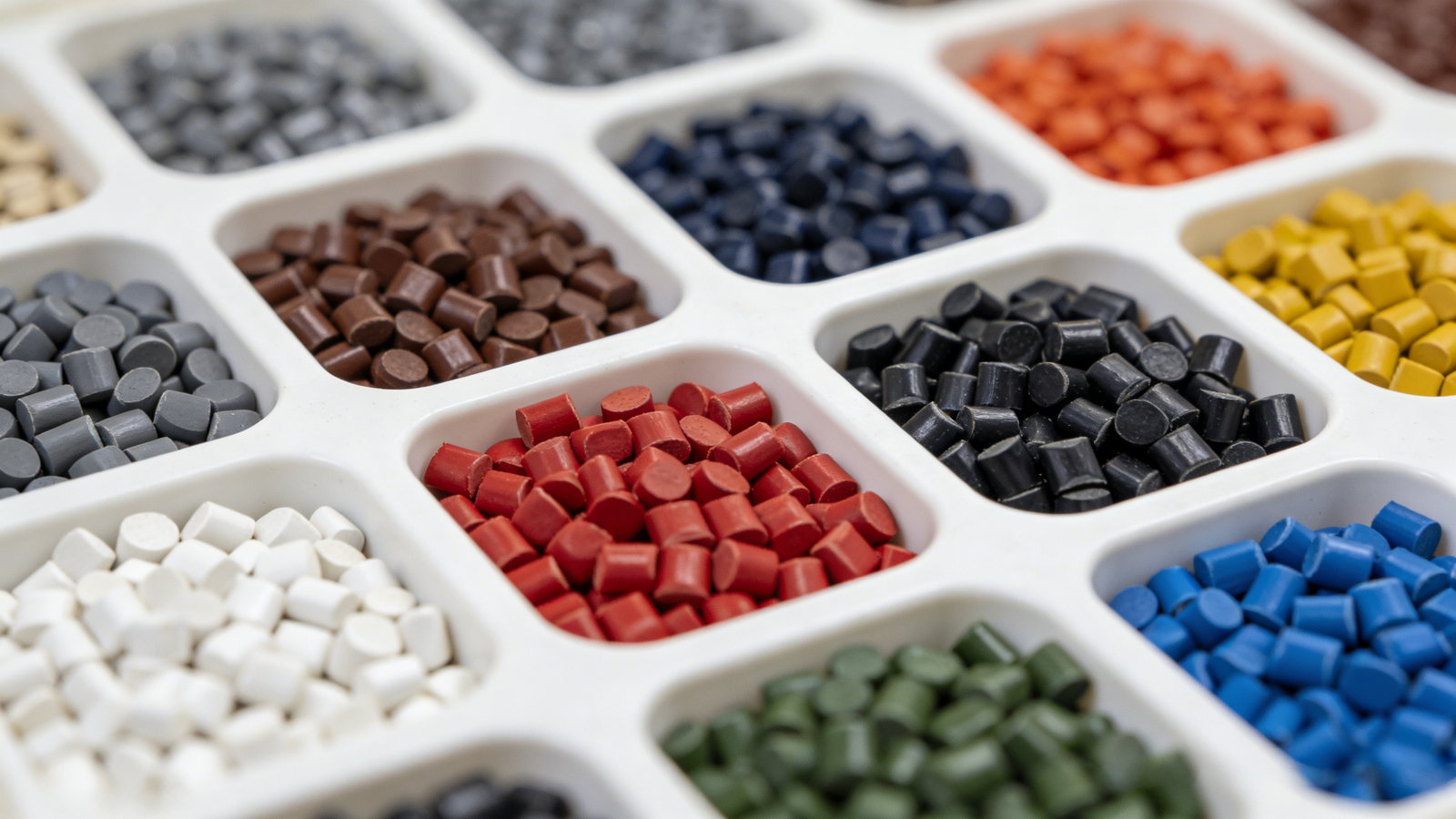
At Xiamen Ruicheng, stable color performance starts with the right material and formulation choices rather than post-production corrections. By customizing TPR formulations and adopting high-weather-resistance pigment systems, fading risks in cultural creative toys can be significantly reduced. The combination of masterbatch technology and weather-resistant pigments ensures long-term color fastness without compromising the soft-touch feel of TPR.
High-compatibility masterbatch: Selecting pigments with polarity matching the TPR matrix enhances encapsulation stability.
UV-resistant additives: Integrating UV stabilizers at the formulation stage slows down light-induced color degradation.
Customized pigment ratios: Adjusting pigment concentration based on color depth prevents migration caused by overloading.
Batch consistency control: Raw material batch locking minimizes color variation across production lots.
🎨 Material-level optimization is the first line of defense for color stability.
How Does Injection Process Control Prevent Post-Production Fading?
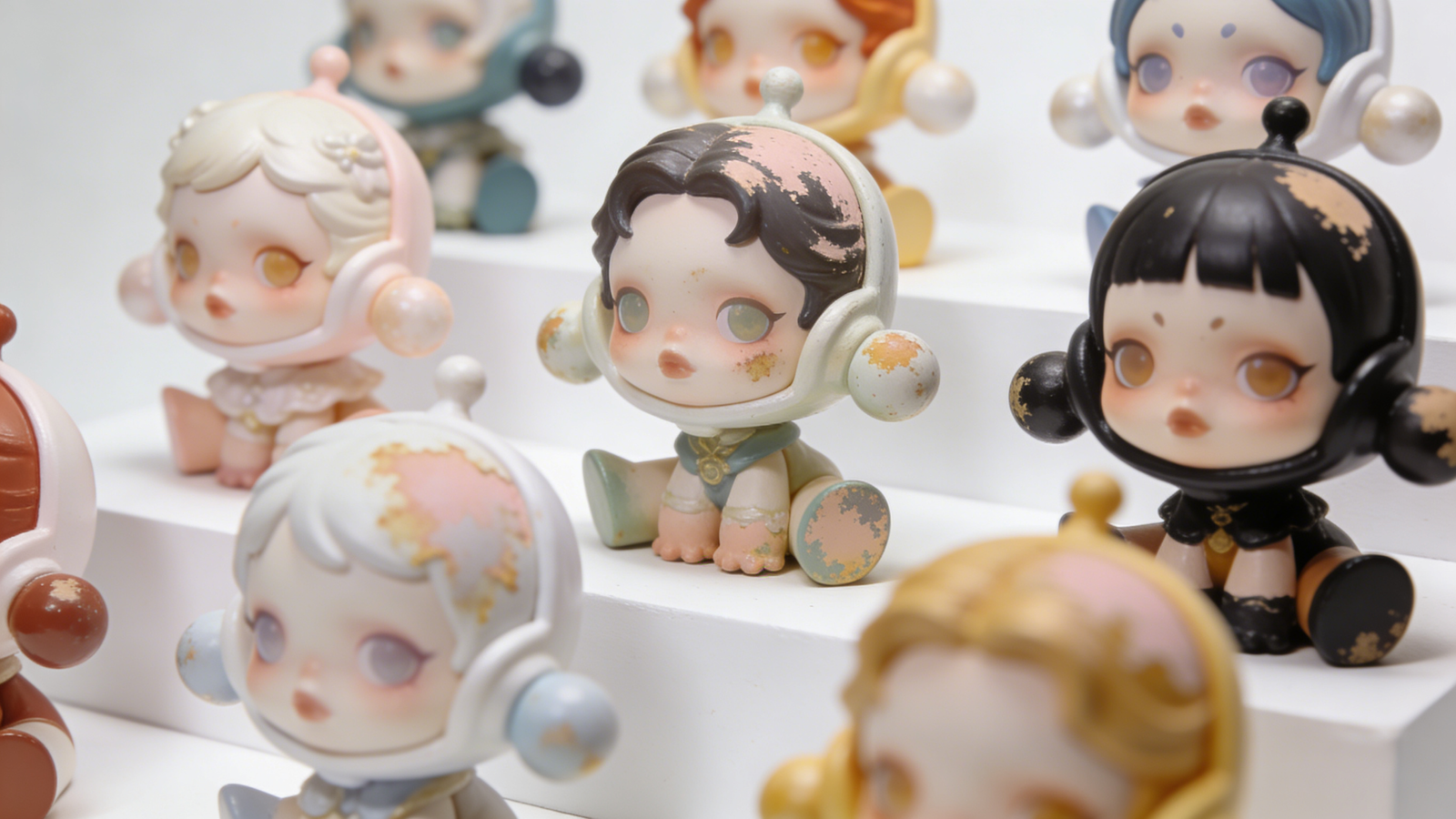
Even with the right materials, unstable molding processes can still compromise color performance. In TPR injection molding operations, Xiamen Ruicheng treats process stability as a core safeguard for color consistency. By tightly controlling injection molding parameters and temperature management, color deviation and fading risks can be effectively minimized.
Precise temperature zoning: Stable barrel and mold temperatures prevent pigment thermal degradation.
Optimized back pressure: Proper back pressure improves melt mixing and pigment dispersion.
Consistent packing control: Stable packing conditions reduce surface color variation.
Process monitoring: Data-driven monitoring helps detect color trends before defects occur.
🛠️ Process stability ensures that design colors are faithfully reproduced in mass production.
Comparison of TPR Injection Solutions and Their Impact on Color Stability
| Comparison Factor | Conventional TPR | Improved TPR | Xiamen Ruicheng Customized | Self-Blended |
|---|---|---|---|---|
| Color deviation | High | Medium | Low | Unstable |
| Weather resistance | Poor | Moderate | Excellent | Uncertain |
| Batch consistency | Low | Average | High | Low |
| Overall risk | High | Medium | Low | High |
Looking to keep your cultural creative toys visually consistent from shelf to end user? Feel free to contact us
How to Systematically Ensure Color Consistency from Sampling to Mass Production
In real-world collaboration, Xiamen Ruicheng focuses on supporting customers throughout the entire decision-making and production lifecycle. Through early color sample confirmation, mid-stage process validation, and continuous monitoring during mass production, color risks can be effectively controlled before reaching the market. This decision-accompaniment approach gives customers clear checkpoints at every critical stage.
1.Early sampling: Confirm color accuracy and tactile feel in small-batch trials.
2.Process validation: Verify color repeatability under stable production conditions.
3.Mass production monitoring: Implement routine color inspections to maintain batch consistency.
4.Continuous optimization: Fine-tune formulations and parameters based on market feedback.
FAQ – Buyer-Oriented Questions
Question: What is the minimum color stability standard of your TPR injection solutions?
Answer: Xiamen Ruicheng ensures controlled color deviation across mass production through customized formulations, process control, and internal weather-resistance testing for long-term stability.
Question: What information is required for custom color development?
Answer: Target color samples, usage environment details, and estimated order volume are recommended. Our engineering team evaluates feasibility and provides a tailored solution within an agreed timeframe.
Question: How do lead times differ between trial runs and bulk orders?
Answer: Trial runs are supported by flexible production lines for rapid turnaround, while bulk orders benefit from planned capacity allocation to ensure stable delivery schedules.
Question: How are color issues handled after mass production begins?
Answer: Xiamen Ruicheng operates a traceable response mechanism to identify root causes quickly and implement corrective actions to minimize customer risk.
Question: Can solutions be customized for special usage environments?
Answer: Yes. For high-UV or high-abrasion conditions, formulation and process adjustments are available, provided detailed operating conditions are supplied in advance.
Conclusion
Color stability in cultural creative TPR toys is not a single-parameter challenge but the result of coordinated material, process, and quality management strategies. Through a decision-accompaniment approach, Xiamen Ruicheng helps customers reduce fading risks at every critical stage of TPR injection molding. This systematic solution enhances product quality while supporting long-term brand value.
For expert assistance in implementing solutions for your production needs, visit our resource center or contact us. Let’s help you scale up your manufacturing with precision and efficiency!