
Introduction

In the field of TPU injection molding for electronic modules, Xiamen Ruicheng enhances insulation resistance by combining material modification and structural optimization, allowing injection-molded parts to maintain stable resistance even under humid environments and continuous voltage stress. This ensures the reliability of sensitive circuits. The team has long served electronic equipment manufacturers and developed mature methodologies for leakage resistance, breakdown resistance, and dielectric stability. Maintaining long-term electrical resistance during mass production is the result of both engineering techniques and a robust quality system.
They optimize TPU parts against thermal shock, dust exposure, and micro-vibrations in electronic environments, ensuring consistent insulation performance under complex conditions. Through injection window control, material drying curves, and polarity adjustment, Xiamen Ruicheng helps customers enhance electrical isolation capability. As electrical designs continue to miniaturize, the safety margin of TPU insulation becomes increasingly critical.
Why does insulation resistance of TPU injection-molded products fail in electronic applications?

Under humid air, voltage fluctuations, and micro-crack accumulation, TPU insulation layers can exhibit resistance decay. Xiamen Ruicheng reduces dielectric loss by controlling material polarity structure and molding flow orientation while applying strategies based on surface energy and dielectric strength to stabilize insulation performance. Once micro-amounts of moisture infiltrate the insulation layer, resistance degradation accelerates sharply, requiring reinforcement from both materials and structural design.The team adopts low-shear molding and enhanced mold venting to maintain sufficient insulation margin during long-term operation of electronic components.
Material cleanliness: Stable resistance depends on raw material purity and proper drying.
Gate control: Gate layout affects uniformity of internal electric fields.
Stress release: Post-molding relaxation reduces potential crack formation.
Structural thickness: Thickness must match insulation needs for different voltage levels.
😊 This section explains the fundamental mechanism of insulation decay and how to improve it.
How to improve dielectric stability of TPU insulation layers during injection molding?

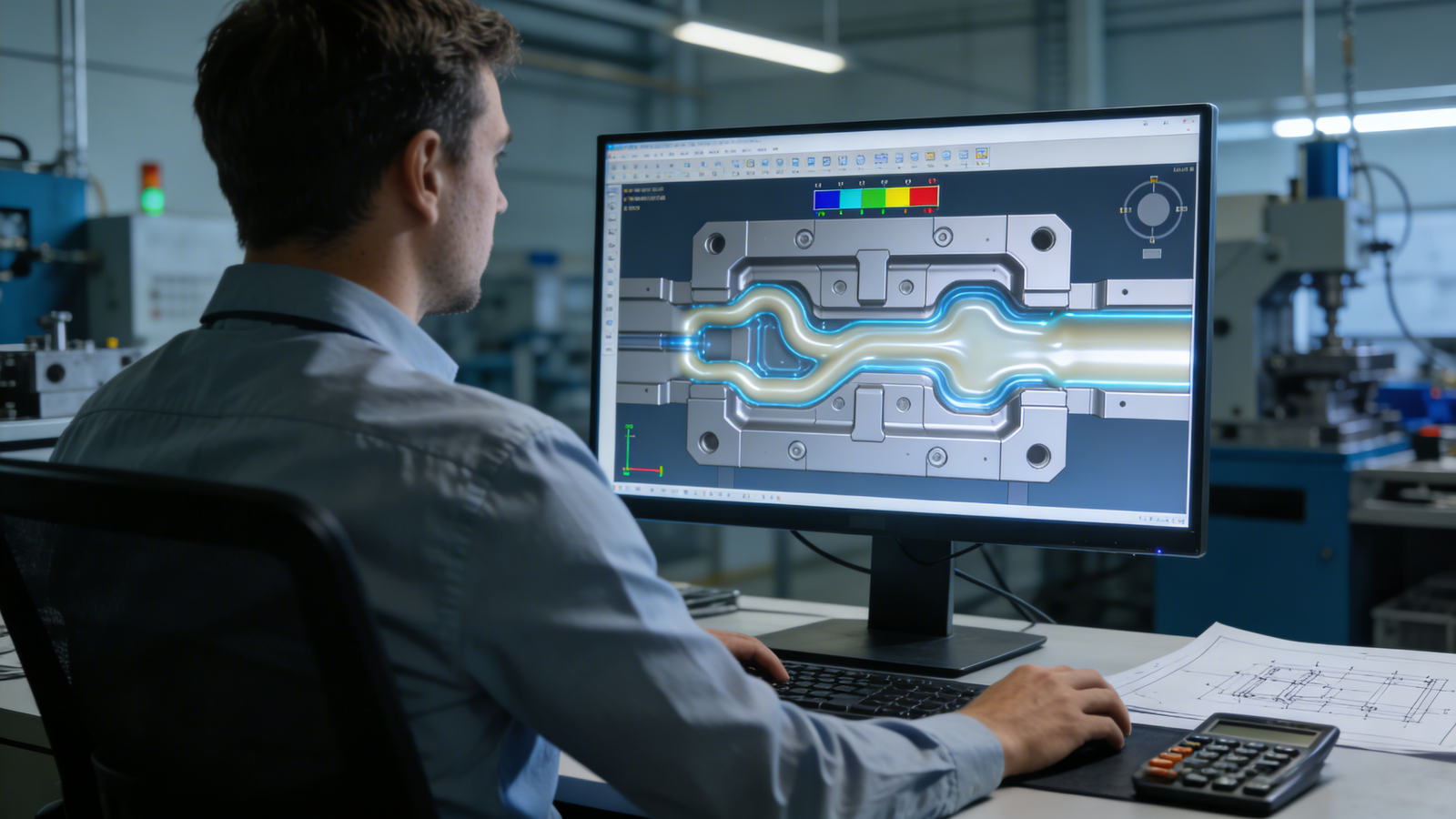
Xiamen Ruicheng applies process-window control tailored for electronic carrier boards and packaging structures. Through precise melt temperature and holding-pressure gradients, the polarity chain segments inside TPU are more uniformly arranged. Combined with internal mold dehumidification design, the insulation layer maintains stable impedance during long-term use. Mechanisms based on impedance matching and polymer polarity further reduce leakage risks. When electronic modules must withstand long-term humidity and cyclic heating, predictable dielectric stability becomes a decisive factor in overall reliability.Xiamen Ruicheng builds predictable insulation models through flow analysis, thermal management, and structural fine-tuning.
Process temperature: Temperature curves influence relaxation of polar chain segments.
Dehumidification structure: Mold venting improves insulation consistency.
Molding speed: Lower shear rate reduces dielectric loss.
Flow direction: Flow planning stabilizes electric-field distribution.
🔧 This section clarifies the relationship between process window and dielectric stability.
How to maintain long-term insulation safety margin for TPU parts in electronic equipment?

Based on varying electronic operating conditions, Xiamen Ruicheng combines material modification, surface energy control, and flow-management strategies to ensure TPU maintains resistance unaffected by humidity, voltage stress, or surface wear. Strategies based on electrical insulation and relative permittivity help components retain long-term insulation margin. Insulation safety margin results from both material properties and structural geometry, not just resistance values alone.Using failure-case analysis and accelerated aging experiments, the team proposes predictable insulation-decay management methods.
Moisture-resistance strategy: Material and structure jointly reduce moisture infiltration.
Aging management: Controls performance decay under prolonged high-temperature exposure.
Interface adhesion: Improves sealing of electronic module encapsulation.
Surface stability: Wear resistance reduces insulation damage risk.
🛡️ This section highlights combined strategies for long-term insulation stability.
Key stability comparison of TPU insulation structures in electronic packaging
| Item | Standard TPU Insulation | Ruicheng Enhanced TPU | Application Scenario |
|---|---|---|---|
| Humidity Influence | Medium | Low | High-humidity electronic devices |
| Voltage Endurance | Medium | High | Power modules / driver boards |
| Dielectric Loss | Medium | Low | High-frequency signal areas |
| Aging Speed | Medium | Slow | Long-term continuous-operation devices |
Enhance insulation reliability for your electronic modules and establish a more predictable performance baseline in advance.contact us
Engineering strategies to enhance insulation reliability of TPU materials in electronic packaging
Focusing on real electronic operating environments, Xiamen Ruicheng establishes a stable insulation system through polarity control, mold dehumidification, and flow-direction optimization. TPU components demonstrate long-term predictability under high humidity, high voltage, and pulsed-heating conditions. By aligning with specific application scenarios, the team helps prevent functional instability caused by insulation decay. As electronic systems move toward miniaturization and high density, engineered stability of TPU insulation becomes even more essential.
Through coordinated material, process, and structural optimization, Xiamen Ruicheng reduces insulation-decay rate and provides manufacturers with more robust insulation strategies.
1.Polarity control: Adjust polymer structure for different voltage levels.
2.Dehumidification design: Mold optimization reduces moisture infiltration rate.
3.Flow management: Improves electric-field uniformity and reduces weak points.
4.Aging suppression: Long-term endurance models extend insulation lifespan.
FAQ Module
Q1: What is the core quality standard for TPU insulation injection-molded parts?
A: Key insulation resistance ≥ 10^12 Ω, maintained through material-polarity adjustment and mold-dehumidification design.
Q2: How to engage with TPU insulation injection suppliers and obtain quotations?
A: Submit structural drawings and insulation requirements. Xiamen Ruicheng provides feasibility assessment and quotation within 12 hours and supports prototype verification.
Q3: What are the MOQ and lead times for TPU insulation injection molding?
A: Minimum order 100 pcs; mass production according to demand. Prototype delivery 3–5 days, production delivery 7–15 days.
Q4: If the TPU insulation injection-molded parts we purchased do not meet the quality requirements, what after-sales support can your company provide?
A: You can apply for quality re-inspection within 7 working days after receiving the goods, and you need to provide the product batch number and problem description (with physical photos). After our laboratory confirms the quality problem through testing, we will issue a solution within 48 hours: you can choose free return and exchange or price reduction compensation, and provide a problem analysis report to avoid recurrence. The core insulation performance provides an 18-month warranty. If there is insulation attenuation caused by non-human factors within the warranty period, free replacement is provided.
Q5: Our electronic modules have special working conditions. Can your company provide customized adjustments for TPU insulation injection-molded parts? What information do we need to provide?
A: We fully support customized services. You need to provide specific working condition parameters (such as long-term working temperature, humidity range, and voltage level), structural dimension drawings (CAD format is preferred), and core insulation requirements. Our technical team will output a customized solution within 3 working days. The cost of customized products is 5%-15% higher than that of standard products, depending on the complexity of the process, and small-batch prototype verification is supported before mass production.
Conclusion
Through synergy among materials, structure, and molding processes, Xiamen Ruicheng ensures the insulation performance of TPU molded parts remains predictable and stable throughout the life cycle of electronic equipment. With strategies focused on moisture management, voltage endurance, and aging suppression, the team helps manufacturers significantly improve module reliability. As electronic environments grow increasingly complex, engineered insulation capability becomes crucial for ensuring stable system performance.These capabilities allow manufacturers to achieve stronger safety margins and reliability in mass production.
For expert assistance in implementing insulation strategies for your production needs, visit our resource center or contact us. Let’s help you scale up your manufacturing with precision and efficiency!





一个回复
I am sure this article has touched all the internet visitors, its really really nice post on building up new weblog.