Introduction

Recycled HDPE is gaining attention due to sustainability trends, particularly in the industrial tank sector, where its chemical stability and mechanical strength are critical. Choosing the right material not only reduces costs but also ensures long-term reliability of the tanks. In industrial settings, tanks are exposed to various chemicals and temperature fluctuations, which demand high material performance. Xiamen Ruicheng leverages optimized injection molding and quality control to deliver dependable HDPE tank solutions.
As environmental regulations tighten, the use of recycled HDPE becomes a key strategy for companies to reduce carbon footprint and material costs. Professional injection molding factories can enhance mechanical properties and chemical resistance of recycled HDPE through customized formulations and mold design. Uniformity, impact resistance, and corrosion resistance are essential factors affecting tank safety and service life.
Is the mechanical performance of recycled HDPE sufficient?

The tensile strength, impact toughness, and creep resistance of recycled HDPE determine its reliability in industrial tanks. By adding modifiers or optimizing injection molding processes, recycled HDPE's mechanical properties can be enhanced to meet pressure requirements. Xiamen Ruicheng carefully selects raw materials and conducts multiple quality tests, ensuring consistent performance while using precision injection molds to maintain uniform wall thickness and avoid stress concentration.
Material modification: Toughening and anti-aging additives improve impact resistance.
Injection molding optimization: Precise control of melt temperature and injection speed ensures uniform wall thickness.
Performance testing: Complete testing including tensile, impact, and creep ensures industrial standard compliance.
Service life prediction: Accelerated aging tests evaluate long-term chemical and temperature resistance.
💡 Proper modification and strict process control allow recycled HDPE to meet industrial tank requirements.
How is the chemical resistance of recycled HDPE?

Stability under various chemical storage conditions is critical for recycled HDPE. Through strict raw material selection and recycling process control, its acid-base resistance and organic solvent resistance are ensured. Xiamen Ruicheng’s recycled HDPE undergoes chemical immersion tests to prevent leaks or deformation during actual use. Tank designs also consider local stresses and temperature gradients to further enhance safety.
Chemical compatibility testing: Covers strong acids, bases, and common organic solvents.
Material selection: Prefer uncontaminated, mechanically stable recycled HDPE.
Surface treatment: Adding anti-permeation layers or linings improves chemical resistance.
Process verification: Simulate working conditions for long-term immersion testing.
💡 Combining chemical resistance with rigorous testing enables safe use of recycled HDPE tanks for various chemicals.
Can the long-term durability of recycled HDPE be guaranteed?

Industrial tanks demand high durability, particularly under temperature fluctuations and chemical exposure. Recycled HDPE, refined through injection molding and anti-aging modification, can extend tank service life. Xiamen Ruicheng conducts accelerated aging and real-use simulations to provide predictable life expectancy. Product designs also incorporate UV resistance and impact toughness to handle outdoor and harsh conditions.
Anti-aging modification: Add antioxidants and UV stabilizers to delay aging.
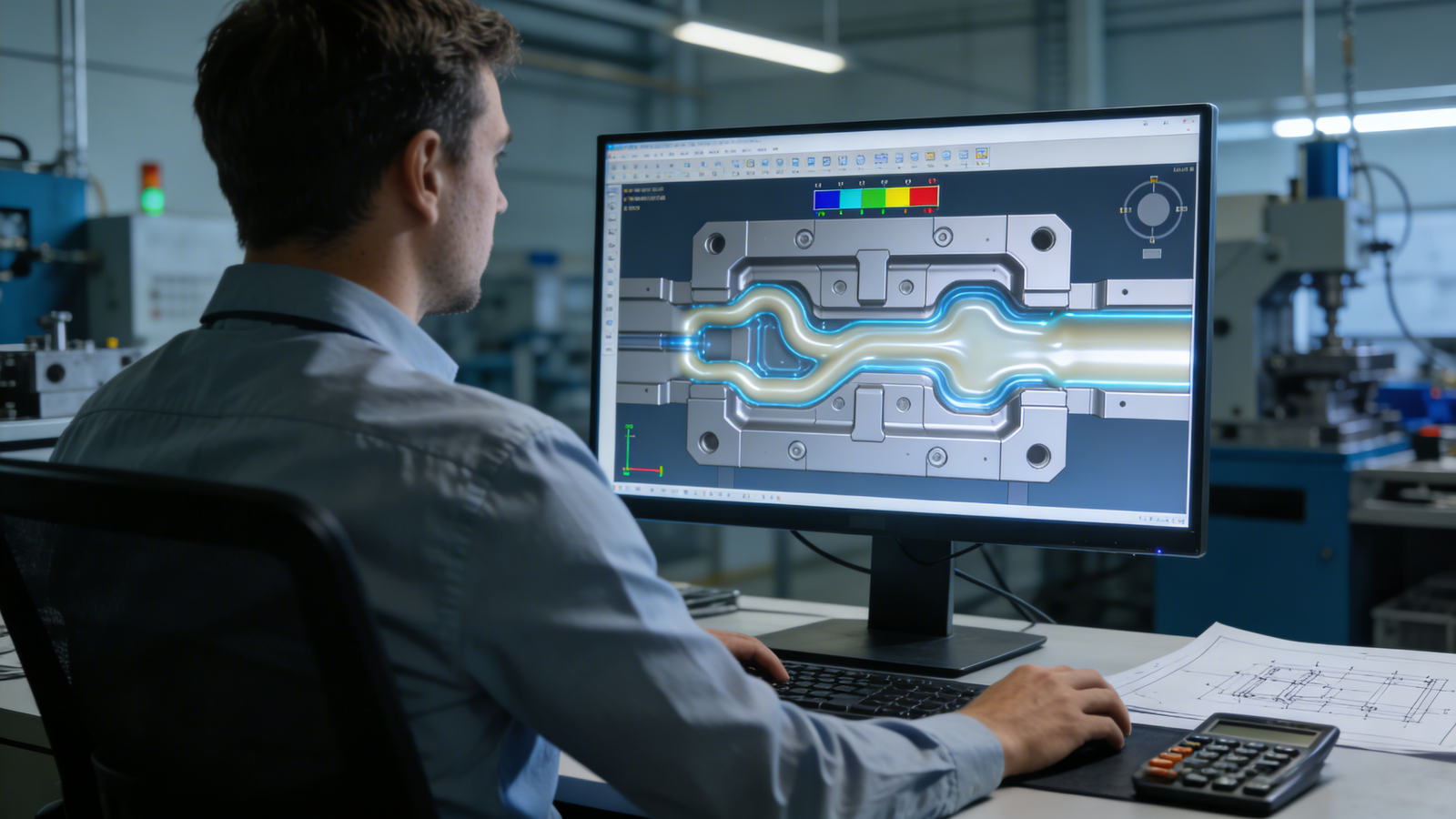
Stress analysis: Use finite element analysis to optimize wall thickness distribution.
Impact-resistant design: Reinforcements and structural optimization reduce fracture risks.
Environmental simulation: Test under high/low temperatures and alternating chemical exposure.
💡 Scientific design and material modification ensure long-term reliability of recycled HDPE tanks.
Material Comparison Table
| Material Type | Tensile Strength (MPa) | Impact Toughness (kJ/m²) | Chemical Resistance | Cost | Applicability |
|---|---|---|---|---|---|
| Virgin HDPE | 30-35 | 20-25 | High | High | Broad |
| Recycled HDPE | 28-32 | 18-22 | Medium-High | Low | Feasible for industrial tanks |
| PP | 25-30 | 15-20 | Medium | Medium | Certain chemicals |
| PVC | 35-40 | 10-15 | High | Medium | Specific chemicals |
🔗 Learn more about custom tank solutions: contact us
Application Expansion
Recycled HDPE is suitable not only for general chemical storage but also for food-grade tanks and rainwater harvesting systems. Xiamen Ruicheng combines injection molding technology with material modification expertise to provide multi-specification, multi-medium tank solutions. Injection molding allows for complex structures while maintaining high strength requirements. Modular designs facilitate transportation and installation, meeting diverse industrial scenarios.
Multi-scenario applicability: Industrial chemicals, rainwater recovery, food liquid storage.
Customized solutions: Supports various capacities, wall thicknesses, and structural designs.
Modular design: Simplifies transport and onsite installation.
Professional services: Full technical support for material selection, mold design, and injection molding process.
FAQ
Question 1: What are the core quality standards for recycled HDPE tanks?
Answer: Critical dimension tolerance ±0.2mm, chemical resistance meets industrial tank standards, controlled through injection molding and aging tests.
Question 2: How to connect with recycled HDPE tank suppliers and get a quote?
Answer: Submit tank design drawings or samples; receive DFM evaluation and accurate quote within 12 hours; free sample testing supported.
Question 3: What is the MOQ and lead time for recycled HDPE tanks?
Answer: Small batch MOQ from 50 units, no limit for mass production; sample 5-7 days, mass production 15-25 days; rush orders available.
Conclusion
Recycled HDPE, through proper modification, strict testing, and optimized injection molding, can meet the mechanical and chemical requirements of industrial tanks. Xiamen Ruicheng provides full-process technical support and customized solutions to ensure safe and reliable recycled HDPE tanks. Under environmental and cost pressures, using recycled HDPE is an effective sustainable choice. Injection molding combined with material modification guarantees long-term tank performance.
For expert assistance in implementing for your production needs, visit our resource center or contact us. Let’s help you scale up your manufacturing with precision and efficiency!