Introduction
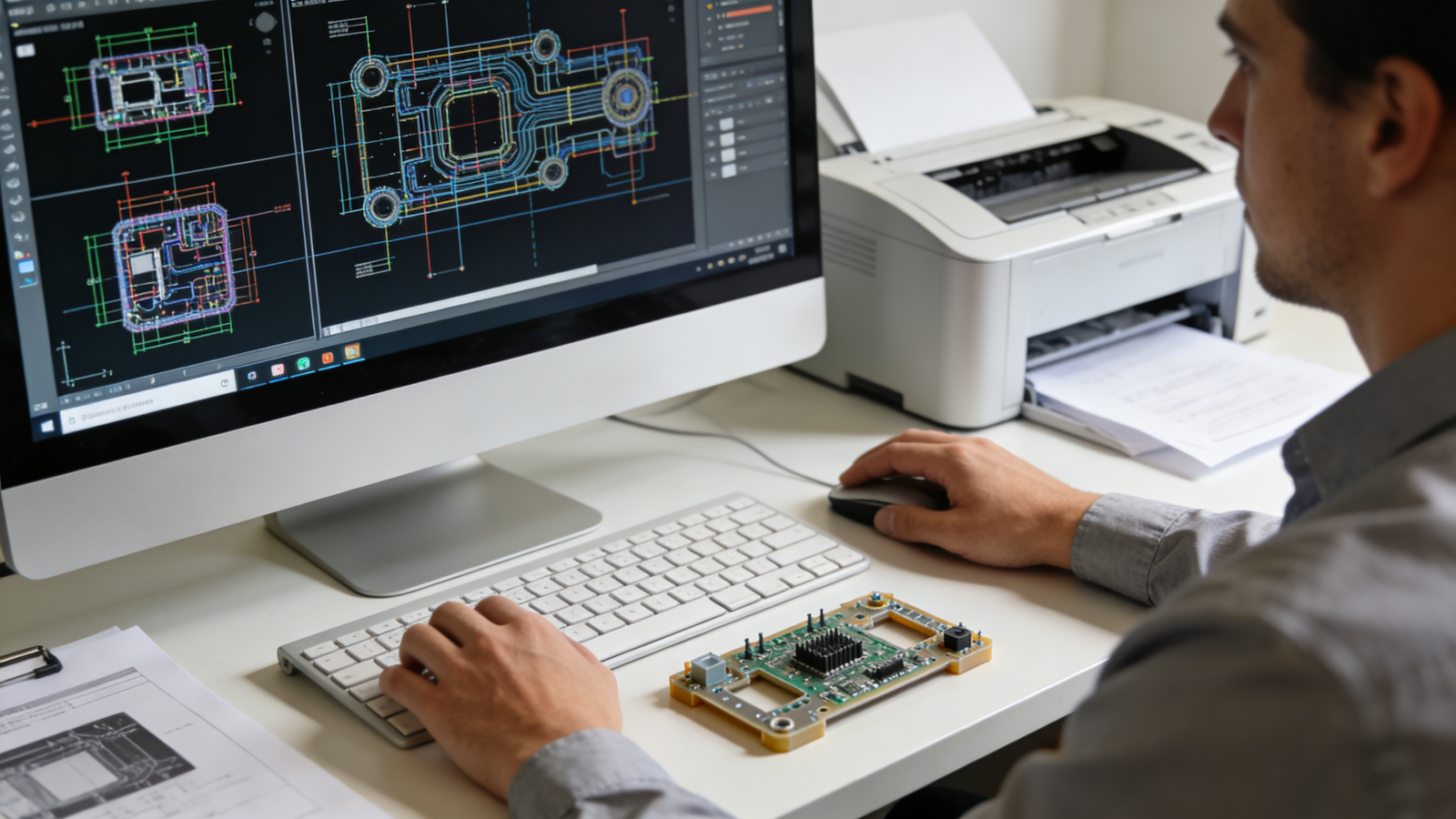
During product development, engineering teams often need to validate structures that combine rigid components with flexible elements, such as sealed buttons, soft touch interfaces, or overmold-like parts. Directly investing in injection molds for these tests can significantly increase both development time and cost. Many R&D teams now rely on PolyJet multi-material prototyping to simulate soft-hard assemblies before tooling begins. This approach allows design teams to validate structure, ergonomics, and assembly fit early in the development process.
From the perspective of Xiamen Ruicheng, many of the electronics and consumer product projects we support require early validation of flexible and rigid component interactions. Multi-material rapid prototyping enables engineers to evaluate design feasibility before committing to full-scale injection mold production. This strategy shortens development cycles and helps companies identify potential structural issues long before mass manufacturing begins.
Can PolyJet Multi-Material Prototyping Validate Soft-Hard Combined Parts?

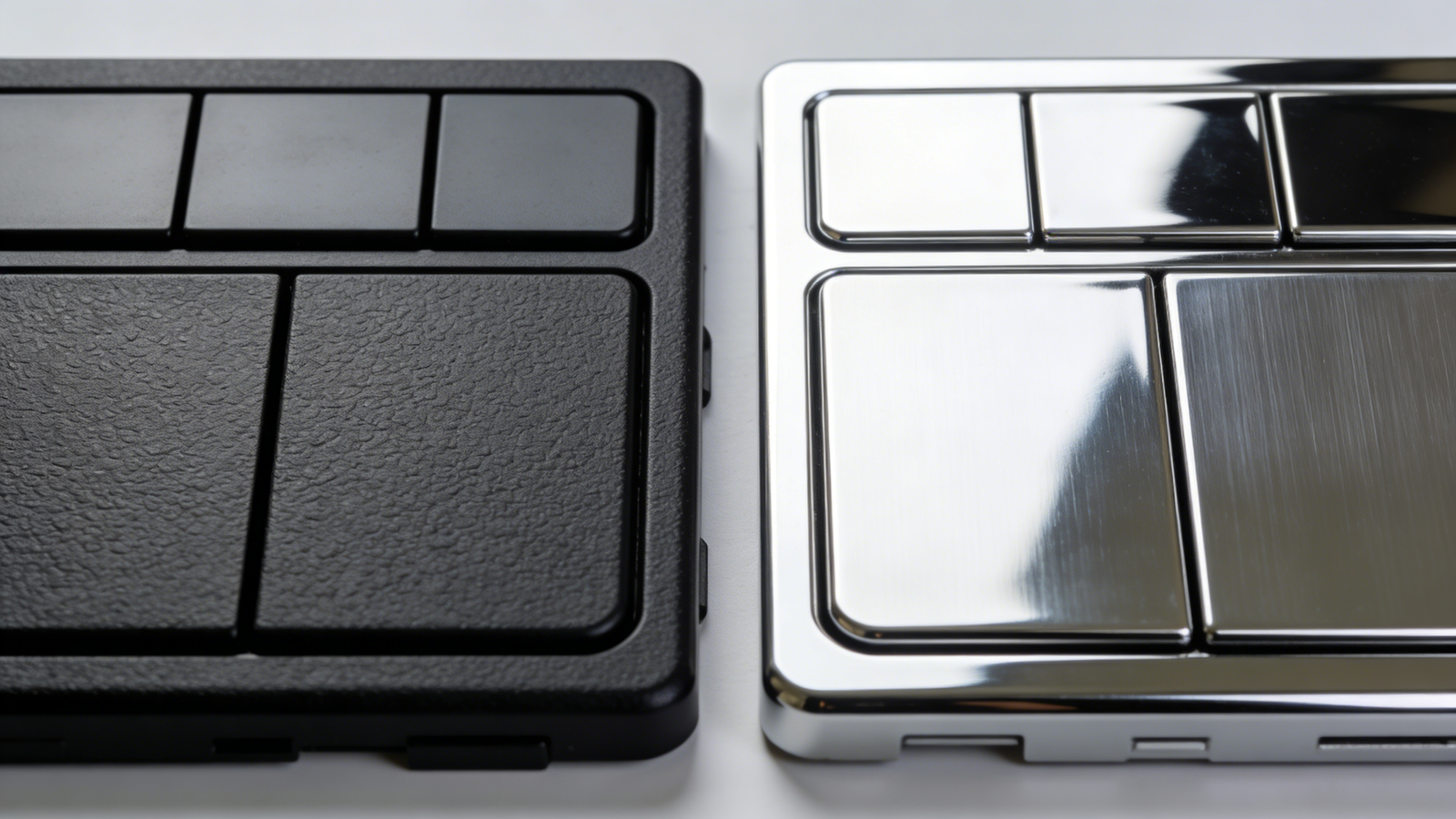
In many product designs, rigid structural parts must work together with flexible components such as seals, buttons, or protective covers. Traditionally, validating such designs requires silicone molding or early injection mold development, which can extend development cycles. Using PolyJet technology, multiple materials with different mechanical properties can be printed in a single build process, enabling engineers to simulate overmold-like structures. Through multi-material 3D printing techniques, prototypes can replicate the interaction between rigid plastics and elastomer-like materials. This capability allows soft and rigid areas to be printed simultaneously within one prototype for realistic design verification.
Material simulation: Multiple hardness levels can be printed in one model, allowing the prototype to mimic the mechanical behavior of overmolded components.
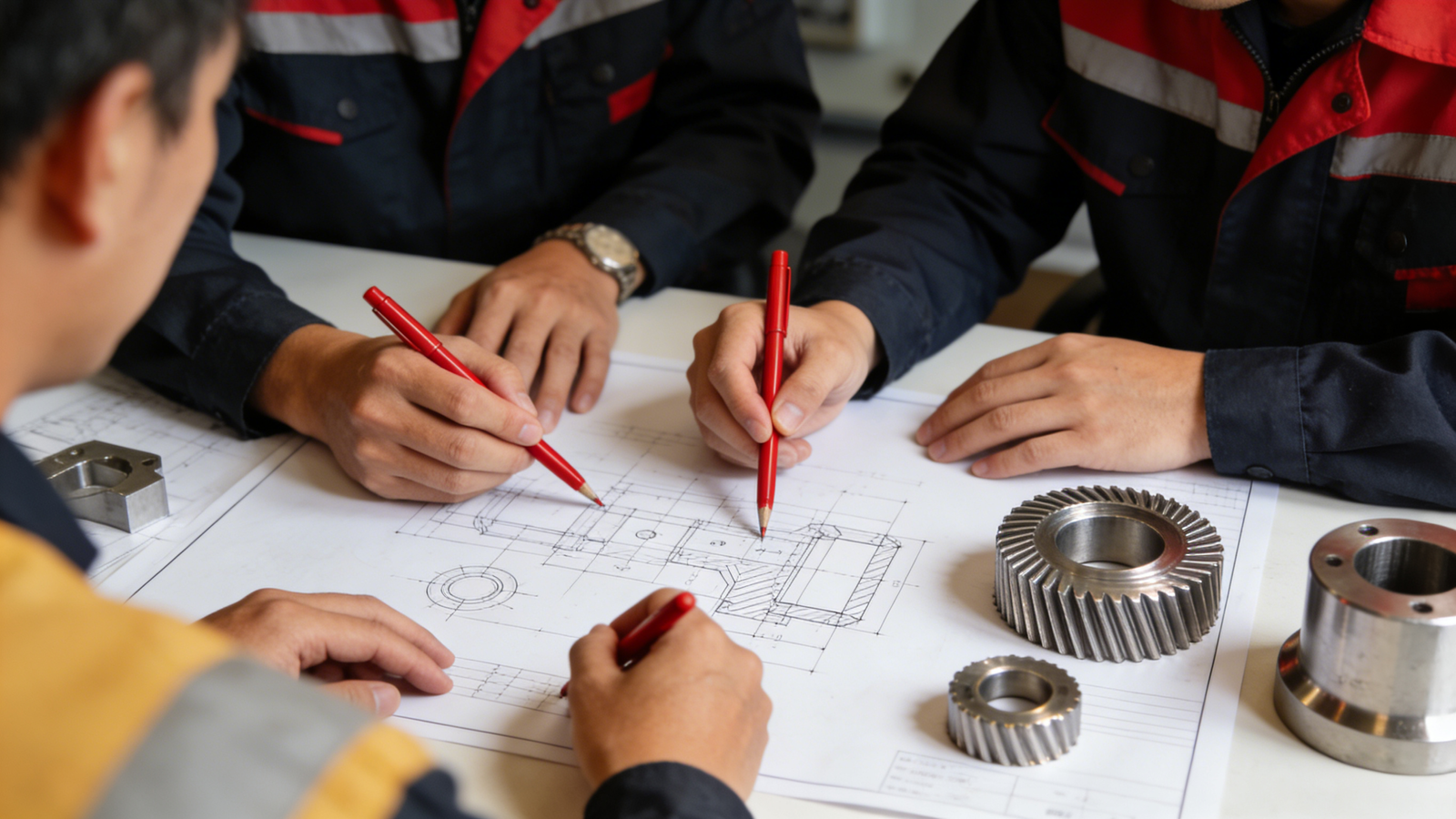
Structural verification: Engineers can directly assemble printed prototypes to test fit, interference, and mechanical interaction.
Rapid iteration: Design adjustments can be quickly implemented by updating CAD files and reprinting prototypes.
Realistic performance: Digital materials can approximate rubber-like flexibility combined with rigid plastic structures.
🙂 PolyJet multi-material prototyping allows engineers to validate soft-hard structures before mold manufacturing begins.
What Advantages Does PolyJet Prototyping Offer Compared With Traditional Sampling Methods?

In conventional development workflows, validating a soft-hard assembly often requires silicone casting or early injection mold trials. While these methods can provide realistic parts, they often require longer lead times and higher costs. With the help of rapid prototyping and 3D printed prototypes, engineers can obtain functional models within days, making design iterations much more efficient. Compared with mold-based sampling, PolyJet multi-material prototypes significantly shorten development verification cycles.
Shorter development cycles: Prototype delivery typically takes only a few days after design submission.
Lower early-stage investment: No tooling cost is required during the concept verification stage.
Faster design optimization: Each design revision can be quickly printed and evaluated.
Complex geometry support: Detailed structures and curved surfaces can be reproduced accurately.
🚀 PolyJet rapid prototyping helps companies accelerate product development while controlling cost.
How Does PolyJet Multi-Material Prototyping Support Injection Mold Product Development?
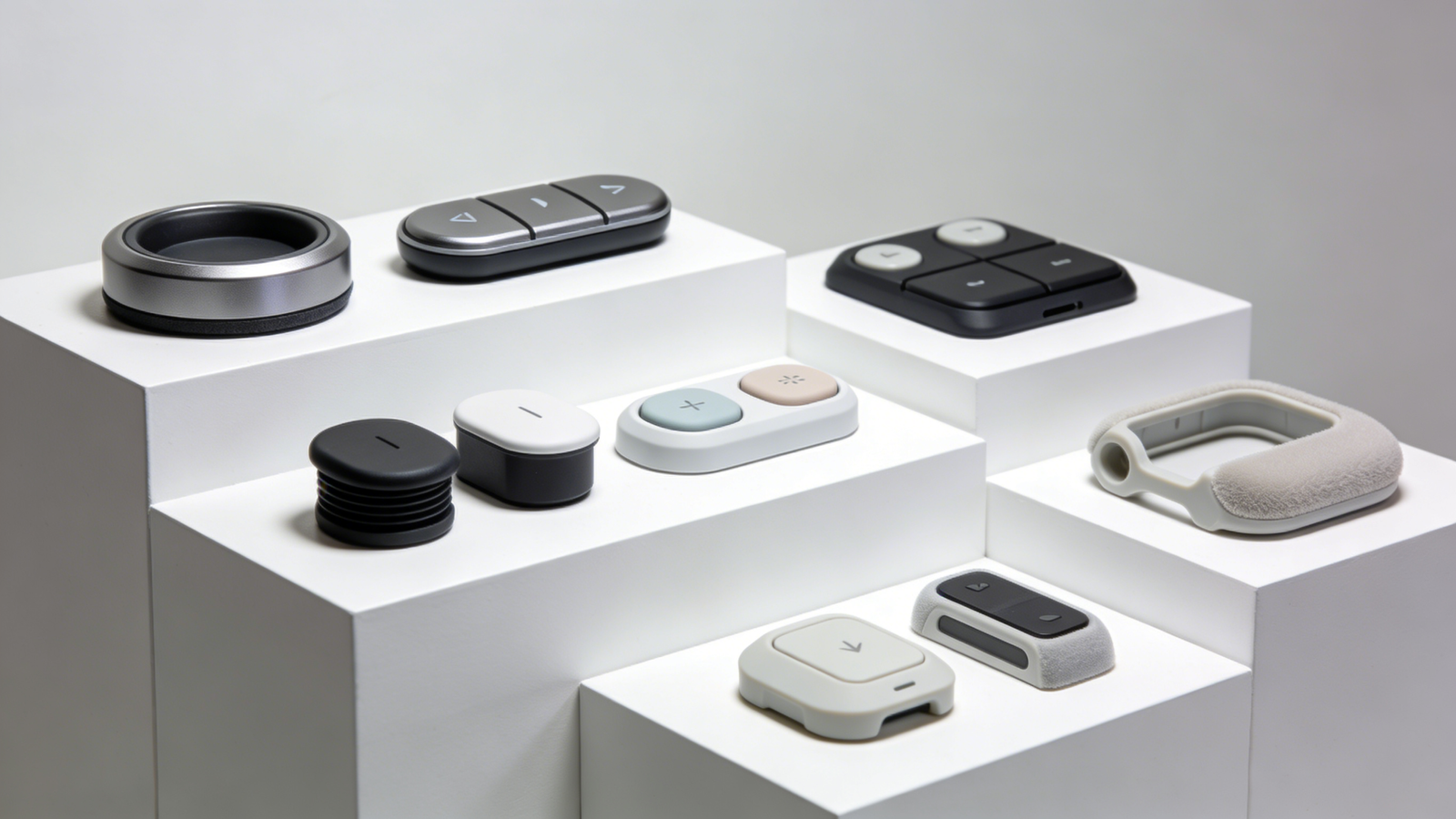
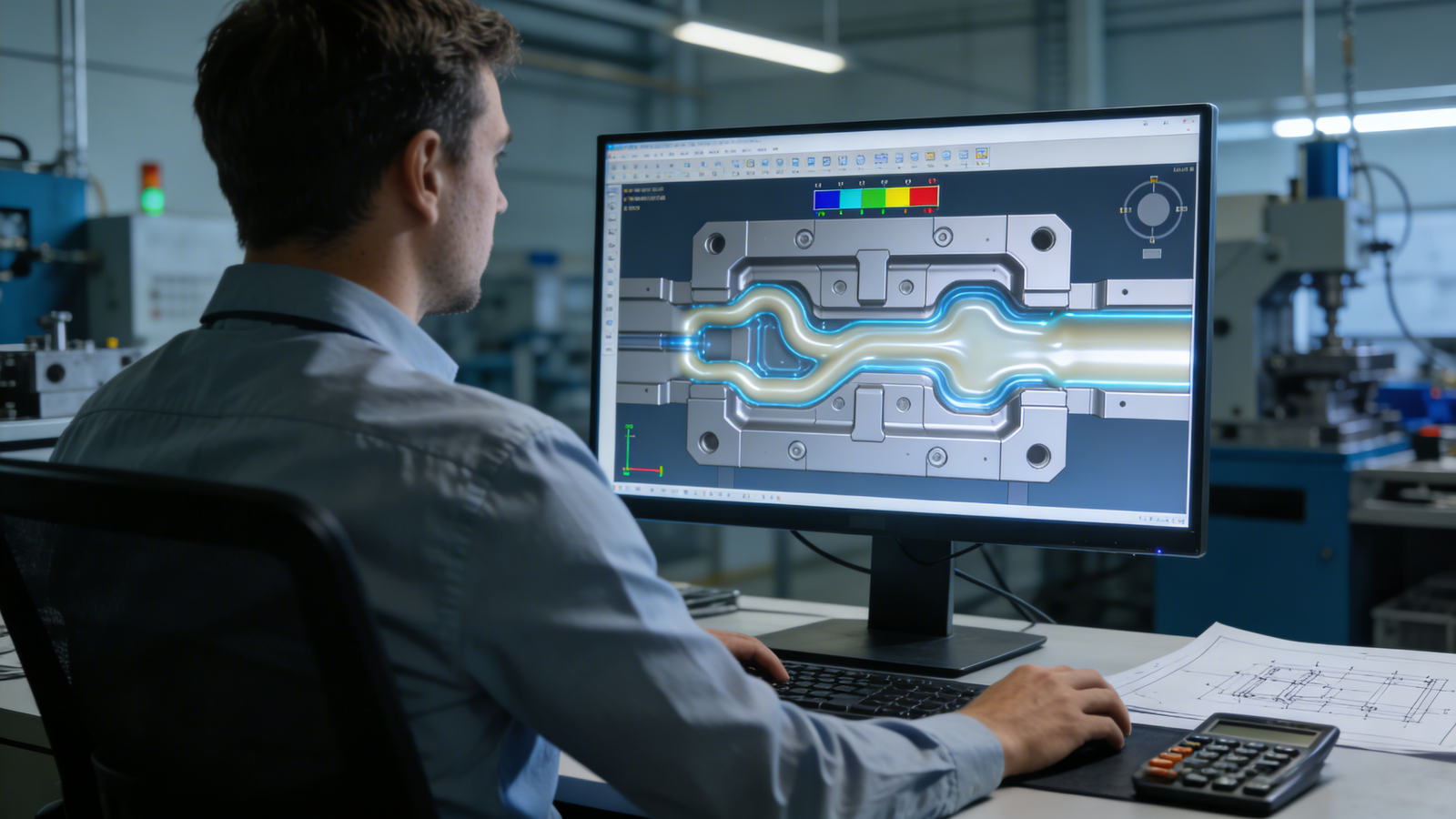
In injection molded product development, soft-hard structures are often used in sealed components, ergonomic interfaces, or overmolded assemblies. Discovering design issues after the mold is built can lead to significant delays and additional costs. By combining injection molding development strategies with product prototyping validation, companies can identify potential structural risks earlier. PolyJet multi-material rapid prototyping allows structural verification before injection mold production begins, reducing development risk.
Risk reduction: Early structural testing helps prevent expensive mold modifications.
Design optimization: Engineers can refine structure and assembly relationships through prototype testing.
Improved development speed: Faster validation allows design teams to finalize products sooner.
Market testing support: Realistic prototypes can also be used for early product demonstrations.
🔍 Prototype validation helps engineering teams confidently move toward injection mold production.
Comparison of PolyJet Prototyping and Other Sampling Methods
| Comparison Item | PolyJet Multi-Material Prototype | CNC Prototype | Silicone Casting | Direct Injection Mold |
|---|---|---|---|---|
| Soft-hard combination | Supported | Not supported | Partially supported | Supported |
| Prototype lead time | 2-5 days | 3-7 days | 7-10 days | 20-40 days |
| Tooling required | No | No | Requires master model | Required |
| Cost structure | Medium | Medium | Higher | High |
| Suitable stage | R&D validation | Structure & appearance | Small batch | Mass production |
| Complexity support | High | Medium | Medium | High |
| Design modification cost | Low | Medium | Medium | High |
| Soft-hard testing suitability | Excellent | Not suitable | Partial | Suitable |
If you are looking for a rapid solution to validate soft-hard product structures, feel free to consult the engineering team at Xiamen Ruicheng: contact us
Practical Value of PolyJet Multi-Material Prototyping in Product Development
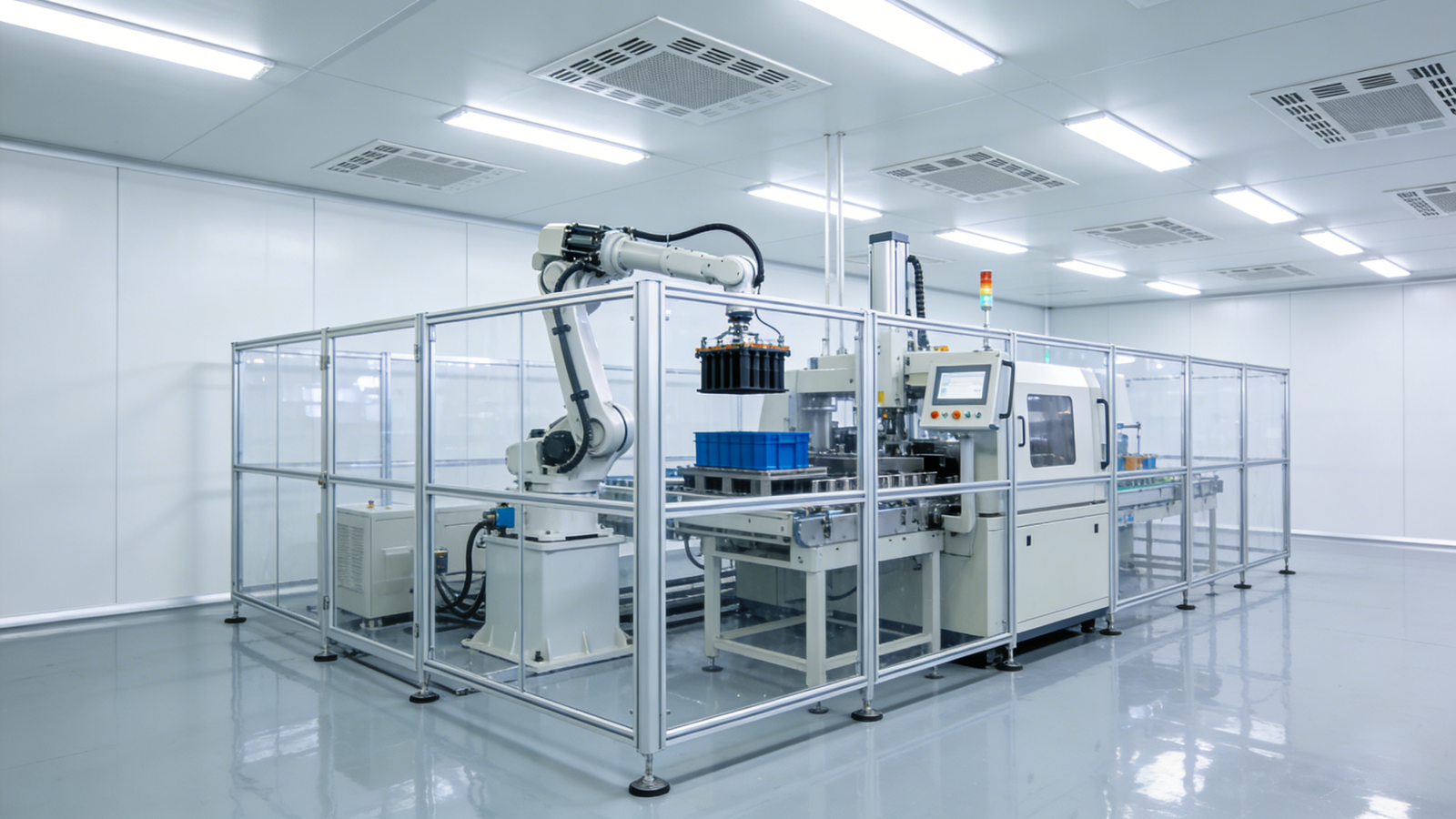
In modern product development, rapid prototyping technologies have become essential tools for engineering teams. PolyJet multi-material printing allows different material hardness levels and functional regions to be produced within a single prototype, closely simulating the behavior of real injection molded products. This validation method helps companies detect structural problems before investing in expensive tooling. For products requiring soft-hard integration, such as consumer electronics or industrial components, multi-material prototyping has become one of the most effective development verification methods. With years of experience in prototyping and injection molding, Xiamen Ruicheng helps customers move efficiently from design verification to mass production.
1.R&D validation efficiency: Multi-material prototypes allow engineers to quickly evaluate structural feasibility during development.
2.Design improvement capability: Physical testing helps refine product structure and assembly relationships.
3.Production risk reduction: Early detection of design issues avoids costly mold changes later.
4.Cross-team collaboration: Prototypes help design, engineering, and marketing teams align on product concepts.
Frequently Asked Questions (FAQ)
Question 1 (Product evaluation): What are the key advantages of your PolyJet multi-material rapid prototyping service?
Answer: Xiamen Ruicheng provides high-precision PolyJet multi-material prototyping capable of combining different hardness materials within one build. With layer thickness as low as approximately 14 microns and strict quality inspection procedures, the prototypes accurately replicate fine structural details required for electronics and industrial product development.
Question 2 (Cooperation process): If we want to order PolyJet prototypes, what information do we need to provide for quotation?
Answer: Clients typically need to submit 3D CAD files such as STEP or STL formats, along with expected material hardness, application purpose, and required quantities. The engineering team at Xiamen Ruicheng will perform a DFM review and recommend material combinations, usually providing a preliminary quotation within 12 hours.
Question 3 (Procurement implementation): How does quantity affect minimum order and delivery time?
Answer: For small quantities, prototype delivery usually takes around 2-5 working days. For complex structures or specific material combinations, the timeline may be slightly longer. Xiamen Ruicheng operates efficient rapid prototyping workflows to support urgent development projects.
Question 4 (After-sales assurance): What happens if issues are found during prototype testing?
Answer: Prototyping is intended to validate design concepts. If structural issues appear during testing, clients can update the CAD design and request another prototype iteration. Our engineering team will also provide optimization suggestions based on testing feedback.
Question 5 (Customization and value-added services): Can you support injection molding production after prototype validation?
Answer: Yes. In addition to PolyJet rapid prototyping, Xiamen Ruicheng also offers injection mold design and plastic injection molding services. Once the prototype validation phase is completed, we can support the transition from prototype to mass production.
Conclusion
Soft-hard integrated structures are increasingly common in modern product design, especially in electronics and consumer devices. PolyJet multi-material rapid prototyping provides a practical solution for validating these complex structures before mold production. By enabling realistic structural testing without tooling investment, this technology significantly reduces development risk and accelerates product innovation. With its combined expertise in rapid prototyping and injection molding, Xiamen Ruicheng helps customers move efficiently from concept validation to full-scale manufacturing.
For expert assistance in implementing solutions for your production needs, visit our resource center or contact us. Let’s help you scale up your manufacturing with precision and efficiency!