Introduction
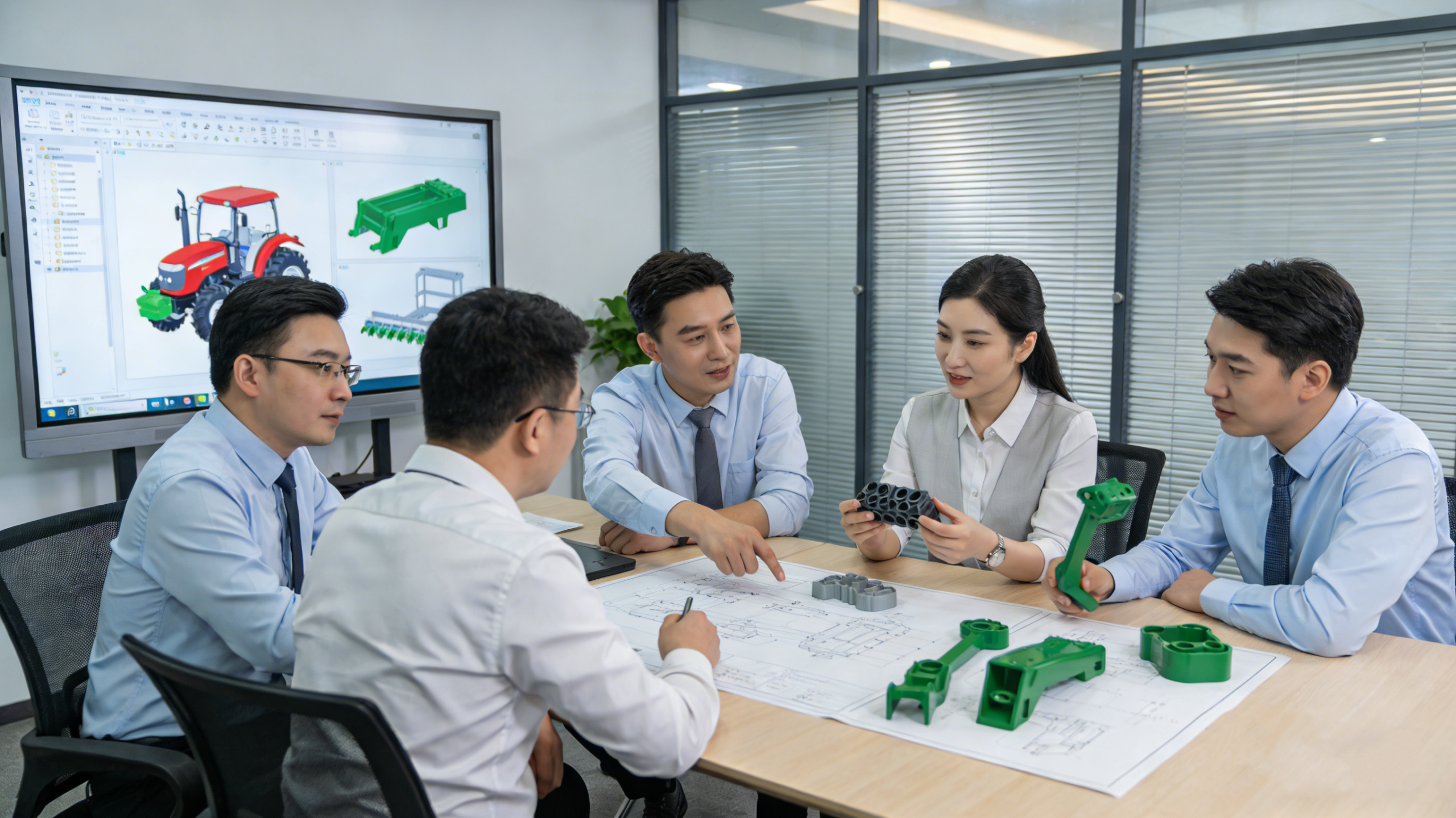
In the long-term evolution of the agricultural machinery market, components have continuously faced the contradiction between structural strength and overall weight, especially in cross-regional logistics and export scenarios where this issue becomes increasingly prominent. Rising transportation costs, reduced loading efficiency, and buyers’ sensitivity to delivery timelines are gradually exposing the limitations of traditional metal or high-density materials. Weight is no longer just a physical attribute, but a key variable that directly influences supply chain efficiency and procurement decisions.
With the maturity of injection molding technology, PE materials have been steadily introduced into agricultural machinery structural components, providing a practical path toward lightweight solutions. Through optimized material selection and structural design, injection molded parts can significantly reduce weight while maintaining functional integrity. This shift represents not just material substitution, but a strategic upgrade in agricultural machinery component sourcing models.
Does Overweight Agricultural Machinery Components Really Slow Down Overall Delivery Efficiency?
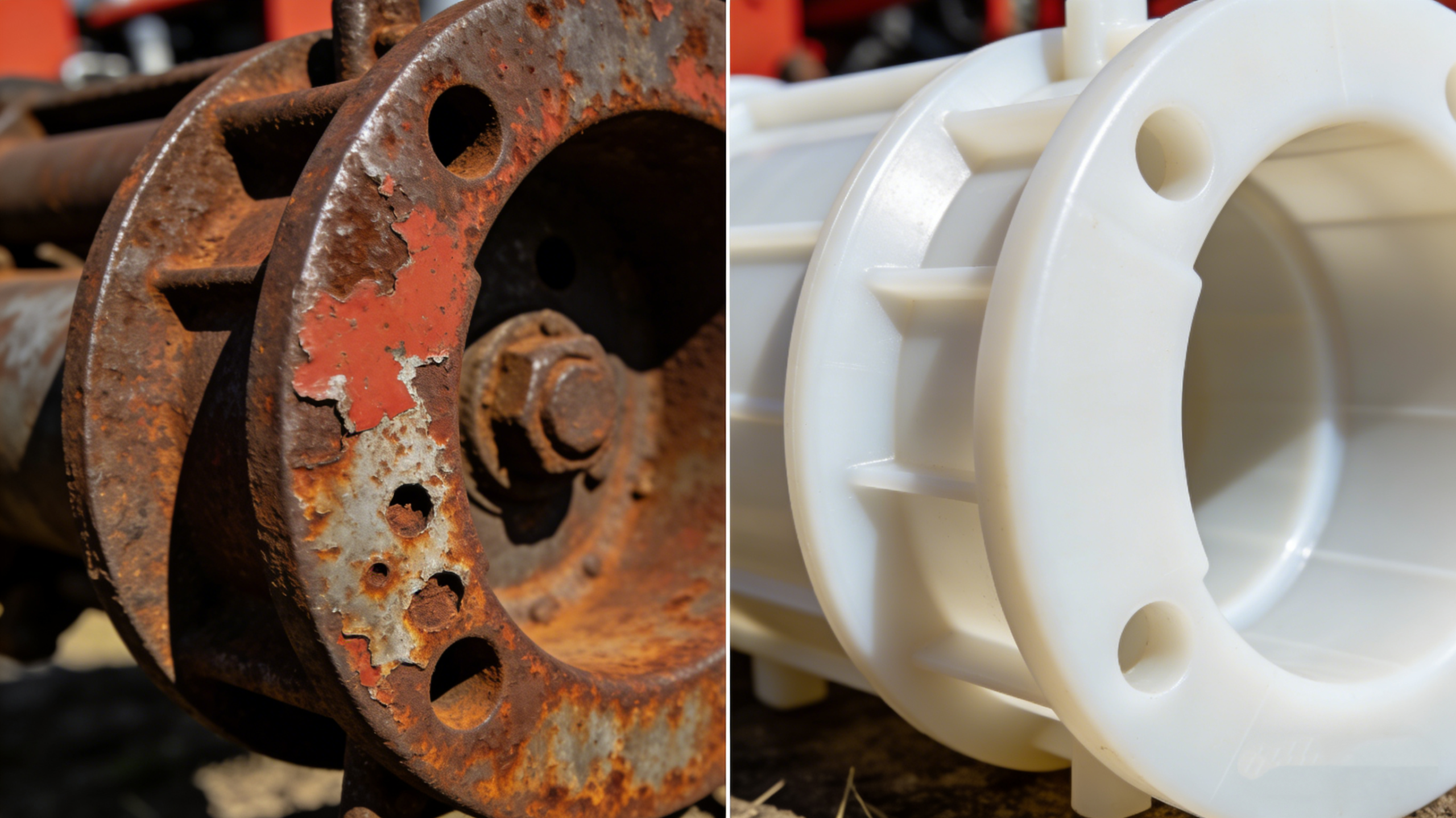
Within the agricultural machinery supply chain, component weight is often underestimated, yet it continuously amplifies transportation and warehousing burdens, especially during large-volume deliveries. Metal parts or high-density materials not only increase per-unit logistics costs but also limit loading capacity and extend delivery cycles, whereas adopting polyethylene injection molded structures can effectively reduce overall load while preserving functional strength. Reducing weight delivers more than lower freight costs—it directly improves delivery rhythm and inventory turnover. In real-world projects handled by Xiamen Ruicheng, replacing traditional manufacturing with injection molding led customers to experience tangible improvements across multiple shipment cycles.
Transportation efficiency: Lighter components increase truck loading utilization and reduce repeat shipments.
Handling safety: Lower weight decreases manual and mechanical handling risks.
Warehouse flexibility: Lightweight parts are easier to store, stack, and pick.
Delivery stability: Fewer logistics uncertainties result in more predictable lead times.
🚜 Lightweight design is not an added benefit, but a decisive factor in delivery efficiency.
Will PE Injection Molded Parts Compromise Structural Reliability?
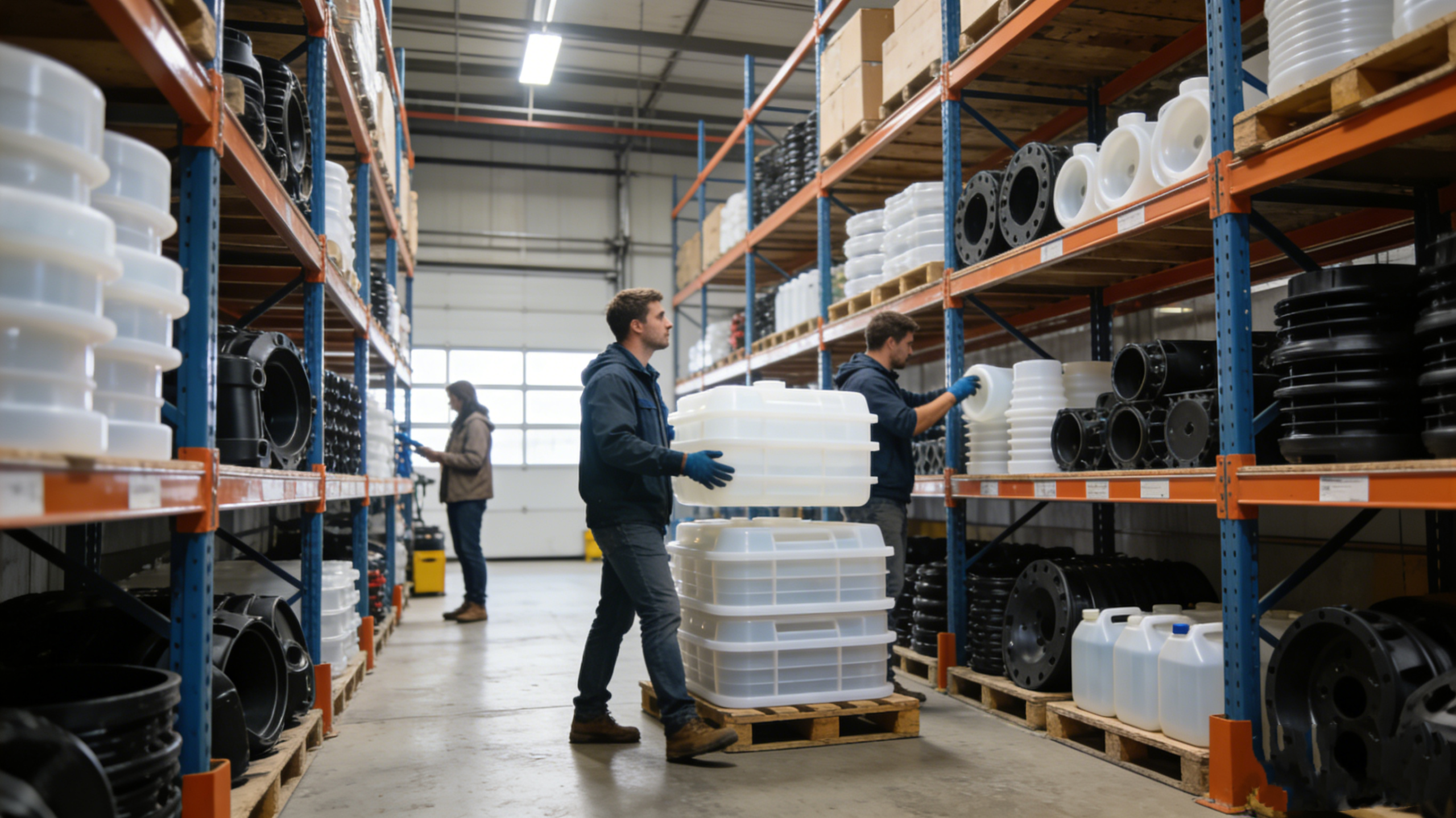
During procurement evaluations, buyers often worry that lightweight solutions may come at the cost of strength, but real-world applications show that PE materials can meet agricultural usage requirements through proper structural engineering. Optimized rib design and wall thickness control enable PE injection molded parts to maintain stable load-bearing and impact resistance, while also offering better shock absorption than metal alternatives. Reliability is determined by the synergy between material performance and structural design, not by density alone. Leveraging expertise in materials engineering and structural design, Xiamen Ruicheng has validated these outcomes across multiple agricultural housing and functional component projects.
Load distribution: Reinforced ribs and localized thickness adjustments reduce stress concentration.
Impact resistance: PE maintains toughness under vibration and low-temperature conditions.
Environmental tolerance: Naturally resistant to moisture, dirt, and many chemicals.
Service life: Properly designed parts meet long-term outdoor operation requirements.
🛠️ Reliability comes from system-level engineering, not material weight.
From a Cost Perspective, Are PE Injection Molded Parts Truly More Competitive?
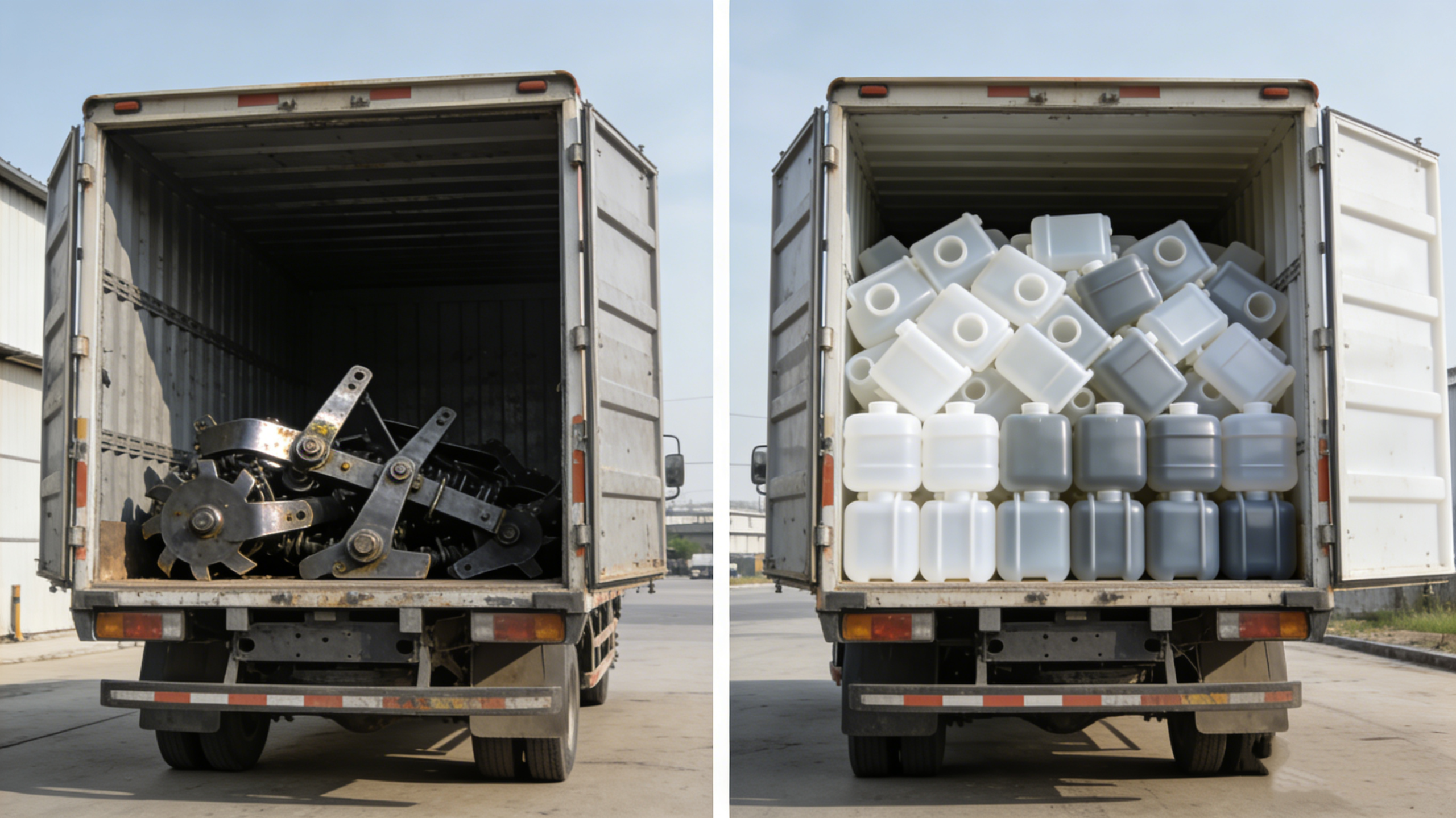
Comparing raw material prices alone does not reflect the true cost structure of agricultural machinery components. Total cost also includes processing, transportation, installation, and after-sales factors. PE injection molded parts allow complex geometries to be formed in a single process, reducing secondary machining and assembly, while lighter weight continuously lowers logistics expenses. Cost advantages emerge across the entire lifecycle, not from unit price comparisons alone. By integrating insights from supply chain management and logistics cost analysis, Xiamen Ruicheng helps customers reassess long-term value.
Process integration: One-piece molding reduces labor and secondary operations.
Logistics savings: Lower weight directly cuts freight and packaging costs.
Installation efficiency: Lightweight parts shorten on-site assembly time.
Maintenance reduction: Corrosion resistance minimizes replacement frequency.
💡 True cost competitiveness comes from re-evaluating the full process.
Key Comparison Points for PE Injection Molded Parts in Agricultural Lightweight Applications
| Comparison Dimension | Traditional Metal Parts | High-Density Plastics | PE Injection Molded Parts | Procurement Focus |
|---|---|---|---|---|
| Unit Weight | High | Medium-High | Low | Transportation efficiency |
| Manufacturing Process | Multi-step | Injection molding | Injection molding | Structural integration |
| Logistics Cost | High | Medium | Low | Total cost |
| Environmental Resistance | Corrosion-prone | Average | Good | Service life |
If you are currently evaluating lightweight alternatives for agricultural machinery components, now is the right time to revisit your decision window—feel free to contact us.
From Product Display to Decision Partnership
The value of PE injection molded parts extends beyond the product itself and lies in whether the supplier can participate throughout the customer’s decision-making journey. From early-stage application analysis to mid-stage structural optimization and late-stage mass delivery support, lightweight solutions only succeed when fully implemented. Xiamen Ruicheng emphasizes decision partnership driven by results, rather than one-time product delivery.
1.Requirement breakdown: Define lightweight objectives based on usage and logistics scenarios.
2.Solution validation: Verify structural and performance compatibility through samples and trial assembly.
3.Cost evaluation: Calculate long-term returns across processing, logistics, and maintenance.
4.Volume support: Ensure stable delivery and continuous process optimization.
Common Procurement Questions for PE Injection Molded Agricultural Components
Question: What are the core advantages of your PE injection molded agricultural components?
Answer: Our solutions focus on lightweight performance, structural reliability, and long-term cost control, supported by mature injection molding processes and stable material systems.
Question: What information should we prepare to initiate procurement discussions?
Answer: Basic drawings, operating conditions, and expected order volumes enable Xiamen Ruicheng to quickly assess feasibility and provide preliminary recommendations.
Question: How are lead times managed for different order quantities?
Answer: Flexible production planning supports both pilot runs and mass production, with clear lead time commitments based on confirmed requirements.
Question: How are quality or fitment issues handled after delivery?
Answer: Defined quality assessment procedures and rapid response mechanisms ensure issues are resolved within controlled timelines.
Question: Can you provide customization for special agricultural operating conditions?
Answer: Yes, we support material formulation and structural customization to meet specific environmental and durability requirements.
Conclusion
The transportation and delivery challenges caused by overweight agricultural machinery components are pushing the industry to rethink material and process selection. PE injection molded parts offer a practical solution through lightweight design, integration, and lifecycle cost optimization. When decision-making shifts from isolated parameters to overall efficiency, the true value of lightweight solutions becomes clear. Choosing a partner with decision-support capability ensures this transition is both stable and controllable.
For expert assistance in implementing solutions for your production needs, visit our resource center or contact us. Let’s help you scale up your manufacturing with precision and efficiency!